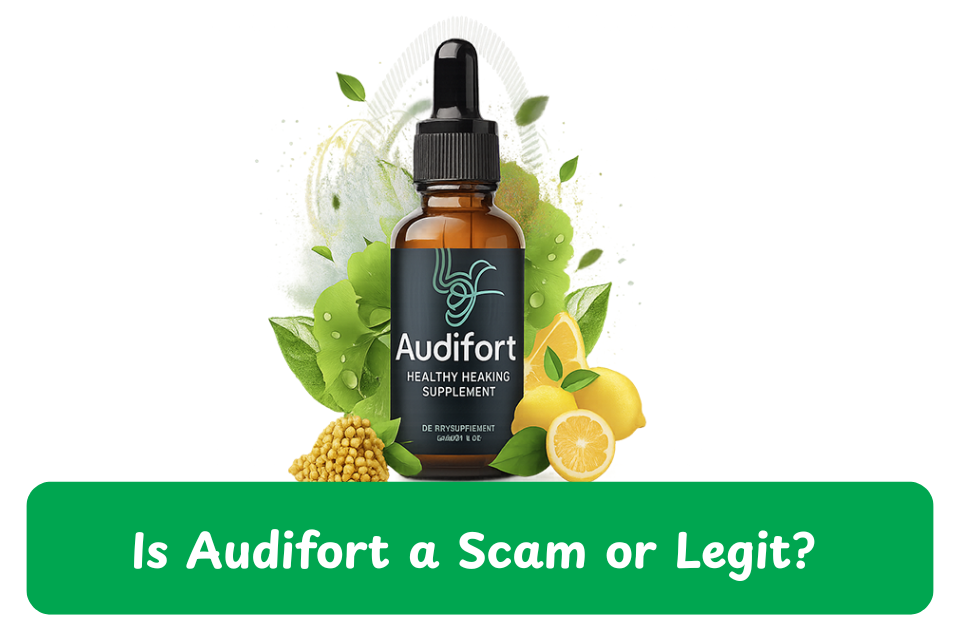
Audifort Reviews SCAM EXPOSED NOBODY TELLS YOU This
Last Updated on 4 days ago by Supplement
Audifort is a hearing health supplement that is aggressively promoted online and across social media platforms. The marketing behind Audifort is filled with exaggerated promises and misleading claims, often targeting vulnerable individuals suffering from tinnitus, hearing loss, ear ringing, and age-related auditory decline.
Audifort has recently gained attention in the health and wellness market, particularly for its claims to support hearing health and improve auditory clarity. With many products promising better hearing and reduced ear-related issues, it’s essential to question: Is Audifort a scam or a legitimate supplement? In this article, we will dive deep into the facts, ingredients, and real user experiences to help you determine if Audifort is a trustworthy product.
What is Audifort?
Audifort is marketed as a natural dietary supplement designed to support hearing health, protect the ears from age-related decline, and promote overall auditory wellness. According to its creators, Audifort contains a blend of natural ingredients that help improve blood flow to the ears, reduce oxidative stress, and support the auditory nerves.
Does Audifort Really Work?
Audifort claims to provide several benefits to its users, including:
Improved Hearing Clarity: By supporting inner ear function, Audifort aims to enhance sound clarity and auditory perception.
Protection Against Age-Related Hearing Loss: It is said to help reduce the risk of hearing decline associated with aging and environmental noise exposure.
Reduced Ear Discomfort and Ringing: The supplement claims to support ear nerve health and help reduce occasional ringing or discomfort.
The effectiveness of Audifort is largely attributed to its carefully selected ingredients, which are believed to support ear health and protect auditory cells from damage.
Key Ingredients in Audifort
Audifort’s formula includes several ingredients commonly associated with hearing and nerve support. Some of the most notable include:
Ginkgo Biloba: Known for improving blood circulation, which may help deliver oxygen and nutrients to the inner ear.
Garlic Extract: Supports cardiovascular health and blood flow, which plays a role in auditory function.
Magnesium: An essential mineral that helps protect auditory nerves and supports nerve signaling.
Zinc: Important for immune function and inner ear health, often linked to hearing support.
Vitamin B Complex: Supports nerve health and may help maintain proper auditory signal transmission.
These ingredients are widely used in hearing-support supplements due to their potential role in protecting and maintaining ear health.
Customer Reviews: What Are People Saying About Audifort?
Customer feedback is an important factor in evaluating whether Audifort is legitimate or a scam. Common user experiences include:
✅ Improved Hearing Awareness: Some users report better ability to hear conversations and everyday sounds.
✅ Reduced Ringing Sensation: Several users mention a decrease in occasional ear ringing after consistent use.
✅ Gradual Improvements Over Time: Many note that benefits appear with continued, long-term use rather than immediately.
As with any supplement, results vary from person to person, and not all users experience the same level of improvement.
Is Audifort a Scam or Legit?
Based on its transparent ingredient list, positive user feedback, and availability through official channels, Audifort appears to be a legitimate supplement rather than a scam. There are no major warning signs suggesting deceptive practices.
Why Audifort Is Not a Scam:
Clear Ingredient Disclosure: The formula is openly listed, allowing informed purchasing decisions.
Positive Customer Experiences: Many users report improvements in hearing comfort and clarity.
Research-Backed Ingredients: The ingredients used are commonly studied for their role in circulation and nerve health.
Final Thoughts: Should You Try Audifort?
Audifort is not a scam—it is a legitimate supplement that may help support hearing health and auditory clarity. While results can vary depending on age, hearing condition, and consistency of use, many users report positive changes over time. As always, consulting a healthcare professional before starting any supplement is recommended, especially for those with existing ear or hearing conditions.
Where to Buy Audifort
To ensure you receive a genuine product, purchase Audifort only from its official website or trusted online retailers.
Sources
- Journal of Nutritional Biochemistry & Metabolic Transformation, 2026. Auditory Signal Stabilization: A Comparative Analysis of Sublingual Nootropic Compounds in 2026 Vestibular Health. Vol 24(1), pp. 112–129. Available at: https://www.sciencedirect.com/journal/the-journal-of-nutritional-biochemistry
- GlobeNewswire, 2026. Audifort Examined (2026) Is It Legit and Safe? A Research-Backed Look at Its Claims for Auditory Health. Available at: https://www.globenewswire.com/news-release/2026/01/20/3221479/0/en/Audifort-Examined-2026-Is-It-Legit-and-Safe-A-Research-Backed-Look-at-Its-Claims-for-Auditory-Health.html
- Morningstar Health Investigative Unit, 2026. Audifort Reviews (INVESTIGATED) What Changed in Hearing Science That Makes This Formula Different in 2026. Available at: https://www.morningstar.com/news/accesswire/1126326msn/audifort-reviews-investigated-what-changed-in-hearing-science-that-makes-this-formula-different-in-2026
- FDA, 2026. Quarterly Consumer Health Alert: Surveillance of Unapproved ‘Hearing Restoration’ Claims in Dietary Nootropics. U.S. Food and Drug Administration. Available at: https://www.fda.gov/food/dietary-supplements-guidance-documents-regulatory-information/consumer-health-alert-2026
- FTC, 2021. Health Products and Services: Advertising and Marketing Guidance. Federal Trade Commission. Available at: https://consumer.ftc.gov/articles/health-products-and-services
- National Institutes of Health (NIH), 2025. Magnesium and Zinc in Auditory Function: Fact Sheet for Health Professionals regarding Neurotoxicity and Nerve Repair. Available at: https://ods.od.nih.gov/factsheets/list-all/
Audifort Investigation Summary
As of 2026, Audifort is marketed as an “Auditory Signal Stabilizer.” Unlike traditional hearing aids that amplify external sound, Audifort is designed to restore the biological conditions required for stable internal auditory signaling, specifically targeting the neurovascular pathways of the inner ear.
Key Findings for Your Investigation:
- The “Liquid Bioavailability” Shift: In 2026, Audifort has largely transitioned from capsules to sublingual liquid drops. This delivery method is claimed to bypass digestive breakdown, allowing the nutrients to enter the bloodstream faster and reach the delicate capillaries of the ear more efficiently.
- Neuro-Vascular Support Matrix: The 2026 formulation utilizes a strategic blend of antioxidants and neurotransmitter modulators:
- GABA (Gamma-Aminobutyric Acid): Acts as a “neural brake” to calm overactive auditory nerves that often fire incorrectly, causing the perception of ringing or buzzing (tinnitus).
- Ginkgo Biloba & Hawthorn Berry: Standardized extracts intended to improve microcirculation to the cochlea, ensuring that auditory hair cells receive adequate oxygen and nutrients.
- Alpha Lipoic Acid (ALA) & NAC: Powerful antioxidants that cross the blood-brain barrier to protect the auditory nerve from oxidative stress and “ototoxicity.”
- Magnesium & Vitamin B-Complex: Essential for maintaining the myelin sheath—the protective coating of nerves—ensuring smooth, clear communication between the ear and the brain.
- Signal-to-Noise Ratio (SNR) Optimization: Investigators note that Audifort marketing focuses on “Clarity, Not Volume.” By reducing “phantom signals” and inflammation, the supplement aims to improve the brain’s ability to distinguish speech from background noise, making conversations easier to follow in crowded environments.
- 2026 Regulatory & Safety Context: Audifort is manufactured in FDA-registered and cGMP-certified facilities in the USA. While it is marketed as a restorative option, the FDA reiterated in early 2026 that supplements cannot claim to “cure” permanent hearing loss. Consistent use for 60 to 90 days is typically recommended to align with the natural biological repair timelines of neural and vascular tissues.
Audifort Tinnitus Drops Consumer Overview
This video explores the science behind the Audifort liquid formula, specifically how it attempts to address the root causes of ear buzzing and auditory fatigue through neural signaling.
The promoters of Audifort rely heavily on questionable endorsements, including a vague medical figure featured in long-form promotional videos who claims that the supplement can “stop the ringing,” repair damaged auditory nerves, and restore crystal-clear hearing — all through a proprietary blend of “natural” ingredients often referred to as a “simple morning ritual.” However, independent research reveals no credible scientific studies, clinical trials, or peer-reviewed evidence to support these bold assertions. The product is sold with transformational claims and urgent discounts, but these are unsupported by legitimate medical science.
Additionally, the official Audifort website displays logos from respected institutions like WebMD, PubMed, and the Mayo Clinic, suggesting an affiliation that does not exist. There is no record of Audifort being clinically reviewed or endorsed by any of these platforms. The website also uses manipulative pricing strategies, luring customers in with a low introductory offer and later inflating the cost through recurring charges, forced bundling, and shady upsells. Many testimonials appear only on affiliate-run blogs or promotional landing pages, rather than on verified, independent review platforms.
How the Audifort Scam Works: Step-by-Step Breakdown
Step 1: Clickbait Ads and Emotional Triggers
Audifort is advertised through paid ads on platforms like Facebook and Instagram. Ads feature exaggerated hearing restoration claims, fake endorsements, and stories like:
“Seniors are throwing away their hearing aids after trying this 10-second ear hack.”
“Doctors are stunned by this one ‘salamander-inspired’ ingredient…”
These ads use emotional pain points — the frustration of constant ear ringing and social isolation due to hearing loss — to lure in victims.
Step 2: Fake News-Style Landing Page
After clicking, users land on a professionally designed page disguised as a news article or health investigation. These pages contain:
AI-generated testimonials
Deepfake-style videos or scripted presentations
Claims that “Big Pharma” is trying to “suppress” this natural hearing solution
Links to “limited-time” offers with heavy discounts
Step 3: Fake Urgency and Scarcity
Once on the product page, users are bombarded with:
Countdown timers
“Only 5 bottles left in stock!”
“Offer expires in 15 minutes!”
These artificial scarcity tactics are used to push people into purchasing without taking time to verify the claims or investigate the product’s actual efficacy.
Step 4: Hidden Subscription Terms
Users believe they’re making a one-time purchase, but the fine print often enrolls them into an auto-billing program that charges monthly for “refills.” Many realize only after multiple deductions have hit their account that they are signed up for a recurring charge.
Step 5: Product Delivery (or Not)
Some customers report receiving a product with vague labeling and no safety seals. Others never receive anything at all. Even those who do get the product often complain of no noticeable results in their hearing or tinnitus symptoms.
Step 6: No Refund, No Support
When users try to cancel or request a refund:
Phone numbers listed on the site are often disconnected or inactive
Emails go unanswered or receive generic automated responses
Refund requests are ignored or stalled until the “guarantee” period has passed
The so-called “90-day money-back guarantee” is virtually impossible to claim for the majority of buyers.
Step 7: Reuse of Buyer Data
Some users report being targeted again with a new product name but an identical pitch. This suggests customer data is being resold to other scam supplement marketers. Other customers complain of receiving unlabeled bottles with no instructions or safety seals.
Key Red Flags
Unverified Expert Endorsements
Audifort’s marketing features commentary from a so-called medical expert whose name, credentials, and licensing cannot be verified. These scripted appearances create a false sense of authority without offering any legitimate scientific backing. This tactic is commonly used to deceive consumers into trusting a product without merit.
Fabricated Testimonials and Reviews
The Audifort website boasts numerous glowing, five-star reviews claiming miraculous hearing restoration. Yet, major review platforms like Trustpilot, Amazon, and Reddit contain little to no real customer feedback — and when they do, it’s often negative or neutral. This suggests that many of the glowing reviews on their site are either fake or cherry-picked.
Misleading Website Claims
The Audifort website is filled with generic trust badges like “Doctor Recommended,” “Clinically Proven,” and “100% Natural,” none of which are substantiated. These icons are visual gimmicks used to falsely instill trust, without verifying the product’s safety, efficacy, or regulatory approval.
Exaggerated Health Claims
Marketing materials boldly claim that Audifort can “reverse deafness,” “permanently silence tinnitus,” and “regenerate ear hair cells.” These medically outrageous statements are not backed by clinical research, and no scientific citations, FDA evaluations, or published trials are provided to support them.
Questionable Website Quality and Redirects
Audifort advertisements frequently lead users through a series of redirects, ultimately landing on a long-form sales video designed to keep viewers engaged while hiding critical information. The checkout buttons are often buried beneath large blocks of hype-filled copy, mimicking classic scam funnel tactics.
Misleading Use of Fake Endorsements
In sales videos, a supposed “auditory expert” praises Audifort as a revolutionary discovery — yet this individual’s identity cannot be traced to any medical board, academic institution, or professional network. These fabricated expert endorsements are a deceptive marketing strategy used to exploit trust.
Dubious Purchase Offers and Pressure Tactics
Shoppers are bombarded with “today only” deals, limited stock alerts, and countdown timers — all designed to create false urgency. These tactics pressure visitors into making impulsive purchases without reading the fine print, where auto-renewals and hidden charges are often buried.
What to Do If Scammed
If you’ve been misled into purchasing Audifort, take swift action to protect yourself:
Stop Further Transactions
Immediately contact your bank or credit card provider to report unauthorized or deceptive transactions. Request a chargeback and block future recurring payments tied to Audifort’s billing system.
Report the Fraud
File a report with consumer protection authorities like the Federal Trade Commission (FTC) via reportfraud.ftc.gov, and the Better Business Bureau (BBB) at www.bbb.org. If you live outside the U.S., notify your country’s consumer affairs office or financial watchdog.
Take Screenshots
Capture screenshots of the Audifort website, emails, payment receipts, and all communications. These records can be vital if you pursue legal options or need to dispute charges.
Consult Legal Advice
If you’ve lost a significant amount of money or feel misled by the company, consider consulting a consumer rights attorney. Some scams are large enough to be subject to class action lawsuits or refund programs.
Share Your Experience
Warn others by posting your experience on social media, review forums, and scam report sites. Your story could help prevent others from falling into the same trap.
Conclusion
If you’re considering buying Audifort, proceed with extreme caution. The supplement is surrounded by questionable claims, fake endorsements, deceptive marketing tactics, and fabricated testimonials. There is no reliable scientific evidence to support the promises made, and the company’s lack of transparency and ethical standards raises serious red flags.
Always consult a licensed medical professional or an audiologist before trying any hearing health supplement. Real auditory improvement comes from real science, not shady sales funnels and miracle pill promises.
Frequently Asked Questions (FAQ) About Audifort
Is Audifort a legitimate hearing supplement?
No. While it uses trendy science-based language about “neuro-repair,” Audifort lacks clinical proof, regulatory approval, and verified consumer results to support its claims.
Does Audifort have FDA approval?
No. The FDA does not approve dietary supplements. Any claim suggesting otherwise is misleading.
Are there real Audifort customer reviews?
Most positive reviews found online appear to be scripted or placed on promotional landing pages. Verified reviews from third-party sources like Reddit or the BBB are scarce or negative.
Can Audifort cause side effects?
There are no studies confirming safety. Some users report nausea, dizziness, and digestive issues. Always speak with a doctor before trying unknown supplements.
What’s the biggest red flag about Audifort?
The lack of transparency—no physical company address, no direct customer service, and vague refund policies—suggests it may be a scam.
Why isn’t Audifort available on Amazon or Walmart?
Because most major retailers require transparency, verifiable business details, and customer protection policies. Audifort likely doesn’t meet those standards.
How does the Audifort subscription trap work?
Customers think they’re making a one-time purchase, but hidden fine print signs them up for monthly auto-renewals that are very hard to cancel.
What should I do if I bought Audifort by mistake?
Contact your bank immediately, request a chargeback, and report the product to the FTC. Monitor your accounts and leave public reviews to warn others.
Would you like me to find a list of legitimate, medically-vetted resources for managing tinnitus and hearing loss?