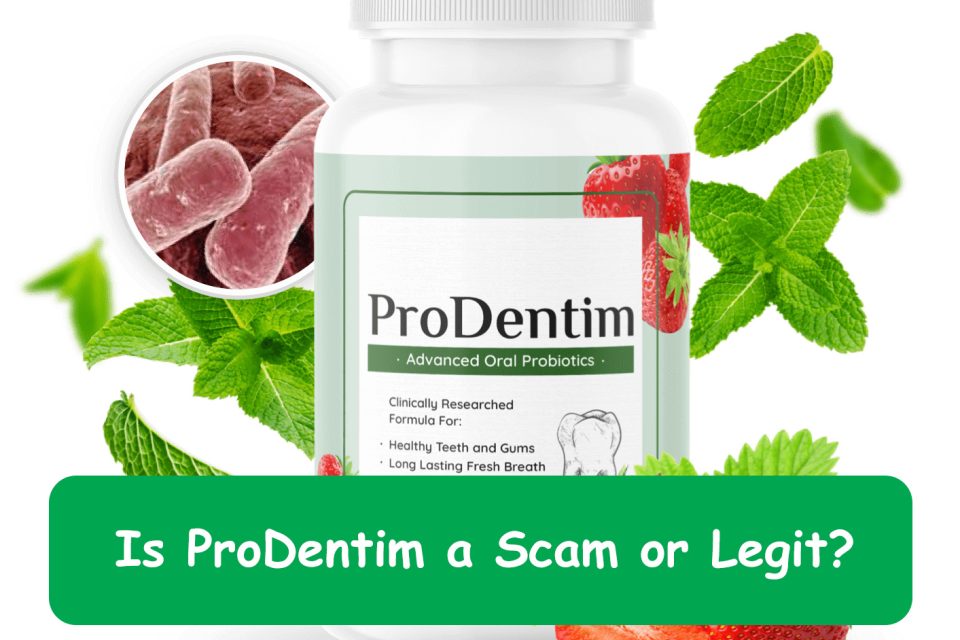
Is ProDentim SCAM or LEGIT? Read This SHOCKING Truth
Last Updated on 4 weeks ago by Supplement
A consumer-protection investigation into counterfeits, fake reviews, AI-generated endorsements, and refund disputes orbiting one of the internet’s most-marketed dental supplements — and whether ProDentim is legit, fake, or something in between.
Last reviewed: July 2026. This article will be updated as new evidence emerges.
ProDentim has recently gained attention in the health and wellness market, particularly for its claims to support oral health and improve gum and teeth strength. With many dental supplements promising healthier smiles, it’s essential to question: Is ProDentim a scam or a legitimate supplement? In this article, we will dive deep into the facts, ingredients, and real user experiences to help you determine if ProDentim is a trustworthy product.
What is ProDentim?
ProDentim is marketed as a natural dietary supplement designed to support oral health, improve gum condition, and promote stronger teeth. According to its creators, ProDentim focuses on improving the balance of good bacteria in the mouth by using probiotics and natural ingredients that support healthy gums, fresh breath, and overall dental wellness.
Does ProDentim Really Work?
ProDentim claims to provide several benefits to its users, including:
Improved Gum Health: By supporting beneficial oral bacteria, ProDentim aims to reduce gum irritation and support healthier gums.
Stronger Teeth: The supplement claims to help maintain tooth strength by supporting the natural oral environment.
Fresher Breath: ProDentim is said to help reduce bad breath by balancing oral bacteria levels.
The effectiveness of ProDentim is largely attributed to its probiotic-focused formula, which is designed to support oral health from within.
Key Ingredients in ProDentim
ProDentim’s formula includes several ingredients known for their oral health benefits. Some of the most notable ingredients include:
Lactobacillus Paracasei: A probiotic strain known to support healthy gums and reduce harmful oral bacteria.
Lactobacillus Reuteri: Helps promote balanced oral flora and gum health.
Inulin: A prebiotic fiber that supports the growth of beneficial bacteria in the mouth.
Malic Acid: Found in fruits, it helps support saliva production and oral cleanliness.
Peppermint: Commonly used to support fresh breath and oral comfort.
These ingredients have been studied for their role in oral microbiome balance and are commonly used in dental health supplements.
Customer Reviews: What Are People Saying About ProDentim?
User feedback is an important factor in evaluating whether a supplement is legitimate or a scam. Common customer sentiments include:
✅ Healthier Gums: Many users report reduced gum sensitivity and improved gum comfort.
✅ Fresher Breath: A significant number of users notice longer-lasting fresh breath.
✅ Positive Oral Changes Over Time: Some customers report overall improvements in oral health after consistent use.
However, results vary between individuals, and not all users experience the same outcomes.
Is ProDentim a Scam or Legit?
Based on its transparent ingredient list, probiotic-based approach, and positive customer feedback, ProDentim appears to be a legitimate supplement rather than a scam. It is sold through reputable sources, and there are no major warning signs indicating deceptive practices.
Why ProDentim Is Not a Scam:
Clear Ingredient Disclosure: The supplement clearly lists all ingredients.
Positive Customer Feedback: Many users report improved oral health and fresher breath.
Science-Based Approach: The formula focuses on probiotics, which are widely studied for oral and gut health.
Final Thoughts: Should You Try ProDentim?
ProDentim is not a scam—it is a legitimate supplement that may help support gum health, fresher breath, and overall oral wellness. While individual results may vary, many users report positive dental health changes with consistent use. As with any supplement, it is advisable to consult a healthcare or dental professional before starting, especially if you have existing oral health conditions.
Where to Buy ProDentim
To ensure you receive a genuine product, purchase ProDentim only from its official website or trusted online retailers.
ProDentim: What the Evidence Supports
As of 2026, ProDentim is positioned as a “Biological Oral Ecosystem Rebuilder.” It challenges the traditional “scrub and rinse” approach to dental hygiene, suggesting that the overuse of antiseptic mouthwashes kills the beneficial bacteria necessary for maintaining healthy teeth and gums.
Key findings:
- The “Bacterial Repopulation” Strategy: ProDentim focuses on reintroducing 3.5 billion CFUs (Colony Forming Units) of specific probiotic strains into the mouth. The goal is to create a “living shield” of good bacteria that outcompetes the pathogens responsible for tooth decay and gum disease.
- The “Soft Mineral” Matrix: Unlike standard pills, ProDentim is a dissolvable candy designed to be chewed slowly. This ensures the probiotics stay in the mouth long enough to colonize the oral tissues:
- Lactobacillus Paracasei: Targeted at supporting gum health and keeping the sinuses open and free-flowing.
- B.lactis BL-04®: Primarily included to support a balanced oral microbiome and enhance the respiratory tract’s natural immune response.
- Lactobacillus Reuteri: Known for its anti-inflammatory properties, specifically aimed at reducing redness and sensitivity in the gums.
- Tricalcium Phosphate (TCP): A mineral that supports tooth enamel integrity and helps with the natural remineralization process.
- Holistic Benefits: Investigation into the 2026 formula reveals that ProDentim is increasingly marketed for its “Upstream Benefits.” Because the mouth is the gateway to the body, supporting the oral microbiome is linked to improved digestive health, fresher breath (by treating the root cause rather than masking it), and even clearer skin.
- 2026 Regulatory & Market Context: ProDentim is manufactured in FDA-registered and GMP-certified facilities in the USA. While it is highly popular for managing “morning breath” and gum sensitivity, the FDA issued a notice in early 2026 clarifying that oral probiotics are not a substitute for professional dental surgery or treatments for advanced periodontitis. Most users report the best outcomes—including noticeably whiter teeth and firmer gums—after 90 to 180 days of consistent daily use.
Sources
- Ferrillo M. et al., 2025. Clinical effects of probiotics on the treatment of gingivitis and periodontitis: a systematic review and meta-analysis. BMC Oral Health. https://bmcoralhealth.biomedcentral.com/articles/10.1186/s12903-025-05888-5
- Effect of probiotics on gingival inflammation and oral microbiota: a meta-analysis, 2021. PubMed 33772970. https://pubmed.ncbi.nlm.nih.gov/33772970/
- Teanpaisan R. et al., 2015. Effect of long-term consumption of Lactobacillus paracasei SD1 on reducing mutans streptococci and caries risk. Dentistry Journal. https://www.ncbi.nlm.nih.gov/pmc/articles/PMC5851198/
- West N.P. et al., 2014. Probiotic supplementation for respiratory and gastrointestinal illness symptoms in healthy physically active individuals. Clinical Nutrition. https://pubmed.ncbi.nlm.nih.gov/24268677/
- Hamba H. et al., 2020. Remineralization of enamel subsurface lesions using toothpaste containing tricalcium phosphate and fluoride. BMC Oral Health. https://www.ncbi.nlm.nih.gov/pmc/articles/PMC7590595/
- FDA. Questions and Answers on Dietary Supplements. https://www.fda.gov/food/information-consumers-using-dietary-supplements/questions-and-answers-dietary-supplements
- FTC. Health Products and Services: Advertising and Marketing Guidance. https://consumer.ftc.gov/articles/health-products-and-services
This video explains the 2026 shift in dental science toward probiotic support and why “killing 99% of bacteria” might actually be harming your long-term oral health.
Introduction
ProDentim, an oral probiotic supplement sold as a chewable tablet and marketed by the company Bioventra, has become one of the most heavily promoted “dental health” products on the internet. It promises to rebalance the mouth’s microbiome using probiotic strains such as Lactobacillus paracasei, Lactobacillus reuteri, and Bifidobacterium lactis, positioning itself as a natural alternative to conventional dental care.
But alongside the product’s rise has come something more troubling: a sprawling ecosystem of scams that use ProDentim’s name, branding, and popularity as bait. This is the crucial distinction most “ProDentim scam” articles miss. The useful question is not a simple “is ProDentim a scam?” but rather: what fraud operates around ProDentim, how does it separate consumers from their money, and what does the product’s own evidence base actually show?
This investigation lays out the documented fraud patterns, the efficacy evidence, real consumer reports, and — most importantly — concrete steps to protect yourself and recover money if you have already been burned.
How This Was Researched
This article draws on four categories of source: the manufacturer’s own public statements (a Bioventra press release distributed via PR Newswire), open consumer-review platforms (primarily Trustpilot), U.S. regulatory and government material (the Federal Trade Commission, the Better Business Bureau, and the legal framework governing supplements), and general scientific literature on oral probiotics. It does not rely on original laboratory testing or clinical trials conducted by the author, and where a claim rests only on unverified consumer speculation, that limitation is stated plainly. Open review platforms are treated as indicative signals, not proof.
Why Trending Supplements Attract Fraud
Dietary supplements occupy a uniquely vulnerable position in the U.S. marketplace, and understanding why explains almost everything about the ProDentim scam ecosystem.
Under the Dietary Supplement Health and Education Act (DSHEA) of 1994, dietary supplements are generally not approved by the U.S. Food and Drug Administration before they reach the market. Manufacturers — not the government — are responsible for ensuring their products are safe and truthfully labeled, and the FDA primarily acts after a product is already being sold, in response to problems. This reactive posture creates a wide enforcement gap, and that gap is precisely what opportunists exploit.
Layer onto that a product with viral demand, an emotionally resonant health promise, a generous-sounding money-back guarantee, and sales funneled almost entirely through a single official website, and you have ideal conditions for imitation. ProDentim has been aggressively promoted across affiliate networks, and heavy affiliate promotion reliably attracts counterfeiters, fake-review operators, and ad fraudsters who all move to capture a slice of the traffic. The result: a consumer researching ProDentim today wades through a landscape where telling authentic from fake is genuinely difficult.
Scam Pattern 1: Counterfeit and Tampered Products
The most concrete and well-documented fraud category is counterfeiting — and notably, the manufacturer itself has confirmed it.
In March 2025, Bioventra issued a formal consumer warning through PR Newswire stating that it had identified multiple fraudulent listings across online marketplaces distributing imitation versions of ProDentim. According to that warning, counterfeit products commonly feature altered labeling, incorrect ingredient lists, and tampered packaging, making it difficult for buyers to verify whether they are receiving the genuine formula. This is not speculation — it is an on-record admission from the brand that a counterfeit problem exists.
The real-world footprint shows up in consumer reports. Buyers have described receiving products they believed were counterfeit because the packaging, taste, texture, or labeling differed noticeably from authentic bottles — including unsealed bottles and missing security features. One buyer recounted purchasing a discounted bottle from a third-party marketplace seller, finding the tablets tasted “chalky” and caused a headache, and later concluding the product was fake, noting a clear difference when they reordered from the official source.
An important caveat about a claim that circulates widely: some reviewers and affiliate-published “safety reports” assert that a large share of reported side effects and poor experiences stem from counterfeit or improperly stored product rather than the authentic formula. That may be plausible, but there is no reliable, independent research quantifying how many complaints are attributable to counterfeits, and the sources making the strongest version of that claim are themselves affiliated with sales of the product. Treat it as speculation, not fact.
The economic bait, however, is consistent and verifiable: counterfeit sellers lure buyers with steep discounts that appear too good to be true. As one consumer summarized on Trustpilot, if you find ProDentim significantly cheaper elsewhere, you have very likely bought a counterfeit — the same reviewer noted this mirrored earlier counterfeiting of another dental supplement, where fraudsters stole official product images and sold worthless product on major marketplaces until the platform was alerted.
Scam Pattern 2: The Fake-Review and SEO Manipulation Machine
Perhaps the most insidious element of the ProDentim scam landscape is not a single fraudulent transaction but an entire manufactured information environment.
Type “ProDentim reviews” or “is ProDentim legit” into a search engine and you are met with pages of “investigative reviews,” “scam warnings,” and “complaint exposés” published on newswire-style and low-authority sites. On close inspection, a large proportion are affiliate marketing content disguised as journalism. They almost universally carry a small-print disclosure admitting the article contains affiliate links and earns a commission, then funnel readers toward the same official-site checkout.
Here is a practical tip for spotting them: these affiliate disclosures are almost always buried at the very bottom of the page in the footer, frequently in small, light-gray text or hidden behind a vague “Advertiser Disclosure” link. If a glowing “unbiased review” has a commission disclosure tucked into its footer, treat the entire page as an advertisement.
The manipulation is deliberate. Consumers on public forums have described the tactic precisely: fake review pages seed their content with the exact keywords worried shoppers search for — “scam,” “fake,” “complaints,” “warning” — specifically so a skeptical searcher lands on a page that then reassures and sells to them. The scam anticipates your doubt and monetizes it. This pattern even appears in the product’s own promotional funnels, which openly acknowledge that searching the brand returns “scam” and “fraud” warnings, then pivot to reassure the reader — a textbook “address the objection, then close the sale” structure.
The consequence is severe: genuine independent feedback is drowned out. Balanced reviewers have noted that search results are so saturated with promotional and PR content that legitimate customer reports are extremely hard to surface. This information pollution is itself a form of deception, because it strips consumers of the ability to make an informed choice.
Crucially, this is no longer merely unethical — much of it is now illegal.
Scam Pattern 3: The FTC Crackdown on Fake and AI-Generated Reviews
In August 2024, the Federal Trade Commission finalized a landmark rule — the Trade Regulation Rule on the Use of Consumer Reviews and Testimonials (16 CFR Part 465) — that took effect on October 21, 2024. Passed on a unanimous 5–0 vote, it directly targets the exact tactics visible in the ProDentim review ecosystem. The rule prohibits:
- Fake or false consumer reviews, consumer testimonials, and celebrity testimonials, including reviews by people who do not exist or who never used the product.
- AI-generated fake reviews — the FTC explicitly noted that AI tools let bad actors cheaply flood the ecosystem with realistic but fake reviews, and confirmed such reviews are covered.
- Buying or selling positive or negative reviews, and incentivizing reviews conditioned on a particular sentiment.
- Undisclosed insider reviews by officers, managers, or employees.
- Company-controlled review websites that falsely present themselves as independent.
- Review suppression and fake indicators of social media influence (bot followers, fake accounts).
The rule gives the FTC real teeth: civil penalties of up to $51,744 per violation, plus consumer redress. Consumers can report violations directly at reportfraud.ftc.gov. There is no private lawsuit under this rule — enforcement runs through the FTC.
The relevance to ProDentim is direct: a review ecosystem built on affiliate-seeded “scam or legit?” pages, undisclosed material connections, and potentially AI-generated testimonials sits squarely within the conduct this rule was written to punish.
Scam Pattern 4: AI Deepfakes and Fake Celebrity Endorsements
ProDentim, like nearly every viral supplement, has been swept into the fastest-growing category of online fraud: AI-generated celebrity endorsements.
The Better Business Bureau has issued repeated alerts about this pattern. Scammers pose as trusted public figures — using deepfake video and rapidly improving AI tools that make phony endorsement clips more convincing than ever — to sell health supplements and similar products. The mechanics are consistent: a social-media ad shows a fabricated video of a celebrity or doctor praising the product, links to a spoofed checkout page, and then hits the buyer with a cascade of upsells.
The financial damage is real. In one BBB-cited account, a consumer clicked a Facebook ad featuring an AI-generated video of a well-known television personality endorsing a supplement, then was funneled through repeated “upgrade to 12 bottles” offers and add-on charges — ultimately incurring three separate transactions totaling $883.07 before realizing the ads were computer-generated.
Why do these ads thrive? Platform algorithms optimize for engagement and paid reach. Because fraudsters pay for placement, sensational deepfake ads often slip past automated moderation until enough users report them — effectively placing the burden of verification on the consumer rather than the platform. For a heavily advertised product like ProDentim, fabricated endorsements and the upsell traps behind them are a live and expensive risk.
Scam Pattern 5: Spoofed Websites and the “Only Authentic Site” Confusion
Because ProDentim is sold almost exclusively through its official website, scammers exploit that funnel by cloning it. Counterfeit operators mimic the product’s branding, page layout, and checkout design to convince buyers they are on the real site.
Guidance for spotting a fake ProDentim site highlights the tells: fraudulent sites often use overly complicated URLs padded with hyphens, numbers, or appended terms like “deals” or “official-sale,” and frequently provide only a generic contact form or no contact details at all. Compounding this, the legitimate marketing operation itself spawns numerous landing pages and mirror domains. One frustrated consumer described discovering that the operation appeared to run many different websites, each claiming to be the sole authentic source — making it nearly impossible to know which was genuine — and noted there was no way to leave a review directly on those pages, meaning the testimonials shown there could not be independently trusted. This blurring of “official marketing” and “impersonation” is exactly the fog fraudsters thrive in.
Scam Pattern 6: Refund and “Money-Back Guarantee” Disputes
ProDentim is advertised with a prominent 60-day money-back guarantee, framed as “zero financial risk, no questions asked.” For many buyers, that guarantee is the deciding factor. Yet a recurring thread of complaints alleges it is far harder to redeem than advertised.
Documented consumer accounts on Trustpilot describe a frustrating pattern: a customer requests a refund and is told to keep using the product “a little longer”; when they persist, they are told to return the unused product at their own expense; and after returning it, they are told they have passed the 60-day window — left with neither a refund nor their product. Others report refunds that were promised but never issued, month-long waits, and difficulty reaching the company by phone.
To be fair and precise, Trustpilot contains both positive and negative reviews, and like any open review platform, individual reviews should be interpreted cautiously — they are unverified and can be gamed in either direction. The existence of a published refund policy is itself a legitimacy signal that distinguishes ProDentim from pure fly-by-night operations that deny all returns. Refund friction of this kind reads more as aggressive, customer-hostile business practice than as outright criminal fraud. But for a consumer left out of pocket, that distinction offers little comfort — which is why the recourse section below matters.
Scam Pattern 7: Questionable Spokesperson Credibility
Much of ProDentim’s marketing is anchored to an on-camera figure presented as a medical doctor who formulated the product. This persona carries significant weight in the sales pitch, since the perceived authority of a physician is central to the product’s credibility.
That authority has drawn scrutiny. Publicly available information about the spokesperson’s professional background is limited, which makes independent verification difficult, and several consumers report being unable to satisfactorily confirm the stated credentials or the figure’s actual role in developing the product. Others have flagged inconsistencies in the marketing itself — for example, promotional material describing the active ingredient in ways that did not match the probiotic formula being sold.
The broader, well-established consumer-protection principle applies: when a health product leans heavily on the authority of a single “doctor” figure whose credentials and involvement resist independent verification, treat the surrounding claims with heightened skepticism. (Some online reviews make far more serious personal allegations about this individual; because those claims concern a specific named person and could not be independently verified for this article, they are deliberately not reproduced here.)
What Clinical Studies Actually Say: Does ProDentim Work?
Separate from the fraud question is the efficacy question — and here the honest answer is nuanced.
The individual ingredients have genuine, if limited, science behind them. Strains like Lactobacillus reuteri and Lactobacillus paracasei have been studied for oral health, and some research shows modest benefits — for instance, a L. reuteri lozenge used alongside professional cleaning outperforming placebo in managing chronic gum disease by suppressing periodontal pathogens. The oral-microbiome concept the product is built on is real and taken seriously in dentistry.
But three things must be said plainly:
- There are no published clinical trials on ProDentim itself. The evidence is on individual strains, often at different doses and delivery forms, for different conditions. “This bacterium showed promise in a study” does not establish that this specific product, at this dose, delivers the advertised results.
- The evidence is inconsistent and preliminary. The broader science on probiotic supplements directly improving oral health remains early-stage, and more randomized controlled trials are needed before strong conclusions are warranted.
- The bold marketing claims outrun the evidence. Assertions implying reversal of cavities, regrowth of gum tissue, or that the product can replace professional dental care are not supported for the product as sold.
The consistent professional guidance — from mainstream dental authorities such as the American Dental Association and research bodies like the National Institute of Dental and Craniofacial Research — is that brushing, flossing, and regular checkups remain non-negotiable, and that any oral probiotic should be viewed, at most, as an adjunct to proven dental care, never a substitute. Real users reflect this ambiguity: some report fresher breath or improved gum comfort after a few weeks; others follow the directions for months and see no change at all.
Verdict (Opinion)
Weighing all of the above, here is my honest assessment, offered as opinion rather than established fact: ProDentim is not a straightforward criminal scam of the “ship nothing and vanish” variety. It is a real, purchasable supplement with a published refund policy, some satisfied customers, and ingredients with plausible but unproven-for-this-product science.
However, in my view the product is wrapped in marketing that overstates what the evidence supports, and it sits at the center of a genuine fraud ecosystem — counterfeits, affiliate-driven fake reviews, deepfake ads, spoofed sites, and refund disputes — that inflicts real financial harm. For most people, the money is better spent on the dental basics that are actually proven. If you still want to try it, treat every claim skeptically and buy only through verified channels. That is a judgment call, and reasonable readers may weigh it differently.
How to Protect Yourself — and Recover Your Money
Before you buy:
- Buy only from the verified official source. Treat steep third-party discounts as a counterfeit warning sign, not a bargain.
- Distrust the review layer. Assume top-ranking “scam or legit?” articles may be affiliate content; check the footer for a commission or “Advertiser Disclosure” note.
- Never trust a social-media celebrity endorsement without confirming it from an official, verified source. Assume supplement endorsement videos may be AI-generated.
- Inspect the URL and checkout page for spoofing tells: odd domains, padded URLs, missing contact details.
- Document the terms before paying — screenshot the refund policy, the exact 60-day window, and return requirements.
- Consult a dentist, and treat any supplement as an add-on, not a replacement for professional care.
How to check for a genuine bottle:
- ✓ Intact factory safety seal (unbroken)
- ✓ Legible batch/lot number
- ✓ Clear, correct expiration date
- ✓ Consistent, high-quality packaging and labeling
- ✓ An official checkout receipt / order confirmation
- ✓ Taste, texture, and appearance matching the authentic product
If you have already been scammed or denied a refund:
- Initiate a credit-card chargeback. If the company stonewalls the guarantee, dispute the charge directly with your bank or card issuer. “Item not as described” and “promised refund denied” are valid dispute grounds. Act promptly — chargeback windows are time-limited.
- Report deceptive practices to the FTC at reportfraud.ftc.gov.
- File a complaint with the Better Business Bureau and check its BBB Scam Tracker.
- Report adverse effects from a suspected counterfeit to the FDA’s MedWatch program, which tracks safety problems with health products.
- Preserve everything — receipts, screenshots, emails, and the product packaging — as evidence for any dispute or report.
The Bigger Picture
ProDentim does not exist in isolation. Online fraud losses reported to authorities run into the billions of dollars annually, and health-and-wellness products are a favored vehicle because they combine emotional urgency with low regulatory pre-approval. The tactics documented here — counterfeiting, fake reviews, deepfake ads, spoofed checkouts, refund run-arounds — are not unique to this product; they are the standard modern playbook, and recognizing them protects you far beyond a single supplement.
Conclusion
The ProDentim story is a case study in how modern supplement fraud actually works. The scam is rarely a single villain; it is an ecosystem — counterfeiters exploiting demand, affiliate operators poisoning the information supply, ad fraudsters weaponizing AI, spoofed sites harvesting checkouts, and refund practices that leave customers stranded. A product can be technically real and still be surrounded by deception that costs consumers dearly, all while the underlying evidence for it working as advertised remains thin.
The most valuable defense is not a verdict on any one bottle but a mindset: skepticism toward too-good-to-be-true pricing, distrust of manufactured reviews and celebrity ads, insistence on verified sources, patience to research before purchasing, and knowledge of how to fight back if you are wronged. In a marketplace engineered to exploit trust, informed caution is the only reliable cure.
This article is for informational and consumer-protection purposes only and does not constitute medical, legal, or financial advice. Claims attributed to consumers, the manufacturer, and third-party platforms reflect reporting and reviews available at the time of writing; product details, pricing, and policies may change. Regulatory references reflect U.S. law as of the last-reviewed date. Always consult a qualified healthcare professional before beginning any supplement, and a licensed attorney for legal questions.