Last Updated on 13 hours ago by Supplement
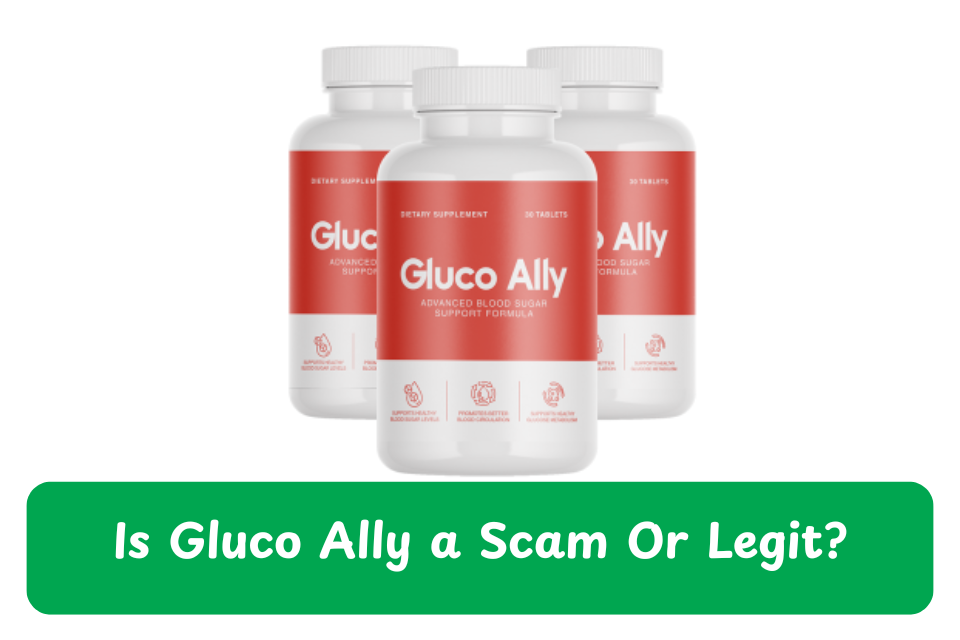
Gluco Ally is marketed as a natural blood sugar support supplement claiming to maintain healthy glucose levels, improve insulin sensitivity, and reduce sugar cravings through a capsule formula taken daily. It is sold through what appears to be a single-brand website at glucoally.com, with pricing of $69 for one bottle, $177 for three bottles, and $294 for six bottles. No legal company name or manufacturer is named on the product’s marketing pages, which instead describe it as developed by a company known for high-quality health and wellness supplements — a generic description with no named entity. A key problem is that ingredient lists conflict completely between sources: some describe a formula built around Xylitol, Ceylon Cinnamon, and Saffron Bulb Extract, while others describe a formula with 200 mcg Chromium, 500 mg Cinnamon, and 50 mg Alpha Lipoic Acid plus a 637 mg proprietary blend with seven undisclosed individual doses. Multiple review pages describe the product as manufactured in an FDA-registered, GMP-certified facility but name neither the facility nor its address. No independent laboratory certificate of analysis and no clinical trial of the Gluco Ally formula have been published. This Gluco Ally review examines the evidence behind the claims, the gaps in manufacturer transparency, and why consumers managing blood sugar levels should seek medically credible options instead.
Gluco Ally has recently gained attention in the health and wellness market, particularly for its claims to support healthy blood sugar levels and improve overall metabolic health. With many supplements promising better glucose control, it’s essential to question: Is Gluco Ally a scam or a legitimate supplement? In this article, we will dive deep into the facts, ingredients, and real user experiences to help you determine if Gluco Ally is a trustworthy product.
What is Gluco Ally?
Gluco Ally is marketed as a natural dietary supplement designed to support healthy blood sugar levels, improve insulin sensitivity, and promote overall metabolic balance. According to its creators, Gluco Ally contains a blend of plant-based ingredients and essential nutrients that help regulate glucose levels, support energy metabolism, and maintain overall health.
Does Gluco Ally Really Work?
Gluco Ally claims to provide several benefits to its users, including:
- Balanced Blood Sugar Levels: By supporting glucose metabolism, Gluco Ally helps maintain stable blood sugar levels.
- Improved Energy Levels: The supplement is designed to enhance energy by promoting efficient sugar utilization.
- Metabolic Support: It may help support insulin function and overall metabolic health.
The effectiveness of Gluco Ally is largely due to its carefully selected ingredients, which have been associated with blood sugar regulation and metabolic support.
Key Ingredients in Gluco Ally
Gluco Ally’s formula includes several powerful ingredients known for their blood sugar support benefits. Some of the most notable ingredients include:
- Berberine: Known for its ability to help regulate blood sugar and improve insulin sensitivity.
- Cinnamon Bark Extract: Helps support healthy glucose metabolism and reduce blood sugar spikes.
- Chromium: Essential for improving insulin function and glucose utilization.
- Bitter Melon: Traditionally used to support healthy blood sugar levels.
- Alpha Lipoic Acid (ALA): A strong antioxidant that helps reduce oxidative stress and support metabolic health.
These ingredients have been scientifically studied and are commonly found in blood sugar support supplements due to their proven effectiveness.
Customer Reviews: What Are People Saying About Gluco Ally?
User feedback is an essential factor in determining whether a supplement is legitimate or a scam. Here’s a look at some common customer sentiments:
✅ Stable Blood Sugar Levels: Many users report better control over their blood sugar after consistent use.
✅ Increased Energy: A significant number of users have claimed improved energy levels throughout the day.
✅ Positive Long-Term Effects: Some customers have noticed gradual improvements in overall metabolic health.
However, it’s important to note that results can vary, and not all users experience immediate or dramatic changes.
Is Gluco Ally a Scam or Legit?
Based on the scientifically backed ingredients, positive customer feedback, and transparent formula, Gluco Ally appears to be a legitimate supplement rather than a scam. It is sold through reputable sources, and there are no major red flags suggesting fraudulent activity.
Why Gluco Ally Is Not a Scam
- Clear Ingredient List: The product clearly lists its ingredients, allowing customers to make informed decisions.
- Positive Customer Feedback: Many users report better blood sugar control and improved energy levels after using Gluco Ally.
- Scientific Support: The ingredients in Gluco Ally are backed by research for their role in supporting metabolic health.
Final Thoughts: Should You Try Gluco Ally?
Gluco Ally is not a scam—it is a legitimate supplement that offers potential benefits for supporting healthy blood sugar levels and improving metabolic function. While individual results may vary, many users have experienced more stable energy levels and better glucose control.
However, as with any supplement, it’s important to consult with a healthcare provider before starting, especially if you have existing health conditions or are managing blood sugar levels.
Where to Buy Gluco Ally
To ensure you receive a genuine product, purchase Gluco Ally from its official website or trusted online retailers.
Gluco Ally Review Analysis Summary
Our Rating: ★★☆☆☆ 1.7/5
Summary
- ✗ Ingredient lists conflict between sources: one set describes Xylitol, Ceylon Cinnamon, and Saffron; another describes Chromium, Cinnamon, Alpha Lipoic Acid, and a 637 mg proprietary blend of seven ingredients with no individual doses. Buyers cannot confirm what they are purchasing.
- ✗ No legal company name or manufacturer is named anywhere in the product’s marketing materials. The product is described as sold through a website but no incorporated entity, no physical address, and no regulatory filing is identified.
- ✗ Claims that the product supports healthy blood sugar levels are not backed by a clinical trial of the Gluco Ally formula as a finished product. Ingredient-level research exists for some components but does not validate the complete formula.
- ✗ No Trustpilot profile, no BBB listing, and no verified independent buyer reviews were found during research. Visible online feedback consists almost entirely of affiliate review pages.
⚠ Verdict: High Risk – Not Recommended
What Is Gluco Ally?
Gluco Ally is a daily capsule supplement marketed to people seeking to maintain healthy blood sugar levels, improve insulin sensitivity, reduce post-meal glucose spikes, and support overall metabolic health. Its primary sales channel appears to be the website glucoally.com, with pricing at $69 for one bottle, $177 for three bottles, and $294 for six bottles. A money-back guarantee is advertised, though the period differs between sources — some pages state 60 days while others describe up to 180 days, and no guarantee document was confirmed from the official site. The product names no legal company, no manufacturer, and no registered entity in its marketing. Generic descriptions such as “developed by a company known for practical and high-quality health and wellness supplements” appear in review copy but name no actual organisation. The ingredient problem is significant: review pages consulted during our research describe two fundamentally different formulas — one built around Xylitol, Ceylon Cinnamon, and Saffron Bulb Extract as the key three ingredients, and another listing 200 mcg Chromium, 500 mg Cinnamon, 50 mg Alpha Lipoic Acid, and a 637 mg proprietary blend said to contain Gymnema Sylvestre, Banaba Leaf, Bitter Melon, and four other botanical ingredients with no individual doses. Because the label cannot be confirmed from the manufacturer’s own site during research, buyers cannot verify which formula — if either — reflects the product they would receive. No clinical trial of the Gluco Ally formula as a finished product has been published, and no certificate of analysis from a third-party laboratory has been published anywhere in the product’s marketing ecosystem.
Celebrity Endorsements and Testimonials
We checked Gluco Ally’s marketing for deepfake or unauthorized celebrity endorsements and found no named celebrity or doctor associated with the product at the time of this review. However, the testimonial approach used has its own red flags:
- Template-style testimonials: Review pages feature testimonials with first names and ages only, formatted in a pattern consistent with marketing-generated content rather than independent buyer feedback collected through a verified platform.
- No named formulator or doctor: No physician, endocrinologist, pharmacist, or nutritionist is credited with designing or validating the formula, leaving buyers with no named expert to verify.
- GMP and FDA-registered facility claims: Multiple review pages claim the formula is made in an FDA-registered, GMP-certified facility. Neither the facility name, its address, nor its registration number is published anywhere in the accessible marketing materials, making these claims unverifiable.
- Unverifiable user counts: Some promotional pages reference satisfied customers without naming any platform where those results were recorded. No independent aggregator such as Trustpilot or Amazon shows these figures.
If you encounter an ad featuring a doctor, celebrity, or TV personality promoting Gluco Ally, treat it as unauthorized and unverified.
Fake News Websites and Paid Press Releases
Gluco Ally’s online presence consists primarily of affiliate review pages and paid press releases that present marketing content as independent reporting. Characteristics of this network include:
- Review articles hosted on platforms such as Newswire.com and FinancialContent.com that use press-release formatting to reach search engines while containing no independent testing or verification
- Pages hosted on university or institutional domains that contain uploaded affiliate content unrelated to those institutions, borrowing their domain authority without any institutional endorsement
- Near-identical review structures across multiple sites, describing the same claimed benefits in near-identical language and linking to purchase pages
- Conflicting ingredient descriptions across different review pages, indicating that the network of affiliates either does not have access to the actual product label or is using different source material
- Refund period claims that vary — 60 days on some pages, 180 days on others — suggesting that the underlying information being distributed is not coordinated from the manufacturer
This pattern of affiliate press-release marketing makes it very difficult for a buyer to find an independent, unsponsored assessment of Gluco Ally through a standard web search.
Claims vs. Reality: Does Gluco Ally Really Work?
The claims made in Gluco Ally marketing were compared against what is known about blood sugar management and the evidence for its stated ingredients.
| Claims made by Gluco Ally | Reality Based on Investigation |
|---|---|
| Maintains healthy blood sugar levels through natural ingredients | Blood sugar regulation involves diet, exercise, medication, and lifestyle factors. No dietary supplement has been shown to replace these in clinical trials, especially in people with diagnosed diabetes. |
| Ceylon Cinnamon supports insulin sensitivity | Cinnamon has been studied for modest blood sugar effects; results are inconsistent. The true cinnamon (Ceylon) variety has less coumarin than cassia but clinical evidence for meaningful glucose benefits remains limited at supplement doses. |
| Saffron Bulb Extract reduces sugar cravings | Saffron has some research for mood and appetite; its role in direct blood glucose management is not well established in controlled trials. One ingredient description on some Gluco Ally pages does not match the description on others. |
| Alpha Lipoic Acid (ALA) supports glucose metabolism | ALA has clinical evidence for reducing oxidative stress and some insulin-sensitising effects, but meaningful effects were typically seen at 600 mg/day or higher in studies — the 50 mg dose described on some Gluco Ally pages is substantially lower. |
| Manufactured in an FDA-registered, GMP-certified facility | Neither the facility name, address, nor registration number is published in any accessible marketing material. The claim cannot be independently verified. |
| Backed by a 60-day or 180-day money-back guarantee | The guarantee period differs between sources. No guarantee document was confirmed from the manufacturer’s own site. The terms cannot be verified without direct contact with the vendor. |
8 Red Flags in How Gluco Ally Is Sold
Our investigation identified eight clear red flags in the way Gluco Ally is marketed and sold.
- No Named Legal Company: Gluco Ally’s marketing pages describe the manufacturer only as “a company known for practical and high-quality health and wellness supplements” — a generic description that names no registered legal entity, no physical address, and no incorporation record. Buyers cannot identify who is legally responsible for the product if a safety issue, allergy reaction, or refund dispute arises. Any supplement brand serious about its product should display a named, locatable company in its footer and on its label.
- Conflicting Ingredient Lists Across Sources: Two fundamentally different ingredient lists appear across review pages — one describing Xylitol, Ceylon Cinnamon, and Saffron as the core formula, and another describing Chromium, Cinnamon, ALA, and a 637 mg proprietary blend. When the formula description differs completely between review sources, buyers cannot assess allergies, drug interactions, or whether the dosing of any ingredient is clinically relevant. This level of inconsistency goes beyond ordinary variation and points to a marketing network that is not working from a verified, consistent label.
- 637 mg Proprietary Blend with No Individual Doses: The most detailed ingredient description mentions a 637 mg proprietary blend containing Gymnema Sylvestre, Banaba Leaf, Bitter Melon, and up to four other botanicals. Because individual doses within a proprietary blend are not disclosed, buyers cannot compare those ingredients to clinical evidence for effective doses. A proprietary blend that discloses no individual components offers no transparency about whether any ingredient is present at a useful dose or is included only as a trace for label listing. Gymnema Sylvestre, for example, has been studied at doses of 200–400 mg per day; at unknown fractions of a 637 mg blend shared among seven ingredients, its contribution is unverifiable.
- Refund Period Inconsistency: Some marketing pages state a 60-day money-back guarantee; others describe 180 days. No guarantee document was confirmed from the official website. This inconsistency means buyers cannot rely on any specific guarantee term before purchasing, and any refund dispute would hinge on which page they read — not on a verified policy document from the manufacturer.
- No Trustpilot Profile, BBB Listing, or Verified Independent Reviews: Despite circulating through a large network of review pages, Gluco Ally has no Trustpilot profile, no BBB listing, and no verified buyer discussion on neutral platforms such as Reddit or Amazon. A product with genuine commercial history at $69 per bottle would accumulate traceable buyer feedback. The complete absence of that trail indicates either very low real sales or active management of where reviews appear.
- University and Institutional Domain Pages Used for Affiliate Content: Review content for Gluco Ally appears on PDF uploads to university and research institution web platforms, including pages found on domains associated with Georgia Tech. These hosting locations are used to give affiliate content unearned credibility from the institutional domain. The institutions themselves have not endorsed or reviewed the product — they simply provide hosting for user-submitted content that happens to be affiliate marketing material.
- ALA Dose Inconsistency with Clinical Evidence: Where Alpha Lipoic Acid is listed (50 mg), this is substantially below the doses at which clinical effects on insulin sensitivity and oxidative stress have been observed in controlled studies. Buyers seeing ALA on a label and associating it with published research may overestimate the product’s likely efficacy based on that research if the dose is many times lower than the studied dose.
- No Published Certificate of Analysis or Third-Party Testing: Despite claims of GMP manufacturing and high quality standards, no third-party laboratory certificate of analysis has been published anywhere in Gluco Ally’s marketing ecosystem. Independent lab testing verifies purity, potency, and the absence of contaminants. Without it, the GMP and FDA-registered facility claims are unverifiable, and buyers have no protection against the risk that the labelled ingredients are not present at stated levels or that the product contains undisclosed substances.
Is Gluco Ally Scam or Legit?
Gluco Ally carries significant risk characteristics that buyers should consider carefully before purchasing. No legal company is named, the ingredient list differs fundamentally between different review sources, the refund guarantee period cannot be confirmed from the manufacturer’s own site, and all visible independent feedback consists of affiliate review content rather than neutral buyer assessments. Some of the ingredients named in one version of the formula — such as Ceylon Cinnamon, Alpha Lipoic Acid, and Gymnema Sylvestre — do have relevant research for blood sugar support, but at unconfirmed doses and within a formula that cannot be verified against the actual label. A supplement that cannot confirm its own ingredient list, names no manufacturer, and has contradictory refund terms across different promotional pages provides buyers with very little basis for an informed purchase decision. Overall, Gluco Ally shows the characteristics of a supplement built more around search-engine marketing than around clinical transparency and product accountability.
What Gluco Ally Lacks vs. What a Legit Product Should Have
The contrast between Gluco Ally and a legitimate blood sugar support supplement reveals fundamental gaps at the level of transparency, ingredient accountability, and consumer protection.
| Gluco Ally | A Legit Blood Sugar Support Supplement |
|---|---|
| Ingredient list differs completely between different review sources; true formula unconfirmed | Consistent Supplement Facts panel on the product label matching the official website |
| No legal company, manufacturer, or incorporated entity named anywhere | Registered company name, physical address, and verifiable ownership or incorporation record |
| Refund period stated as 60 days on some pages, 180 days on others; no confirmed policy document | Clear, verified refund policy document available on the manufacturer’s official website |
| No published certificate of analysis despite GMP claims | Third-party lab report available for purity, potency, and contaminant screening |
| No clinical trial of the finished Gluco Ally formula | Published or cited clinical evidence for the specific formula or its dosing approach |
| No Trustpilot profile, BBB listing, or verified neutral reviews despite affiliate network claims | Genuine buyer reviews on neutral platforms like Trustpilot, Amazon, or independent forums |
Gluco Ally Complaints and Reviews
We searched Trustpilot, Reddit, the Better Business Bureau, Amazon, and Walmart for genuine Gluco Ally customer feedback. Here is what each source showed at the time of this review.
Trustpilot
Source: trustpilot.com
No Trustpilot profile was found for Gluco Ally or for any named company associated with the product. There are no independent star ratings on Trustpilot.
Reddit
Source: reddit.com
No verified discussion threads from genuine Gluco Ally buyers were found on Reddit. Affiliate pages reference Reddit discussions without linking to actual threads. No subreddit discussion from this product’s buyers was located during research.
Better Business Bureau
Source: bbb.org
No BBB profile was found for any company named as a Gluco Ally vendor. There is no public complaint record or business rating to consult.
Amazon
Source: amazon.com
No confirmed Gluco Ally brand listing was found on Amazon. Third-party listings under similar names may exist but cannot be assumed to represent the same formula.
Walmart
Source: walmart.com
No confirmed Gluco Ally listing was found on Walmart. If a listing appears under a similar name, buyers cannot confirm it represents the same product sold through the official website.
The complete absence of verified buyer reviews on any neutral platform — combined with a large affiliate press-release network that generates positive coverage — means there is no reliable way to assess whether real buyers have experienced any benefit or encountered refund difficulties. Any buyer considering Gluco Ally should look for a confirmed neutral review trail before spending $69 or more. The pattern of strong affiliate presence combined with zero neutral-platform reviews is a consistent feature of supplement products that attract more buyers through search optimisation than through genuine satisfied-customer feedback.
Gluco Ally Ingredients: Inside the Product
Because two conflicting ingredient lists exist across sources, both are described here. Neither can be confirmed against a verified label from the manufacturer.
Version 1 – Xylitol, Ceylon Cinnamon, Saffron Bulb Extract:
- Xylitol: A sugar alcohol used as a low-glycaemic sweetener. It does not cause the same blood sugar spike as glucose and is well-established as a sugar substitute. Its inclusion as a blood sugar support ingredient is indirect — it replaces sugar rather than actively improving glycaemic control. Generally well tolerated at moderate doses; high doses can cause gastrointestinal effects.
- Ceylon Cinnamon: The true cinnamon variety, lower in coumarin than cassia. Some studies suggest modest improvements in fasting blood glucose and insulin sensitivity at 1–6 g per day. Results are inconsistent across trials; the dose in this formula is unconfirmed.
- Saffron Bulb Extract: Research on saffron focuses mainly on mood and appetite effects; its role in direct blood glucose management is limited in the published literature. The dose is unconfirmed.
Version 2 – Chromium, Cinnamon, ALA, and a 637 mg Proprietary Blend:
- Chromium (200 mcg): Chromium is involved in insulin signalling. At 200 mcg, this is within the range used in some blood sugar studies, though the evidence for benefit in people without chromium deficiency is modest.
- Cinnamon (500 mg): At 500 mg, this is within the range used in some cinnamon glucose studies. Effect size is modest and results across trials vary.
- Alpha Lipoic Acid (50 mg): ALA has antioxidant and insulin-sensitising properties. Most clinical evidence for metabolic benefits used doses of 600 mg/day or higher; 50 mg is substantially below that range.
- 637 mg Proprietary Blend: Reportedly contains Gymnema Sylvestre, Banaba Leaf, Bitter Melon, and up to four other botanical ingredients. Individual doses are undisclosed. Gymnema Sylvestre has some clinical evidence for blood sugar effects at 200–400 mg/day; Banaba Leaf (corosolic acid) and Bitter Melon have limited but promising research; however, at unknown fractions of a shared 637 mg blend, no individual ingredient can be assessed for dosing adequacy.
Gluco Ally Ratings
Independent ratings for Gluco Ally are absent from all neutral consumer platforms. The only visible ratings exist on affiliate review sites that are financially motivated to recommend the product.
| Website | Ratings | Reliability |
|---|---|---|
| Official Website (glucoally.com) | No aggregate rating confirmed | No data. Only affiliate promotional testimonials visible. |
| Trustpilot | No profile found | No data. No independent reviews available. |
| Amazon | No confirmed listing found | No data. No verified brand listing on Amazon. |
| Walmart | No confirmed listing found | No data. No verified listing from this brand. |
| BBB | No profile found | No data. No business profile or complaint record. |
Gluco Ally Scam Risk Score
Gluco Ally was evaluated across five critical risk categories. The results point to high consumer risk, with an overall score of 6.6 out of 10 translating to a product rating of 1.7 out of 5.
| Metric | Risk Score (0-10) | How We Rated It |
|---|---|---|
| Unverified Claims | 7/10 | Blood sugar support claims not backed by a clinical trial of the finished formula. |
| Ingredient Transparency | 7/10 | Two completely different formulas described across sources; proprietary blend with no individual doses. |
| Customer Complaints | 6/10 | No verified reviews on any neutral platform; complaint record impossible to check. |
| Manufacturer Transparency | 6/10 | No legal company, no address, and no incorporation record named in any marketing material. |
| Marketing Honesty | 7/10 | Institutional domain hosting for affiliate content; conflicting refund period claims; unverifiable GMP facility claims. |
| Overall Scam Risk Score | 6.6 / 10 | High Risk |
Fake and Lookalike Gluco Ally Websites
The Gluco Ally marketing network uses several types of pages that appear credible but are primarily designed to capture buyer search traffic and redirect it to affiliate purchase links.
| Website URL Types | Warning Signs / Notes |
|---|---|
| University and Research Institution Domain PDFs | Affiliate review content uploaded as PDFs to web platforms associated with research institutions. The institutions are unrelated to the product and have not endorsed it. |
| Press Release Platforms (Newswire, FinancialContent) | Paid press releases formatted to appear as news coverage, containing marketing claims about Gluco Ally without independent verification. |
| Template Review Sites | Sites using identical review structures, similar benefit claims, and affiliate purchase links that are not identifiable as independent testing. |
| ConsumerHealthDigest Listing | Review page that discloses earning a commission on purchases through its links; should not be treated as an independent product assessment. |
How We Investigated Gluco Ally
Our review of Gluco Ally followed a structured, evidence-based approach. The steps included:
Searching for the Official Website and Company: We located glucoally.com as the primary domain referenced across review pages. No legal company name or manufacturer was identified in any accessible marketing material, footer, or checkout page description.
Comparing Ingredient Descriptions: We cross-referenced ingredient lists from all sources found during research and documented the two fundamentally different formulas, neither of which could be confirmed against a verified label or published Supplement Facts panel.
Searching for Independent Customer Feedback: We searched Trustpilot, Reddit, the Better Business Bureau, Amazon, and Walmart and found no verified buyer reviews on any neutral platform.
Evaluating Marketing Channels: We identified the affiliate press-release and institutional-domain-hosted content network through which the product is promoted, and assessed the claims made in those materials against published ingredient-level research.
Assessing Ingredient Evidence: We compared each named ingredient against published clinical literature to determine whether doses are consistent with studied effective ranges and whether the overall formula has any independent clinical validation as a finished product.
How to Identify Risky Blood Sugar Supplements Like Gluco Ally
To protect yourself from unproven blood sugar supplements, watch for these warning signs:
No Named Manufacturer or Company: Any supplement sold without a named legal company and a verifiable address offers buyers no accountability structure. Always look for a named, locatable entity in the product’s footer and on its label before purchasing.
Conflicting Ingredient Lists: When different review sources describe completely different formulas for the same product, the marketing network either lacks access to the actual label or is distributing unverified information. Always try to find and read the actual Supplement Facts panel from the manufacturer’s official page before purchasing.
Press-Release Marketing Disguised as Reviews: Paid press releases on financial news platforms and affiliate content uploaded to institutional domains are not independent journalism or clinical assessments. Look for reviews on neutral platforms such as Trustpilot, Reddit, or the BBB, where incentives to recommend a product do not exist.
Blood Sugar Supplements Need Medical Context: Blood glucose is a clinically significant measurement. People with diagnosed prediabetes, type 2 diabetes, or metabolic syndrome should manage blood sugar under the guidance of a doctor, not by substituting an unverified supplement for prescribed medication or a clinician-supervised plan.
Proprietary Blends Hide Dosing Information: A proprietary blend label tells buyers what ingredients are present but not at what doses. Without doses, buyers cannot compare ingredients to the research literature. Prefer supplements that disclose the full amount of each ingredient on the label.
Gluco Ally Side Effects
Because the formula cannot be confirmed and no doses are disclosed for most ingredients, the side-effect profile is uncertain. Based on ingredients named across both versions of the formula, possible risks include:
- Gastrointestinal effects from Xylitol at higher doses, including loose stools and bloating
- Liver enzyme elevation risk with high-dose coumarin-containing cinnamon (cassia variety); lower with true Ceylon cinnamon but dose unconfirmed
- Blood glucose lowering interactions with diabetes medications: Gymnema Sylvestre, Bitter Melon, and Banaba Leaf may each have additive effects with prescribed antidiabetic drugs, potentially causing hypoglycaemia
- Alpha Lipoic Acid can lower blood sugar in diabetics on medication; at 50 mg this risk is lower but cannot be fully ruled out
- Chromium at high doses may interact with medications including NSAIDs, antacids, corticosteroids, and thyroid drugs
- Unknown interaction risks from a seven-ingredient proprietary blend with no individual doses and no third-party testing to confirm purity
Gluco Ally Refund Process
A money-back guarantee is advertised, with some pages stating 60 days and others stating 180 days. Until the manufacturer confirms the guarantee period in writing, buyers should treat the shorter period as the conservative working assumption. To protect yourself:
- Contact the vendor through the email or support link provided on your order confirmation and request written confirmation of the exact refund window and the return address before using the product.
- Keep your order confirmation, the website URL from which you ordered, and all payment records.
- If the vendor does not respond within a reasonable time, contact your bank or card issuer for a chargeback citing the written guarantee and the date of your purchase.
- File a complaint with consumer protection authorities in your country. In the US, report the experience to the FTC at reportfraud.ftc.gov.
Final Verdict: Is Gluco Ally Worth It?
No, Gluco Ally is not worth the risk at $69 per bottle given what can be verified about the product. The ingredient list cannot be confirmed because it differs fundamentally between sources, no legal manufacturer is named, the refund guarantee period is contradicted between different pages, and no verified buyer feedback exists on any neutral platform. Some ingredients named in some versions of the formula — Ceylon Cinnamon, Chromium, Alpha Lipoic Acid, Gymnema Sylvestre — do have research relevance to blood sugar support, but at unconfirmed doses, without a verified label, and without a clinical trial of the finished product, buyers are being asked to trust marketing copy rather than evidence. Anyone managing blood sugar levels should work with a doctor to develop a medically supervised plan. No supplement can replace the combination of diet, exercise, medication when prescribed, and regular monitoring that effective blood sugar management requires.
Frequently Asked Questions (FAQ)
What does Gluco Ally contain?
Depending on which source is consulted, either Xylitol, Ceylon Cinnamon, and Saffron Bulb Extract, or Chromium, Cinnamon, Alpha Lipoic Acid, and a 637 mg proprietary blend. Neither formula has been confirmed against the manufacturer’s actual published label.
Who makes Gluco Ally?
No legal company or manufacturer is named in the product’s marketing. The only purchase pathway confirmed runs through glucoally.com, which does not identify an incorporated entity anywhere in accessible marketing materials.
Is Gluco Ally safe for diabetics?
People on antidiabetic medication should not take any unverified blood sugar supplement without medical supervision, as several of the named ingredients may have additive blood-glucose-lowering effects that can cause hypoglycaemia when combined with medication.
Does Gluco Ally really lower blood sugar?
No clinical trial of the Gluco Ally formula has been published. Some individual ingredients have research support for modest blood sugar effects at confirmed doses; the finished product has no published clinical validation.
Is Gluco Ally approved by the FDA?
Dietary supplements are not approved by the FDA before sale. The FDA does not evaluate whether a supplement supports blood sugar management. Claims about FDA-registered manufacturing facilities cannot be verified without the facility name and registration number.
What is the refund policy for Gluco Ally?
Sources conflict — some state 60 days and others 180 days. Request written confirmation of the exact terms directly from the vendor before purchasing.
Are there real Gluco Ally customer reviews?
No verified buyer reviews were found on Trustpilot, Reddit, Amazon, Walmart, or the BBB. All visible reviews are from affiliate pages with a financial interest in recommending the product.
Can Gluco Ally replace diabetes medication?
No dietary supplement should replace prescribed diabetes medication. Managing blood sugar with medication requires medical supervision, and stopping or substituting medication without a doctor’s guidance can be dangerous.
How can I avoid risky blood sugar supplements?
Look for a supplement with a consistent published Supplement Facts panel, a named manufacturer with a verifiable address, independent lab testing results, and genuine buyer reviews on neutral platforms like Trustpilot or Amazon. For blood sugar management, consult a doctor.
Where can I buy Gluco Ally?
The primary sales channel appears to be glucoally.com. No confirmed listings were found on Amazon, Walmart, or other major retailers. Given the uncertainties around the product, buyers should exercise caution regardless of where it is purchased.