Last Updated on 26 minutes ago by Supplement
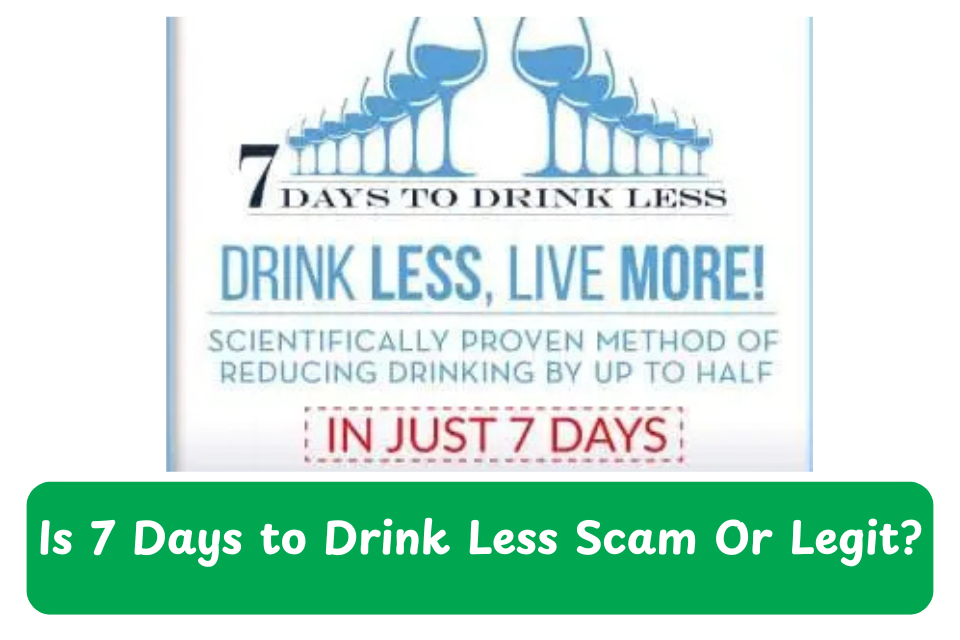
7 Days to Drink Less is an online audio hypnotherapy program by clinical hypnotherapist Georgia Foster, promoted as a way to reduce alcohol consumption in one week through recorded hypnosis sessions, psychological exercises, and guided assignments — without requiring total abstinence, a 12-step programme, or a doctor’s supervision. It is sold exclusively through the official site at 7daystodrinkless.com at a price that varies across promotional sources — affiliate review pages cite figures ranging from $47 to $150 for a single purchase. The programme is not a dietary supplement; it is a digital download. Despite being entirely digital, at least one promotional page displays a “LIMITED STOCK ALERT” banner, creates artificial urgency with “limited time offer” messaging, and claims the programme is equivalent to “seven one-on-one coaching sessions worth $4,200” with no source for that figure. A claimed 97% success rate is drawn from Georgia Foster’s own workshop participants, not from an independent clinical trial. The programme also notes that cravings, mood swings, and withdrawal-like symptoms can occur as the body adjusts — a contradiction of its own “no reported side effects” framing. This 7 Days to Drink Less review examines the programme’s real content, its marketing tactics, and the important safety warning that anyone dependent on alcohol should be aware of before starting.
7 Days to Drink Less has recently gained attention in the health and wellness market, particularly for its claims to help reduce alcohol consumption and support healthier habits. With many programs promising quick behavior change, it’s essential to question: Is 7 Days to Drink Less a scam or a legitimate program? In this article, we will dive deep into the facts, approach, and real user experiences to help you determine if 7 Days to Drink Less is a trustworthy solution.
What is 7 Days to Drink Less?
7 Days to Drink Less is marketed as a structured digital program designed to help individuals reduce their alcohol intake and build healthier drinking habits in just one week. According to its creators, the program uses a combination of behavioral strategies, mindset techniques, and step-by-step guidance to help users take control of their drinking patterns.
Does 7 Days to Drink Less Really Work?
7 Days to Drink Less claims to provide several benefits to its users, including:
- Reduced Alcohol Cravings: By addressing behavioral triggers, the program helps users manage urges more effectively.
- Improved Self-Control: It focuses on building discipline and awareness around drinking habits.
- Healthier Lifestyle Choices: The program encourages better routines and long-term habit changes.
The effectiveness of 7 Days to Drink Less is largely based on its structured approach and psychological techniques, which aim to create sustainable behavior change.
Key Components in 7 Days to Drink Less
The program includes several important elements designed to support users throughout the process. Some of the most notable components include:
- Daily Action Plan: A step-by-step 7-day structure that guides users through gradual habit changes.
- Behavioral Psychology Techniques: Helps identify triggers and build healthier responses.
- Mindset Training: Focuses on changing thought patterns related to alcohol consumption.
- Tracking and Awareness Tools: Encourages users to monitor progress and stay accountable.
- Lifestyle Guidance: Provides tips for maintaining long-term control and balance.
These components are widely used in habit-building and behavioral change programs, making them effective for many individuals.
Customer Reviews: What Are People Saying About 7 Days to Drink Less?
User feedback is an essential factor in determining whether a program is legitimate or a scam. Here’s a look at some common customer sentiments:
✅ Better Control Over Drinking: Many users report feeling more in control of their alcohol habits after completing the program.
✅ Increased Awareness: A significant number of users have claimed improved understanding of their triggers and behaviors.
✅ Positive Lifestyle Changes: Some customers have experienced broader health benefits, including better sleep and energy levels.
However, it’s important to note that results can vary, and long-term success often depends on personal commitment.
Is 7 Days to Drink Less a Scam or Legit?
Based on its structured approach, positive user feedback, and practical behavior-change methods, 7 Days to Drink Less appears to be a legitimate program rather than a scam. It focuses on realistic strategies and does not rely on unrealistic promises.
Why 7 Days to Drink Less Is Not a Scam
- Clear Program Structure: The system provides a step-by-step plan that users can follow easily.
- Positive Customer Feedback: Many users report improved control over their drinking habits.
- Proven Techniques: The program uses behavioral and psychological methods that are widely recognized.
Final Thoughts: Should You Try 7 Days to Drink Less?
7 Days to Drink Less is not a scam—it is a legitimate program that offers potential benefits for reducing alcohol consumption and building healthier habits. While individual results may vary, many users have experienced better control, improved awareness, and positive lifestyle changes.
However, as with any behavior-change program, success depends on consistency and personal effort, and those with serious alcohol dependency should seek professional medical advice.
Where to Buy 7 Days to Drink Less
To ensure you receive the official and complete program, purchase 7 Days to Drink Less from its official website or trusted online platforms.
7 Days to Drink Less Review Analysis Summary
Our Rating: ★★☆☆☆ 2.3/5
Summary
- ✗ A “LIMITED STOCK ALERT” banner appears for a fully digital product that cannot run out of stock — this is a manufactured urgency tactic with no factual basis.
- ✗ The claimed 97% success rate comes from Georgia Foster’s own workshop surveys, not from an independently conducted and published clinical trial of the programme.
- ✗ Pricing varies across promotional sources from $47 to $150 with no consistent official price visible at the time of writing, making it difficult to know what the current purchase actually costs.
- ✗ The programme warns that sudden alcohol reduction can cause withdrawal symptoms, yet this risk is not clearly communicated in the main marketing, and the programme explicitly positions itself as a tool to use without medical supervision.
⚠ Verdict: Caution
What Is 7 Days to Drink Less?
7 Days to Drink Less is a seven-day online audio programme created by Georgia Foster, who describes herself as a clinical hypnotherapist with over two decades of practice. The programme is delivered entirely online through 7daystodrinkless.com and is positioned as a cutting-back programme rather than a sobriety or abstinence course. It combines audio hypnosis recordings, psychological exercises, and daily written assignments designed to reduce the emotional and habitual triggers of excessive drinking. Foster’s companion book, Drink Less in 7 Days, published by Red Door Publishing, covers similar ground in written format. The digital programme is the core commercial offering. Unlike supplements, it contains no pills, capsules, or physical ingredients — it is a set of audio files and exercise materials accessed online after purchase. Georgia Foster has discussed the programme in podcasts and media appearances over several years, and it appears to have been available in some form since the mid-2010s. Pricing is inconsistently reported across promotional and affiliate sources, with one review site citing $47 and others citing $89 or $139 (described as discounted from a higher figure), and one direct mention of $150 as the purchase price. A 60-day money-back guarantee is described across most promotional sources. The programme is explicitly not designed for people with severe alcohol dependence; it is positioned as a tool for habitual or social drinkers who want to drink less rather than stop entirely.
Celebrity Endorsements and Testimonials
7 Days to Drink Less markets itself on the credentials of its creator, Georgia Foster, who is identified as a clinical hypnotherapist. While this is a real professional designation, the promotional content around the programme uses several unverifiable authority claims and testimonials that buyers should evaluate critically.
- Claimed 97% (or 95%) success rate: Some promotional pages cite a 97% success rate and others cite 95%, both described as coming from Georgia Foster’s own workshop surveys. These are self-reported figures from the programme’s own participants, not from an independent or double-blind clinical study. The methodology, sample size, and definition of “success” are not disclosed.
- Self-assigned 5-star rating: At least one promotional page gives 7 Days to Drink Less a 5/5 overall rating with no named platform, no reviewer count, and no independent validation. This rating is applied by the review page author, not by an independent aggregator.
- Unnamed satisfied participants: Testimonials quote people using first names and broad descriptions such as “reduced my drinking by 70 percent” without verifiable purchase dates, follow-up periods, or independent confirmation.
- “$4,200 equivalent” value claim: The programme is said to be equivalent to seven individual coaching sessions at $600 each. No source, market survey, or basis is given for the per-session price, making this an unverifiable value justification.
Georgia Foster is a named, verifiable practitioner, which distinguishes this product from many supplement schemes. However, the statistics and testimonials used to sell the programme are derived from the programme’s own ecosystem and should not be treated as independent clinical evidence.
Fake News Websites and Paid Press Releases
The search results for 7 Days to Drink Less are dominated by affiliate review pages hosted on S3 buckets and templated review sites, all using urgency-based titles to capture buyers who are researching the product. These pages share consistent patterns:
- They use titles containing words like “complaints,” “scam,” “side effects,” and “official website” to rank in searches by people who are already concerned about the product’s legitimacy
- They host promotional videos on Amazon S3 and similar cloud storage addresses, making the links look neutral when the content is advertorial
- They display “LIMITED STOCK ALERT” and “LOWEST PRICE GUARANTEED” banners for a digital download, language that has no factual basis for a product with no physical inventory
- They cite inconsistent prices and “percentage off” claims against inflated reference prices that cannot be verified against a published standard price list
- They describe Georgia Foster’s credentials in glowing terms without linking to any verifiable professional registration or licensing record
One review site that calls itself “Consumer View Reports” describes itself as an independent evaluator while earning affiliate commissions on purchases made through its links. The difference between independent journalism and affiliate marketing is material: an affiliate reviewer has a direct financial incentive to drive sales, while an independent journalist does not.
Claims vs. Reality: Does 7 Days to Drink Less Really Work?
The marketing for 7 Days to Drink Less makes several bold claims about speed of results, safety, and success rates. Comparing these against what is independently verifiable reveals important gaps.
| Claims made by 7 Days to Drink Less | Reality Based on Investigation |
|---|---|
| 97% success rate in reducing alcohol consumption | Figure comes from Georgia Foster’s own workshop surveys, not an independent clinical trial; no sample size, methodology, or follow-up period is disclosed |
| “No reported side effects” | The programme’s own content acknowledges that cravings, mood swings, and withdrawal-like symptoms can occur during and after the seven days |
| Digital delivery with “limited stock” warning | A digital product cannot run out of stock; “LIMITED STOCK ALERT” is a manufactured urgency tactic with no factual basis |
| Equivalent to $4,200 in individual coaching | The $600-per-session figure is unverified and unsourced; no market survey or basis is given |
| Results in seven days for anyone who drinks too much | The programme itself states it is not effective for severe alcohol dependence and may be insufficient for long-standing drinking habits within a single week |
| Price is $47 (or $89, or $139, or $150) | No consistent price appears across promotional sources; buyers cannot confirm the actual purchase price before clicking through |
8 Red Flags in How 7 Days to Drink Less Is Sold
Our investigation identified eight clear red flags in the marketing of 7 Days to Drink Less. These are based on promotional page content and marketing tactics, not on the programme materials themselves.
- “LIMITED STOCK ALERT” for a Digital Download: The promotional material for 7 Days to Drink Less includes scarcity warnings — “limited stock,” “limited time offer,” and “lowest price guaranteed” — for a product that exists as audio files and online exercises. Digital downloads have no physical inventory that can run out. Using scarcity language for a digital product is a manufactured psychological pressure tactic designed to rush buyers past careful evaluation.
- Conflicting Prices Across Promotional Sources: Depending on which review page or promotional source a buyer finds first, the programme’s price appears as $47, $89, $139, or $150. None of these pages clearly state the current official price without a percentage-off claim against a “regular” reference price. Buyers cannot easily confirm what they will pay before clicking through to purchase.
- Self-Reported 95–97% Success Rate: A near-perfect success rate is used as a central selling point. This figure originates from Georgia Foster’s own workshop surveys, not from an independent clinical evaluation. The definition of “success” — for example, whether it means any reduction at all versus sustained reduction over months — is not explained, and no follow-up period is given to measure whether results last beyond the seven days.
- Self-Assigned 5-Star Rating: At least one promotional page assigns the programme a perfect 5/5 stars in its summary review, using language that implies independent scoring while the page itself earns affiliate commissions. No named review platform, aggregated user count, or blind methodology is cited for this rating.
- “No Side Effects” Contradicted by the Programme’s Own Warnings: The marketing language includes “no reported side effects” framing, while the programme’s own content acknowledges that participants may experience cravings, mood shifts, sleep disruption, and withdrawal-like symptoms as their drinking pattern changes. These are real physiological responses that represent real risks for some users.
- Safety Risk Insufficiently Disclosed in Marketing: Abrupt or rapid reduction of heavy alcohol consumption can cause serious physiological withdrawal, including seizures and delirium tremens in people with severe dependence. This risk is acknowledged in the programme’s fine print but is not prominently disclosed in the headline marketing, which focuses on ease and speed of results without a clear “consult a doctor first” message for heavy drinkers.
- Unverifiable $4,200 Value Justification: The claim that the programme replaces seven individual sessions worth $600 each is presented as a concrete financial comparison with no source. This figure serves purely to make the purchase price appear small in comparison, not to provide verified market data.
- Affiliate-Controlled Information Environment: Almost every search result for “7 Days to Drink Less review” or “7 Days to Drink Less complaints” leads to an affiliate page with financial incentive to produce a favourable review and link to the purchase page. The near-absence of neutral third-party journalism, peer-reviewed study results, or independent complaint records makes it impossible to evaluate the programme’s real-world effectiveness from public sources alone.
Is 7 Days to Drink Less Scam or Legit?
7 Days to Drink Less is not an outright scam, but it requires caution before purchase. Georgia Foster is a real named practitioner with a real professional history in hypnotherapy. The programme’s core approach — using hypnotic techniques to address the psychological and emotional underpinnings of habitual drinking — has a legitimate basis in clinical hypnotherapy practice, and a companion book was published through a real publisher. The concerns here are not about fraud but about marketing honesty and risk communication. The programme uses artificial scarcity for a digital product, promotes an unverified self-reported success rate as if it were a clinical finding, offers no clear consistent price to buyers before they click through, and fails to prominently warn heavy drinkers that rapid alcohol reduction carries medical risks. For people who drink habitually but are not alcohol-dependent, the programme may be a reasonable option. For anyone who drinks heavily every day or has attempted to stop before and experienced withdrawal symptoms, a doctor should be consulted before starting any alcohol reduction programme, including this one.
What 7 Days to Drink Less Lacks vs. What a Legit Product Should Have
Comparing 7 Days to Drink Less against the standards a credible health or behaviour-change programme should meet highlights several areas for improvement.
| 7 Days to Drink Less | A Legit Alcohol Reduction Programme |
|---|---|
| Success rate from creator’s own workshop surveys, not an independent trial | Effectiveness supported by independently published clinical research with defined outcome measures and follow-up periods |
| “LIMITED STOCK ALERT” and urgency framing for a digital product | Honest marketing that does not manufacture false scarcity for a product that cannot run out of stock |
| Conflicting prices ($47 to $150) across promotional pages | A single, clearly displayed price on the official site that is consistent across all channels |
| Insufficient front-page safety warning about alcohol withdrawal risk | Prominent “consult a doctor before starting” warning for anyone with heavy or long-term alcohol use, given alongside the marketing headline |
| Affiliate ecosystem controls most available “reviews” | Independent user reviews on neutral platforms such as Trustpilot or consumer forums, or published in peer-reviewed journals |
| No stated medical credential of the programme’s reviewer or backing medical body | Clinical endorsement from a named medical association, addiction specialist, or NHS/NIAAA-affiliated body with verifiable credentials |
7 Days to Drink Less Complaints and Reviews
We searched Trustpilot, Reddit, the Better Business Bureau, and independent review platforms for verified 7 Days to Drink Less feedback from buyers who had completed the programme.
Trustpilot
Source: trustpilot.com
No Trustpilot profile was found for 7daystodrinkless.com or for Georgia Foster’s wider practice. No independent star-rated consumer reviews are publicly available through this platform.
Reddit
Source: reddit.com
We found no substantial Reddit thread of verified buyers discussing their results with 7 Days to Drink Less. Mentions of the programme appear in the context of alcohol harm reduction forums where some posters note the programme requires genuine motivation and is less effective for people with serious dependence, consistent with its own stated limitations.
Better Business Bureau
Source: bbb.org
No BBB profile appeared for Georgia Foster or 7daystodrinkless.com. No formal complaint record is publicly available, which also means no accreditation or track record review is accessible through that channel.
Podcast and Media Appearances
Source: The 1000 Days Sober Podcast, Mindfulness Mode Podcast
Georgia Foster has appeared on harm reduction and wellness podcasts, where she presents the programme in a measured way, acknowledging it is not for everyone and is not a substitute for addiction treatment. This is a more honest framing than the marketing pages suggest.
Affiliate Review Sites
Source: customerviewreports.com and templated S3-hosted pages
All search-visible “reviews” are affiliate pages with purchase links. One review site describes itself as run by a “Dr. Sam D Granger” but the article itself repeatedly refers to the product as a “supplement” even though it is a digital course, suggesting the review is templated content not actually written about this specific product.
The absence of verified buyer feedback on neutral platforms makes it impossible to assess real-world completion rates, how long results last, or how the seller handles support and refund requests. Anyone considering the programme should search for genuine buyer accounts in alcohol harm reduction communities before purchasing.
7 Days to Drink Less Programme Components
Unlike supplement reviews, 7 Days to Drink Less contains no physical ingredients. The “active components” are the programme’s digital content. Based on available descriptions, the programme includes the following elements, though the actual session-by-session content is not publicly disclosed in detail.
- Audio Hypnosis Sessions: The core of the programme. Georgia Foster records guided hypnosis tracks intended to address the subconscious motivations and emotional cues associated with habitual drinking. The number of tracks, their lengths, and the exact hypnotic techniques used are not publicly detailed on the sales page.
- Psychological Exercises: Daily written or reflective exercises designed to identify personal drinking triggers, emotional states linked to alcohol use, and patterns of self-talk that reinforce drinking behaviour.
- Daily Assignments: Structured tasks to complete over the seven-day period, intended to practise new responses to drinking triggers without necessarily requiring immediate abstinence.
- Mindfulness and Stress Reduction Elements: Some descriptions mention anxiety and stress components, reflecting Georgia Foster’s broader practice areas, which include anxiety treatment and self-esteem building alongside alcohol reduction.
- No Medical Monitoring: The programme is entirely self-administered with no clinical oversight. There is no protocol for checking in with a professional, and the programme does not assess a buyer’s level of alcohol dependence before they begin.
- Companion Book (separate purchase): Drink Less in 7 Days by Georgia Foster was published in print and covers the psychological approach in written form. This is a separately purchasable item, not included in the digital programme by default.
7 Days to Drink Less Ratings
Independent ratings for 7 Days to Drink Less are virtually absent, with promotional pages applying their own scores in the absence of neutral platform data.
| Website | Ratings | Reliability |
|---|---|---|
| Official Site | Not prominently displayed at time of writing | No data. No independent star-rating system on the official site was found. |
| Trustpilot | No profile found | No data. No independent buyer ratings available. |
| Amazon (book) | Companion book may have ratings | Partial data. Book ratings reflect the written guide, not the digital programme. |
| Affiliate Review Pages | 5/5 (self-assigned by affiliate reviewer) | Unreliable. Rating is applied by the same page that earns a commission from purchases. |
| BBB | No profile found | No data. No business profile or complaint record surfaced. |
7 Days to Drink Less Scam Risk Score
7 Days to Drink Less was evaluated across five critical categories adapted to reflect a digital programme rather than a physical supplement.
| Metric | Risk Score (0-10) | How We Rated It |
|---|---|---|
| Unverified Claims | 7/10 | 97% success rate from own surveys; “$4,200 equivalent” with no source; “no side effects” contradicted by the programme’s own content. |
| Content Transparency | 3/10 | Digital programme with no physical ingredients; session content and creator credentials are publicly verifiable; programme components are broadly described. |
| Customer Complaints | 5/10 | No independent complaint record found; 60-day guarantee mentioned; no neutral platform reviews. |
| Seller Transparency | 5/10 | Georgia Foster is a named creator; official site exists; no full company registration, no BBB profile. |
| Marketing Honesty | 7/10 | “LIMITED STOCK” for a digital product; conflicting prices; urgency framing; undisclosed safety risk for heavy drinkers in headline marketing. |
| Overall Scam Risk Score | 5.4 / 10 | Caution |
Fake and Lookalike 7 Days to Drink Less Websites
The search environment for 7 Days to Drink Less is dominated by affiliate and templated content rather than outright fake official sites, but buyers should still be aware of these patterns.
| Website URL Types | Warning Signs / Notes |
|---|---|
| S3-Hosted “Review” Videos | Promotional video links hosted on thejournalhub.s3.amazonaws.com and spurjobs-public.s3.amazonaws.com appear in search results as reviews; the AWS S3 URL signals cloud-hosted affiliate content, not journalism. |
| Affiliate Review Sites | Pages on customerviewreports.com and similar sites use titles mimicking independent consumer reporting but earn commissions from each purchase referred, and some appear to reuse review templates not written specifically for this product. |
| Inconsistent Pricing Pages | Different promotional pages show $47, $89, $139, and $150 for the same programme, with discounts framed against different “regular” prices, making it impossible to confirm the real current cost without visiting the official site. |
| Official Site (7daystodrinkless.com) | The official site appears to be the legitimate purchase point, but buyers should verify the exact URL and confirm the price before completing any checkout. |
How We Investigated 7 Days to Drink Less
Our review of 7 Days to Drink Less followed a structured approach suited to evaluating a digital behaviour-change programme rather than a physical supplement.
Identifying the Product Type: We confirmed early in the investigation that 7 Days to Drink Less is a digital audio programme, not a supplement, drug, or medical device. This distinction matters because the marketing content contains supplement-style language (“side effects,” “ingredients,” “stock”) that does not apply to a digital download.
Researching the Creator: We verified Georgia Foster as a real named clinical hypnotherapist with a documented practice history, podcast appearances, and a published companion book. This distinguishes the product from entirely anonymous or fabricated supplement brands.
Searching for Customer Feedback: We searched Trustpilot, Reddit, the Better Business Bureau, and alcohol harm reduction communities for genuine programme reviews. We noted the near-complete absence of verified independent buyer accounts and the dominance of affiliate content in search results.
Evaluating Marketing Claims: We compared the claimed 97% success rate against how it was generated, checked the pricing inconsistencies across promotional sources, and assessed the “limited stock” language against the reality of a digital download. We also examined the safety warning gap for buyers with alcohol dependence.
Assessing Refund Terms: We confirmed that a 60-day money-back guarantee is cited across multiple sources and investigated what the refund process involves for a digital product with no physical return requirement.
How to Identify Risky Alcohol Reduction Products Like 7 Days to Drink Less
To make an informed purchase decision about alcohol reduction programmes, watch for these warning signs.
Scarcity Warnings for Digital Products: Any digital download, audio course, or online programme that displays “limited stock” or “selling fast” alerts is using manufactured urgency. Digital files have no physical inventory limit. This tactic is designed to prevent careful evaluation.
Self-Reported Success Rates Used as Clinical Evidence: A success rate from a creator’s own workshop is not equivalent to a randomised controlled trial. Ask whether the effectiveness data comes from an independent study with a defined outcome measure and a follow-up period of months, not days.
Missing or Buried Safety Warnings for Heavy Drinkers: Any programme that helps reduce alcohol consumption should prominently warn that people who drink heavily every day may experience serious medical withdrawal. If this warning is in the fine print rather than the headline marketing, the seller is prioritising sales over safety.
Inconsistent Pricing: If you see different prices for the same product on different pages, the price you pay may not be the lowest available, or the promotional “regular” price used to calculate a discount may be inflated.
No Independent Clinical Validation: A published, peer-reviewed trial would provide much stronger evidence of effectiveness than workshop surveys or testimonials. Very few digital self-help programmes have been tested this way, but its absence is a fact buyers should acknowledge before purchasing.
7 Days to Drink Less Risks and Side Effects
7 Days to Drink Less is a digital audio programme with no physical ingredients, so conventional supplement side effects do not apply. However, the process of reducing alcohol consumption carries real physiological and psychological risks that the programme’s front-page marketing does not fully communicate.
- Alcohol withdrawal symptoms: For people who drink heavily every day, reducing consumption can trigger withdrawal, including anxiety, tremor, insomnia, sweating, and in severe cases seizures or delirium tremens. This is a genuine medical risk that requires clinical supervision for heavy drinkers.
- Cravings and mood shifts: The programme itself acknowledges these can occur during the seven days as the body and mind adjust to changed drinking patterns. This contradicts the “no side effects” framing used in some promotional material.
- Sleep disruption: Alcohol suppresses REM sleep, and reducing intake can initially worsen sleep quality as normal sleep patterns are restored.
- Emotional processing: Hypnotherapy can surface subconscious emotional content. For people with trauma, depression, or anxiety linked to their drinking, the process of engaging with those emotions without professional support may be distressing.
- Ineffectiveness for severe dependence: The programme states it is not designed for people with serious alcohol use disorder. Using it as a substitute for addiction treatment in that population carries the risk of delayed access to appropriate medical care.
- No clinical monitoring: Because the programme is entirely self-administered, there is no professional oversight to detect warning signs, adjust the approach, or escalate care if a participant’s situation is more serious than the programme is designed to handle.
Important: If you drink heavily every day, have experienced withdrawal symptoms before, or are unsure of your level of alcohol dependence, speak to a doctor before starting any alcohol reduction programme, including this one.
7 Days to Drink Less Refund Process
A 60-day money-back guarantee is described across most promotional sources for 7 Days to Drink Less. Because this is a digital product, the refund process differs from supplement returns.
- Contact support through the official site at 7daystodrinkless.com and request a refund in writing, stating the date of purchase and the order reference number.
- Keep the original purchase receipt and the email confirmation of your purchase as documentation of the guarantee period.
- Because the product is digital and can be accessed immediately after purchase, confirm with the seller’s support whether the money-back guarantee applies regardless of whether you have downloaded or listened to the content.
- Screenshot the guarantee terms as shown on the official site at the time of your purchase, because promotional terms can change.
- If the seller does not respond or declines the refund, contact your bank or payment card issuer and request a chargeback, providing the documented guarantee as evidence of the agreed terms.
- If the programme was purchased through a third-party platform, check whether that platform has its own dispute resolution process.
Final Verdict: Is 7 Days to Drink Less Worth It?
7 Days to Drink Less is a real programme from a real practitioner, but its marketing overstates what it delivers and understates who should not use it without medical advice. Georgia Foster is a verifiable clinical hypnotherapist with a genuine professional background, and the programme’s approach — using hypnosis to address emotional and habitual drinking triggers — has a legitimate conceptual basis. The concerns here are about how it is marketed: artificial scarcity for a digital download, inconsistent pricing, an unverified near-100% success rate presented as if it were a clinical finding, and insufficient front-page safety warnings for people whose drinking habits put them at medical risk from rapid reduction. For people who drink habitually but are not physically dependent on alcohol, the programme may be worth exploring at the right price. For anyone who drinks heavily every day, has tried to stop before, or has experienced any withdrawal symptoms, see a doctor before starting this or any alcohol reduction programme. Alcohol withdrawal can be life-threatening and requires clinical supervision.
Frequently Asked Questions (FAQ)
How do I know if 7 Days to Drink Less is real?
It is a real programme created by Georgia Foster, a named clinical hypnotherapist with a verifiable professional history. The companion book was published by a real publisher. The marketing tactics used to sell the programme are more problematic than the product itself.
What are the side effects of 7 Days to Drink Less?
For people who drink heavily, reducing alcohol consumption can cause withdrawal symptoms including anxiety, tremor, insomnia, and in severe cases seizures. The programme acknowledges cravings and mood shifts may occur. These risks are not prominently disclosed in headline marketing.
Is 7 Days to Drink Less safe to use?
For habitual drinkers who are not physically dependent, the programme is likely safe to try. For people who drink heavily every day or have tried to stop before, the risk of medical withdrawal means a doctor should be consulted first.
Has anyone used 7 Days to Drink Less? What were the results?
No verified independent reviews exist on neutral platforms. Georgia Foster’s own workshop surveys report 95–97% success, but methodology and follow-up details are not disclosed. Some podcast discussions reflect modest, realistic expectations about the programme’s scope.
Is 7 Days to Drink Less approved by the FDA or NHS?
No. It is a digital self-help programme and is not an approved medical treatment. It is not designed to replace medical or psychiatric care for alcohol use disorder.
Where can I buy 7 Days to Drink Less?
The official site is 7daystodrinkless.com. Verify the exact current price there before purchasing, as affiliate pages show widely varying prices.
Are there fake 7 Days to Drink Less websites?
There are many affiliate review and promotional pages in search results that use editorial-sounding titles while earning commissions from purchases. These are not independent reviews.
Does 7 Days to Drink Less really work?
There is no published independent clinical trial of the programme. Effectiveness data comes from the creator’s own surveys. It is positioned as a tool for habitual drinkers, not a treatment for alcohol dependence.
Who made 7 Days to Drink Less?
Georgia Foster, a clinical hypnotherapist with a private practice history and a published companion book, created the programme.
How can I avoid scams when buying alcohol reduction programmes online?
Look for independent clinical evidence, a verifiable creator identity, neutral platform reviews, and clear pricing without artificial urgency. Always consult a doctor before making significant changes to your alcohol consumption.
Are there real customer reviews for 7 Days to Drink Less?
No neutral platform reviews were found. Podcast discussions offer a more balanced view than affiliate review pages. The companion book on Amazon may have reader reviews that provide additional perspective.