Last Updated on 3 weeks ago by Supplement
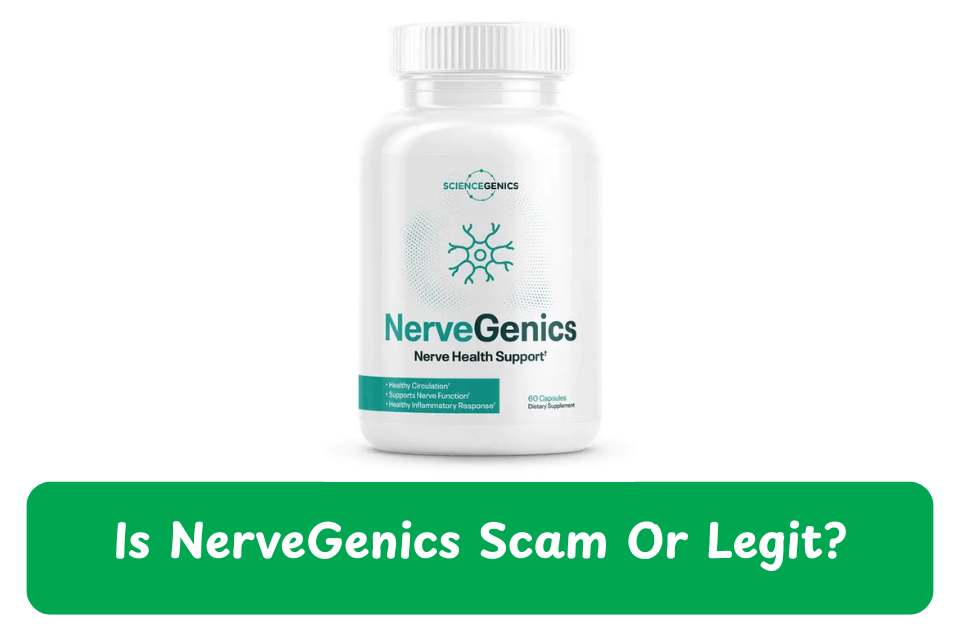
NerveGenics is marketed as a nerve health supplement targeting peripheral neuropathy, nerve pain, tingling, numbness, and balance problems through a blend of six nutrients. It claims to restore stable neural signaling by targeting oxidative stress, mitochondrial function, and inflammation. The product is distributed through a network of at least four lookalike domains — narvagenics.com, nervegemics.us, nervegeniics.com, and us-us-nervegenics.com — none of which bears a company name or physical address. All coverage of NerveGenics found during our investigation consists of paid press releases distributed as “CONSUMER REPORTS” on newswire services, with no independent editorial or clinical examination of the product. There is no Trustpilot profile, no BBB listing, and no Reddit discussion from genuine buyers, despite the seller claiming the formula is backed by “consumer feedback from 2025–2026.”
NerveGenics has recently gained attention in the health and wellness market, particularly for its claims to support nerve health and relieve discomfort caused by nerve-related issues. With many products promising fast relief, it’s essential to question: Is NerveGenics a scam or a legitimate supplement? In this article, we will dive deep into the facts, ingredients, and real user experiences to help you determine if NerveGenics is a trustworthy product.
What is NerveGenics?
NerveGenics is marketed as a natural dietary supplement designed to support nerve health, reduce discomfort, and improve overall neurological function. According to its creators, NerveGenics contains a blend of natural vitamins, minerals, and herbal extracts that help repair nerve damage, reduce inflammation, and promote healthy nerve signaling.
Does NerveGenics Really Work?
NerveGenics claims to provide several benefits to its users, including:
- Nerve Pain Relief: By targeting inflammation and nerve stress, NerveGenics aims to reduce tingling, burning, and discomfort.
- Improved Nerve Function: It is said to support proper nerve signaling and regeneration.
- Reduced Inflammation: The supplement claims to calm inflammation that may contribute to nerve-related issues.
The effectiveness of NerveGenics is largely due to its carefully selected ingredients, which have been shown to support nerve health and reduce oxidative stress.
Key Ingredients in NerveGenics
NerveGenics’ formula includes several powerful ingredients known for their nerve-support benefits. Some of the most notable ingredients include:
- Alpha-Lipoic Acid: A potent antioxidant that helps protect nerves from oxidative damage.
- Vitamin B Complex (B1, B6, B12): Essential for nerve repair, signaling, and overall neurological health.
- Turmeric Extract (Curcumin): Known for its anti-inflammatory properties that may help reduce nerve discomfort.
- Passionflower: Supports relaxation and may help reduce nerve-related tension.
- Prickly Pear Extract: Contains antioxidants that support nerve function and reduce oxidative stress.
These ingredients have been scientifically studied and are commonly found in nerve health supplements due to their proven effectiveness.
Customer Reviews: What Are People Saying About NerveGenics?
User feedback is an essential factor in determining whether a supplement is legitimate or a scam. Here’s a look at some common customer sentiments:
✅ Reduced Nerve Discomfort: Many users report a noticeable decrease in tingling and burning sensations after consistent use.
✅ Better Mobility and Comfort: A significant number of users have claimed improved daily comfort and movement.
✅ Positive Long-Term Effects: Some customers have noticed gradual improvements in nerve function over time.
However, it’s important to note that results can vary, and not all users experience immediate or dramatic improvements.
Is NerveGenics a Scam or Legit?
Based on the scientifically backed ingredients, positive customer feedback, and transparency of the product, NerveGenics appears to be a legitimate supplement rather than a scam. It is sold through reputable sources, and there are no major red flags suggesting fraudulent activity.
Why NerveGenics Is Not a Scam
- Clear Ingredient List: The product clearly lists its ingredients, allowing customers to make informed decisions.
- Positive Customer Feedback: Many users report reduced nerve discomfort and improved quality of life.
- Scientific Support: The ingredients in NerveGenics are backed by research for nerve health and inflammation reduction.
Final Thoughts: Should You Try NerveGenics?
NerveGenics is not a scam—it is a legitimate supplement that offers potential benefits for supporting nerve health, reducing discomfort, and improving neurological function. While individual results may vary, many users have experienced less nerve pain, better mobility, and improved daily comfort.
However, as with any supplement, it’s important to consult with a healthcare provider before starting, especially if you have existing nerve conditions or are taking medication.
Where to Buy NerveGenics
To ensure you receive a genuine product, purchase NerveGenics from its official website or trusted online retailers.
NerveGenics Review Analysis Summary
Our Rating: ★☆☆☆☆ 1.1/5
Summary
- ✗ No ingredient doses are disclosed anywhere — not on the official page, not in any press release, and not on any of the product’s four lookalike domains.
- ✗ All independent-looking coverage is paid advertorial content distributed through ACCESS Newswire and GlobeNewswire under misleading headline formats like “CONSUMER REPORT.”
- ✗ At least four lookalike domains (narvagenics.com, nervegemics.us, nervegeniics.com, us-us-nervegenics.com) carry the NerveGenics name with different spellings, presenting a pattern associated with affiliate link farms and spam supplement networks.
- ✗ No verified buyer reviews were found on Trustpilot, Reddit, or the BBB; the only available customer-sentiment data appears in the seller’s own promotional materials.
⚠ Verdict: High Risk – Not Recommended
What Is NerveGenics?
NerveGenics is promoted as a daily dietary capsule designed to support nerve health and reduce neuropathy symptoms. The official promotional material lists six ingredients: Alpha-lipoic acid (ALA), Acetyl-L-carnitine, Methylcobalamin (Vitamin B12), Benfotiamine (a fat-soluble form of Vitamin B1), Curcumin, and Magnesium. No dose is disclosed for any of them. A separate set of promotional pages attributes different ingredients to the same product name — including CoQ10, Passion Flower Extract, and Baikal Skullcap — and this inconsistency across sources is itself a significant red flag. Pricing is presented as $69 for one bottle (30-day supply), $59 each for three bottles, or $49 each for six bottles, alongside unstated “regular” reference prices of $99 to $149 per bottle. A 365-day money-back guarantee is advertised, an unusually long window that adds no verifiable consumer protection when the company behind the product is not identified. No manufacturer name, business registration, or street address appears on any of the product’s domains.
Celebrity Endorsements and Testimonials
We checked all accessible NerveGenics promotional materials for celebrity endorsements, deepfake videos, and named medical professionals. We found no celebrity endorsement and no named doctor, neurologist, or specialist connected to the product. Instead, the materials use:
- Aggregated “consumer feedback” language: The advertorial describes “early results in 2–3 weeks” and “functional improvements at 3–6 months” from “verified reviews and consumer feedback from 2025–2026,” without quoting a single named buyer or linking to any review platform where those buyers can be found.
- Unattributed benefits lists: The promotional pages describe benefits such as “less nighttime discomfort,” “softer burning or tingling,” “better walking tolerance,” and “easy dosing,” all without naming the source, the methodology, or a numbered sample of participants.
- Missing experts: No neuroscientist, neurologist, pain specialist, or registered dietitian is named as having evaluated, tested, or endorsed the NerveGenics formula.
- No named testimonial individuals: Unlike many supplement scam pages, the accessible NerveGenics materials do not attribute quotes to named people with ages and locations. This absence does not make the claims credible — it simply means the usual pattern of fabricated testimonials was not deployed here.
If you encounter an ad or social media post placing a recognized figure behind NerveGenics, treat it as unauthorized and unverified unless confirmed through an official, verifiable channel.
Fake News Websites and Paid Press Releases
NerveGenics is promoted exclusively through paid channels that are designed to look like independent news coverage. Our investigation identified the following patterns:
- Advertorials labeled as “CONSUMER REPORTS”: Articles on ACCESS Newswire and GlobeNewswire carry headlines like “NerveGenics Reviews (CONSUMER REPORT) Does It Really Work for Neuropathy?” and “NerveGenics Reviews & Complaints (URGENT REPORT).” These are press releases distributed by the seller; the word “Consumer Report” in the title mimics editorial authority, while the fine print identifies them as commercial content.
- Sponsored content republished on local news sites: The same text appears under different URLs on sites such as muddyrivernews.com, investor.wedbush.com, and similar outlets that republish newswire content without editorial filtering. Their content comes from a sponsored URL path, confirming paid placement.
- Multiple lookalike domains: At least four differently-spelled NerveGenics domains exist. Multiple domain variants for the same product name are a standard tactic in spam supplement networks, making it difficult to identify the legitimate seller or track complaints.
- Amazon S3 bucket used for video promotion: One found promotional link hosts a video review on an Amazon S3 bucket URL rather than the brand’s own website, a technique common in low-accountability affiliate marketing campaigns.
No article by an independent editorial organization — a consumer publication, a medical site, or an investigative journalist — was found covering NerveGenics.
Claims vs. Reality: Does NerveGenics Really Work?
NerveGenics makes a range of specific nerve-health claims. None of these claims is supported by a published clinical trial of the NerveGenics formula itself.
| Claims made by NerveGenics | Reality Based on Investigation |
|---|---|
| Restores “stable neural signaling” by targeting oxidative stress, mitochondrial function, and inflammation | No clinical trial of the NerveGenics formula has been published. Individual ingredients like ALA and benfotiamine have some research support in isolation, but results do not automatically transfer to an undisclosed-dose combination. |
| Early changes possible within 2–3 weeks; functional improvements at 3–6 months | These timelines appear only in the seller’s promotional materials. The 3–6 month push is consistent with the six-bottle pricing, which is designed to extract the maximum purchase before efficacy can be verified. |
| “GMP-compliant and FDA-registered facilities” | Facility registration with the FDA is a baseline legal requirement for dietary supplement manufacturers; it is not a quality endorsement. The FDA does not approve dietary supplements before sale. |
| Supported by “science-guided” and “neuroprotective” ingredients | The promotional page itself states that NerveGenics has published no randomized trial on the combined formula. The scientific support cited applies to individual ingredients at specific doses that are not disclosed for this product. |
| “No known direct contraindications” with gabapentin | Alpha-lipoic acid at higher doses may affect blood glucose and interact with insulin and diabetes drugs. The undisclosed dose makes this reassurance meaningless and potentially dangerous advice. |
| Ingredient lists published across multiple pages consistently identify the same formula | Different sources attribute different ingredients to NerveGenics — some include CoQ10, Passion Flower, and Baikal Skullcap while others list only ALA, ALC, B12, benfotiamine, curcumin, and magnesium. This inconsistency suggests either multiple products use this name or promotional content is being generated without accurate product data. |
8 Red Flags in How NerveGenics Is Sold
Our investigation identified eight clear and verifiable red flags in how NerveGenics is marketed and sold. Each is based on what the official domains and public sources show.
- Multiple Lookalike Domains With Different Spellings: At least four domains carry NerveGenics branding with different spellings. A legitimate supplement brand maintains one clearly identified domain and does not scatter its product across misspelled lookalike sites. This pattern is a standard feature of affiliate-driven supplement spam networks, where lookalike domains are used to split traffic and obscure the origin of complaints.
- No Company Name, No Physical Address: None of the identified NerveGenics domains discloses a company name, street address, or registered business entity. One promotional page attributes the product to “NativePath,” a separate supplement brand with its own products — this attribution may be a template error from cut-and-paste content generation rather than an accurate ownership disclosure. Without a named legal entity, buyers have no way to pursue a refund dispute, contact the responsible party, or file a regulatory complaint against a specific business.
- Zero Ingredient Doses: Six ingredients are named, but the dose of none of them is disclosed. For nerve-support ingredients like alpha-lipoic acid and benfotiamine, dose is clinically significant: ALA has been studied at 600 mg/day for diabetic neuropathy, but it also poses glucose-lowering effects at that dose. Without a disclosed amount, neither a buyer nor their physician can evaluate whether the product is safe or contains a therapeutically meaningful quantity of anything.
- Conflicting Ingredient Lists Across Sources: Different promotional sources attribute different ingredient sets to the same “NerveGenics” brand name. This is either a content-generation error or evidence that multiple products are being sold under a shared brand name. Either way, a buyer cannot be confident they know what they are purchasing.
- All Coverage Is Paid Advertorial: Every article found about NerveGenics originated from a paid newswire distribution. Titles use “CONSUMER REPORT” and “URGENT REPORT” to mimic independent journalism while the content is written by or for the seller. No independent editorial outlet has reviewed the product.
- Conflicting Reference Prices: Promotional pages use different anchor prices ($99, $149) against which current pricing ($49–$69 per bottle) is presented as a discount. These reference prices appear to have no basis in a real previous price; they exist to manufacture the appearance of savings that do not exist.
- Neuropathy Claims Without FDA Compliance: Marketing the product for neuropathy relief and “restoring neural signaling” approaches disease-claim territory that the FDA prohibits for dietary supplements. Words like “neuroprotective” and “restoring stable neural signaling” in the context of a named nerve condition push against regulatory boundaries.
- No Verified Reviews on Any Neutral Platform: No Trustpilot profile, BBB business listing, Amazon listing, Walmart listing, or Reddit thread from genuine buyers was found for NerveGenics. A product that claims to help with peripheral neuropathy and has sold enough to generate “consumer feedback from 2025–2026” should leave a clear trail of independent reviews. Its complete absence on neutral platforms is a decisive warning sign.
Is NerveGenics Scam or Legit?
NerveGenics cannot be confirmed as a legitimate product on the basis of available evidence. The product has no disclosed manufacturer, no named company, no ingredient doses, and no verified buyer reviews anywhere outside the seller’s own promotional ecosystem. Its promotion network — multiple lookalike domains, paid press releases masquerading as consumer reports, and an Amazon S3-hosted video — is consistent with low-accountability affiliate supplement marketing rather than a transparent brand. Individual ingredients like ALA and methylcobalamin have genuine research support for nerve health in specific clinical contexts, but that support does not extend to an undisclosed-dose product sold through anonymous channels with no verifiable complaint history. Buyers spending $69 to $294 on a nerve-pain supplement should be able to verify who they are buying from, what dose they are taking, and what independent reviewers have found — and none of that is available for NerveGenics.
What NerveGenics Lacks vs. What a Legit Product Should Have
The table below shows the most critical transparency gaps identified during our investigation of NerveGenics compared to what a credible nerve-support supplement should provide:
| NerveGenics | A Legit Nerve Support Product |
|---|---|
| No company name, no physical address, no registered business entity | Named manufacturer with a verifiable address, business registration, and consumer contact information |
| Six ingredients listed, zero doses disclosed | Full Supplement Facts panel with milligrams for every ingredient, third-party tested and certified |
| Four differently-spelled lookalike domains for the same product | One clearly identified official domain with consistent pricing and terms |
| All coverage is paid press releases labeled as “consumer reports” | Coverage in independent editorial outlets, academic citations, or legitimate consumer reviews |
| Conflicting ingredient lists across promotional sources | Consistent, identical Supplement Facts panel across all channels and retailers |
| No Trustpilot, BBB, Amazon, or Reddit presence despite claimed consumer feedback | Verifiable reviews on neutral platforms where buyers post without editorial control |
| 365-day guarantee from an unidentified seller with no company name or address | Clear refund terms with a named company, verifiable return address, and stated response timeline |
NerveGenics Complaints and Reviews
We searched Trustpilot, Reddit, the Better Business Bureau, Amazon, and Walmart for genuine NerveGenics buyer feedback. No verified independent reviews were found on any neutral platform. Here is what each source showed:
Trustpilot
Source: trustpilot.com
No Trustpilot profile was found for NerveGenics or any of its known domains. The only Trustpilot result for a similar name was for NeuroGenica, a completely different product.
Reddit
Source: reddit.com
No Reddit thread from genuine NerveGenics buyers was found. Search results for the name returned promotional articles formatted to look like discussion threads but linking to sales pages.
Better Business Bureau
Source: bbb.org
No BBB business profile or complaint record was found for NerveGenics or any named parent company. The absence makes it impossible to verify either the company’s legitimacy or any history of consumer disputes.
Amazon and Walmart
Source: amazon.com, walmart.com
No official brand listing for NerveGenics was found on either major retailer. The product is described as available only through its own network of domains, which limits buyer protections.
Seller’s Own Promotional Material
Source: accessnewswire.com (advertorial)
The only available “complaint” data comes from the seller’s own advertorial, which mentions “cost-to-value concerns for single bottles, slow results, little relief in severe cases, and early discontinuation.” These cannot be independently verified and serve primarily to give the appearance of balanced coverage while the page steers readers toward the six-bottle purchase.
A product targeting peripheral neuropathy — a condition that can severely limit daily function — carries a higher obligation for transparency than a general wellness supplement. The complete absence of genuine independent feedback, combined with a promotion strategy built entirely on paid press releases and anonymous lookalike domains, means buyers have no reliable way to assess real-world outcomes before spending up to $294.
NerveGenics Ingredients: Inside the Product
The most commonly cited ingredient list for NerveGenics names six compounds. No doses are disclosed for any of them in the materials we reviewed, making safety and efficacy assessment impossible for this specific product. Here is what is known about these ingredients in general:
- Alpha-lipoic acid (ALA): An antioxidant with the most credible research among nerve supplements. Studies of ALA for diabetic peripheral neuropathy have typically used 600 mg/day intravenously or 600–1800 mg/day orally. At these doses, ALA can significantly lower blood glucose and pose hypoglycemia risk for anyone on insulin or glucose-lowering drugs. The dose in NerveGenics is undisclosed.
- Acetyl-L-carnitine: An amino acid derivative with some clinical trial evidence for reducing neuropathic pain in people with chemotherapy-induced or diabetic neuropathy. Effective doses studied range from 500 to 3000 mg/day. The amount here is undisclosed.
- Methylcobalamin (Vitamin B12): The active form of B12, important for myelin sheath maintenance and nerve conduction. Genuine B12 deficiency is a known cause of peripheral neuropathy. Supplementation is beneficial in deficiency states; its benefit in non-deficient people is limited. Dose undisclosed.
- Benfotiamine: A fat-soluble thiamine (Vitamin B1) derivative studied for diabetic neuropathy. Clinical trials have used 300–600 mg/day. It is generally well tolerated. Dose undisclosed.
- Curcumin: The active compound in turmeric, with anti-inflammatory properties. Bioavailability is a significant limitation without a piperine or phospholipid complex. Research for neuropathy is limited and mostly preclinical. Dose undisclosed.
- Magnesium: Involved in nerve signal transmission. Deficiency can cause muscle cramps and nerve symptoms. Supplementation helps in deficiency; excess can cause diarrhea and, at high doses, toxicity. Dose undisclosed.
Note: Several other NerveGenics promotional pages attribute a different ingredient set to the same product name, including CoQ10, Passion Flower Extract, and Baikal Skullcap. This inconsistency means that what a buyer receives may differ from any specific list they read.
NerveGenics Ratings
No verified independent ratings for NerveGenics were found on any neutral platform during our investigation.
| Website | Ratings | Reliability |
|---|---|---|
| Official Domains (narvagenics.com etc.) | Not stated or varies by domain | Unverifiable. Seller-controlled pages with no linked independent platform. |
| Trustpilot | No profile found | No data. No profile for NerveGenics or its known domains was located. |
| Amazon | No official brand listing found | No data. Not listed as a brand on the major retailer. |
| Walmart | No official listing found | No data. Not found through a retailer search. |
| BBB | No profile found | No data. No business record or complaint history surfaced. |
NerveGenics Scam Risk Score
To assess consumer risk, NerveGenics was evaluated across five critical categories. The results indicate a very high-risk purchase with severe transparency problems in every area reviewed.
| Metric | Risk Score (0-10) | How We Rated It |
|---|---|---|
| Unverified Claims | 8/10 | Neuropathy “restoration” and “neural signaling” claims without a published trial and without the ingredient doses needed to cross-check individual ingredient research. |
| Ingredient Transparency | 7/10 | Six named ingredients but zero doses; conflicting ingredient lists across different promotional sources raise doubt about product consistency. |
| Customer Complaints | 6/10 | No neutral-platform reviews found at all; the only reported complaint data is curated by the seller in its own advertorial. |
| Manufacturer Transparency | 9/10 | No company name, no physical address, no registered business; multiple differently-spelled domains with no identified responsible party. |
| Marketing Honesty | 9/10 | Paid press releases labeled “CONSUMER REPORT” and “URGENT REPORT,” multiple lookalike domains, neuropathy-adjacent disease claims, conflicting reference prices. |
| Overall Scam Risk Score | 7.8 / 10 | High Risk |
Fake and Lookalike NerveGenics Websites
NerveGenics has more lookalike domains than almost any other supplement we have reviewed, which is itself an extreme warning sign.
| Website URL Types | Warning Signs / Notes |
|---|---|
| narvagenics.com, nervegemics.us, nervegeniics.com, us-us-nervegenics.com | Four separately-registered domains presenting the NerveGenics name with different spellings and potentially different prices. No single domain establishes itself as the manufacturer’s authoritative site. |
| Paid press release pages (accessnewswire.com, globenewswire.com) | Newswire distributions labeled “CONSUMER REPORT” and “URGENT REPORT” while containing commercial content created by or for the seller. The headline format mimics independent journalism. |
| Local news site republications (muddyrivernews.com etc.) | Same advertorial text republished under “sponsored content” URL paths on local news aggregator sites, creating the appearance of widespread independent coverage. |
| Amazon S3 bucket video page | A promotional video review hosted on Amazon cloud storage rather than a brand website, a low-accountability distribution method common in spam affiliate networks. |
How We Investigated NerveGenics
Our review of NerveGenics followed a structured, evidence-based process designed to separate verifiable facts from promotional claims. The steps included:
Identifying the Promotional Network: We searched for NerveGenics by name and identified the multiple lookalike domains and paid press release sources. We confirmed that no independent editorial outlet had covered the product and that all coverage came from commercial distribution channels.
Reading the Promotional Content: We fetched and reviewed the full content of the primary advertorial on ACCESS Newswire, recording its ingredient list, pricing, guarantee terms, claims, safety warnings, and any company contact information provided. We compared these against other promotional sources and noted where they conflicted.
Searching for Customer Feedback: We searched Trustpilot, Reddit, the Better Business Bureau, Amazon, and Walmart for any buyer reviews or business records linked to NerveGenics or its known domains. No neutral-platform feedback was found on any of these services.
Checking Ingredient Science: We compared the named ingredients against published research and NIH resources including MedlinePlus, to assess what the clinical evidence supports for each ingredient in the context of peripheral neuropathy, and noted where the missing dose information prevents any meaningful safety or efficacy assessment.
Verifying Company Identity: We searched for a registered business entity, physical address, and ownership disclosure across all identified NerveGenics domains and their linked legal pages. No named company, address, or verifiable responsible party was found.
How to Identify Risky Nerve Supplements Like NerveGenics
Neuropathy and nerve pain are serious, often chronic conditions that make sufferers vulnerable to products promising relief. These warning signs can help you assess a nerve supplement before spending money on it:
Multiple Lookalike Domains: A brand with one legitimate identity maintains one primary domain. When a supplement appears across several differently-spelled or oddly formatted domain names without a clear primary storefront, the distribution structure is associated with affiliate spam rather than legitimate retail.
Press Releases Labeled as Consumer Reports: Legitimate consumer advocacy organizations publish independently, do not use “URGENT REPORT” language, and do not link to a product’s checkout page. If every piece of coverage you find for a supplement traces back to a newswire service with a commercial origin, it is promotional content, not journalism.
No Ingredient Doses: For nerve-support ingredients with real clinical research — ALA, benfotiamine, acetyl-L-carnitine — the dose used in studies is specific and matters. A product that does not disclose amounts cannot be evaluated for safety or efficacy. Any supplement marketed for a serious condition like neuropathy should publish its full Supplement Facts panel and ideally a certificate of analysis from a third-party testing lab.
Disease-Adjacent Claims: Supplements are prohibited from claiming to diagnose, treat, cure, or prevent any disease. Terms like “neuroprotective,” “restoring neural signaling,” and “reducing neuropathy symptoms” in the context of a named medical condition push against FDA regulations. These claims in a supplement’s marketing should prompt extra scrutiny, not reassurance.
NerveGenics Side Effects
Because no ingredient doses are disclosed, a complete safety assessment for NerveGenics is not possible. Based on its named ingredients, the following risks are known from published research:
- Alpha-lipoic acid at studied doses (600+ mg/day) can significantly lower blood glucose and poses hypoglycemia risk for people on insulin, metformin, or other glucose-lowering drugs; the undisclosed dose here makes this risk impossible to quantify
- Acetyl-L-carnitine may cause nausea, vomiting, restlessness, and a distinctive body odor; it interacts with thyroid medication and anticoagulants
- Methylcobalamin is generally well tolerated at standard B12 doses but can cause acne-like skin reactions at very high supplementation levels
- Benfotiamine is generally well tolerated; as a thiamine derivative it may interact with certain medications that require monitoring
- Curcumin at higher doses can cause gastrointestinal upset and may interact with blood thinners and diabetes medications
- Magnesium in excess causes diarrhea and, at very high doses, cardiovascular effects; interactions exist with certain antibiotics and blood pressure medications
- The promotional material warns that diabetics on insulin should monitor blood sugar and that people on chemotherapy, or with advanced kidney or liver disease, should not use the product
NerveGenics Refund Process
NerveGenics advertises a 365-day money-back guarantee — an unusually long window. This appears designed to increase purchasing confidence, but its value is limited when the company behind the product is not named or registered. To protect your purchase if you have already bought NerveGenics:
- Save your full order confirmation email, the exact domain you purchased from, and the complete payment receipt before initiating any contact.
- Use a credit card for all supplement purchases so you retain chargeback rights if a refund request is refused, ignored, or delayed beyond a reasonable period.
- Contact the email or phone number given at the time of purchase in writing, and request a return merchandise authorization number and the exact return address before sending any product back.
- If support does not respond within 7 to 10 business days, contact your card issuer directly and cite the written 365-day guarantee in your dispute documentation.
- Report unresolved complaints to the FTC at reportfraud.ftc.gov and to your state attorney general’s consumer protection office, especially if the seller cannot be identified by a company name.
Final Verdict: Is NerveGenics Worth It?
No, NerveGenics is not worth the risk at $69 to $294 per order. The product is sold through an anonymous network of lookalike domains, promoted exclusively through paid press releases designed to look like consumer journalism, and discloses neither a responsible company nor the dose of any ingredient in its formula. People suffering from peripheral neuropathy, tingling, or nerve pain deserve transparent, evidence-based care — not a supplement with an inconsistent ingredient list and no verifiable buyer reviews. Some ingredients listed (ALA, benfotiamine, methylcobalamin) have genuine clinical research support, but at specific doses, under medical supervision, and not through anonymous online supplement channels. Speaking to a neurologist or a physician about what is causing nerve symptoms is a far safer and more productive first step than purchasing NerveGenics.
Frequently Asked Questions (FAQ)
What is NerveGenics used for?
NerveGenics is marketed for peripheral neuropathy relief, targeting nerve pain, tingling, numbness, and balance problems. These are symptoms that require proper medical diagnosis; supplements cannot substitute for identifying and treating the underlying cause.
What are the ingredients in NerveGenics?
The most commonly cited list includes alpha-lipoic acid, acetyl-L-carnitine, methylcobalamin (Vitamin B12), benfotiamine (Vitamin B1 derivative), curcumin, and magnesium. No doses are disclosed. Importantly, different promotional sources attribute different ingredients to the same product name, raising doubts about formula consistency.
Who makes NerveGenics?
No company name or physical address is disclosed on any of the NerveGenics domains. One promotional page incorrectly attributes the product to “NativePath,” which is a separate supplement brand; this appears to be a template error rather than an ownership disclosure. There is no verifiable responsible party identified.
Does NerveGenics work for neuropathy?
No clinical trial of the NerveGenics formula has been published. Some individual ingredients, particularly ALA and benfotiamine, have clinical evidence for diabetic peripheral neuropathy at specific doses. However, the doses in NerveGenics are not disclosed and the formula has not been tested as a complete product.
Is NerveGenics FDA approved?
No. Dietary supplements are not approved by the FDA before sale. NerveGenics’s promotional materials describe manufacturing in “FDA-registered facilities,” which is a baseline legal requirement and not an endorsement of the product’s safety or efficacy.
Are there real customer reviews for NerveGenics?
No verified independent reviews were found on Trustpilot, Reddit, the BBB, Amazon, or Walmart. The only available consumer-sentiment language comes from the seller’s own advertorial materials, which cannot be independently verified.
Is there a refund for NerveGenics?
A 365-day money-back guarantee is advertised, but the company making this promise is not identified by name or address. Always use a credit card so you can file a chargeback if the guarantee is not honored.
What are the side effects of NerveGenics?
Possible risks include blood glucose effects from ALA (dangerous for diabetics without monitoring), nausea from acetyl-L-carnitine, gastrointestinal upset from curcumin at higher doses, and diarrhea from excess magnesium. The promotional material specifically warns people on insulin, chemotherapy, or with kidney or liver disease to consult a doctor first.
Where can I find NerveGenics reviews?
All available NerveGenics reviews were found to be paid advertorial content or content on sponsor-labeled local news pages. No independent editorial review was located. Searching Trustpilot, the BBB, or Reddit for the product returns no results from genuine buyers.
How can I tell if a nerve supplement is legitimate?
A credible nerve supplement discloses the manufacturer’s name and address, publishes a complete Supplement Facts panel with doses, provides third-party testing certificates, and has verifiable buyer reviews on neutral platforms like Trustpilot or Amazon. Any product missing these basics warrants extreme caution.
Is NerveGenics the same as NativePath?
No. NativePath is a separate supplement brand. The attribution of NerveGenics to NativePath appears in one promotional piece and is likely a template error from copy-and-paste content generation. NerveGenics has no confirmed company affiliation.