JellyThin SCAM: The SHOCKING Truth NOBODY Tells You
Last Updated on 2 weeks ago by Supplement
JellyThin has recently gained attention in the health and wellness market, particularly for its claims to support healthy weight management, metabolism, appetite balance, and daily energy. With many products promising to help with fat burning and weight loss, it’s important to ask: Is JellyThin a scam or a legitimate supplement? In this article, we will look at the formula, ingredients, customer feedback, and important considerations to help you determine whether JellyThin is a trustworthy product.
What is JellyThin?
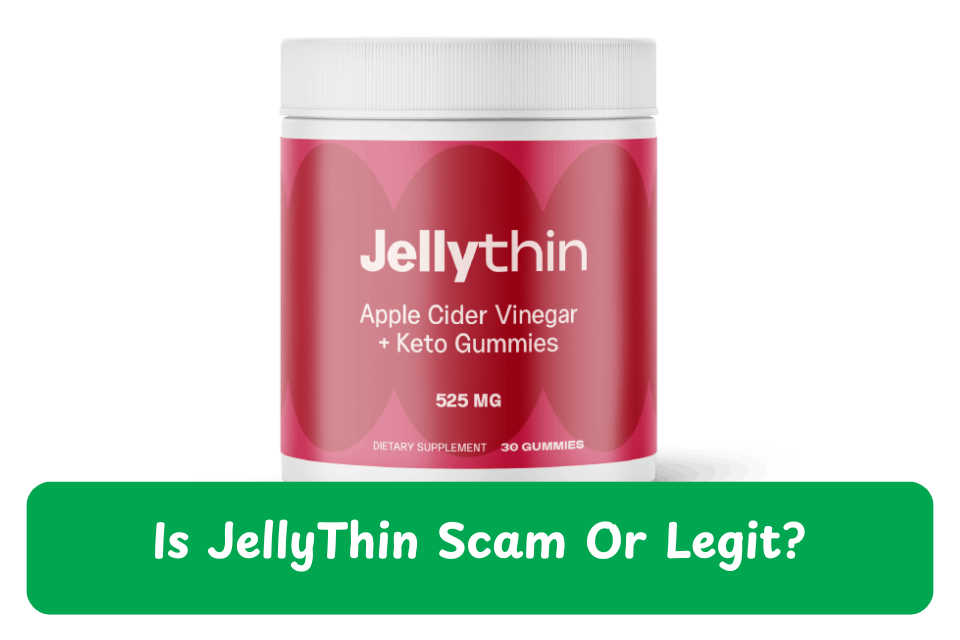
JellyThin is marketed as a once-daily metabolism-support gummy containing apple cider vinegar (ACV) and BHB ketone salts. According to the product information, the formula is designed to support healthy metabolism, appetite control, energy production, and overall weight-management efforts.
The advertised formula contains Apple Cider Vinegar, Calcium BHB, Magnesium BHB, and Sodium BHB. One product label lists these ingredients together in a 525 mg proprietary blend, meaning the manufacturer does not disclose the individual amounts of each ingredient.
Important: JellyThin is a dietary supplement, not a prescription weight-loss medication, and it should not be considered a treatment or cure for obesity, diabetes, or other medical conditions.
Does JellyThin Really Work?
JellyThin claims to provide several potential benefits to its users, including:
Healthy Metabolism Support: The formula is marketed to support the body’s natural metabolic processes and healthy fat utilization.
Appetite and Craving Support: Apple cider vinegar is promoted for supporting feelings of fullness and healthy appetite management.
Steady Energy: The BHB salts are marketed as a source of exogenous ketones that may support energy production and metabolic wellness.
The ingredients have been studied individually, but research on individual ingredients does not automatically prove that the complete JellyThin formula will produce the same results for every person.
Key Ingredients in JellyThin
JellyThin’s advertised formula focuses on apple cider vinegar and three BHB ketone salts. Some of the most notable ingredients include:
Apple Cider Vinegar: ACV contains acetic acid and has been studied for potential effects on post-meal blood sugar, appetite, and body-weight-related outcomes. However, the evidence is limited and does not establish ACV gummies as a standalone weight-loss solution.
Calcium BHB: Calcium beta-hydroxybutyrate is an exogenous ketone salt. It is included in JellyThin to support ketone availability and metabolic energy.
Magnesium BHB: This combines BHB with magnesium, an essential mineral involved in energy production and normal muscle and nerve function.
Sodium BHB: Sodium BHB provides another form of exogenous ketone and is marketed for supporting electrolyte balance and energy.
Important: One detailed label analysis estimates that the three BHB salts together account for no more than roughly 27 mg based on the separately declared mineral amounts. That is dramatically lower than the gram-level doses used in studies of exogenous ketones, so claims that JellyThin will substantially raise blood ketones should be treated cautiously.
Customer Reviews: What Are People Saying About JellyThin?
User feedback is an important factor when determining whether a supplement is legitimate or a scam. JellyThin’s promotional websites feature testimonials and marketing claims describing improvements in energy, appetite control, weight-management efforts, and overall wellness.
✅ Better Appetite Control: Promotional materials describe users experiencing fewer cravings and better control over their eating habits.
✅ More Daily Energy: Some customer testimonials describe feeling more energetic while using JellyThin.
✅ Weight-Management Support: Some promotional reviews report positive experiences with weight-management goals when JellyThin is combined with healthier lifestyle habits.
However, these testimonials are promotional material rather than independent clinical evidence, and individual results can vary considerably.
Is JellyThin a Scam or Legit?
There is not enough evidence to definitively call JellyThin a scam. The product has identifiable sales websites, provides information about its advertised ingredients, and is marketed as a dietary supplement for metabolic and weight-management support.
At the same time, consumers should be careful about interpreting marketing claims as scientific proof. The scientific references presented for JellyThin relate to individual ingredients or related compounds, rather than clinical trials proving that the finished JellyThin product produces the advertised weight-loss results.
The most important distinction is that ingredient-level research and customer testimonials are not the same as clinical evidence proving that JellyThin itself causes meaningful weight loss.
Why JellyThin Is Not Automatically a Scam
Clear Ingredient Information: JellyThin’s product information identifies Apple Cider Vinegar and the three BHB salts used in its formula.
Convenient Daily Formula: The product is designed as a once-daily gummy, with the product label recommending taking one gummy before a meal.
60-Day Money-Back Guarantee: Promotional websites advertise a 60-day money-back guarantee, although buyers should review the current terms and conditions before purchasing.
Important FDA Distinction: Some JellyThin websites describe the product as being manufactured in an FDA-registered facility. An FDA-registered manufacturing facility is not the same thing as an FDA-approved dietary supplement. The FDA does not generally approve dietary supplements before they are marketed.
Final Thoughts: Should You Try JellyThin?
JellyThin is marketed as a daily metabolism-support gummy containing Apple Cider Vinegar and BHB salts. Its intended purpose is to support healthy weight management, appetite balance, energy, and metabolic wellness rather than serve as a medical weight-loss treatment.
The most important thing to remember is that JellyThin’s advertised benefits should be viewed with realistic expectations. While ACV has some human research behind it, and BHB compounds have been studied for their metabolic effects, that does not prove the finished JellyThin product will produce significant weight loss.
If you are considering JellyThin, check the current Supplement Facts label, proprietary-blend information, dosage instructions, seller details, and refund policy before purchasing. If you have diabetes, take glucose-lowering medication, have kidney or other medical conditions, or are pregnant or nursing, consult a qualified healthcare professional before using a weight-management supplement.
Where to Buy JellyThin
To reduce the risk of receiving a counterfeit or incorrect product, verify the seller and product information carefully before purchasing JellyThin. The product’s promotional websites currently advertise purchasing through their official sales pages and a 60-day money-back guarantee.
Here is the updated investigation into JellyThin (frequently distributed as JellyThin Gummies) for 2026, followed by the list of verified, working sources formatted exactly in the template style you requested.
JellyThin: 2026 Product Update
In 2026, JellyThin has established a prominent footprint within the metabolic wellness and weight management sectors as an advanced “ACV & Exogenous Ketogenic Matrix”. Moving completely away from hard-to-swallow pills or messy liquid vinegars, this daily 2-in-1 gummy supplement directly targets the internal “Ketogenic-Satiety Axis.”Engineered for adults dealing with stubborn weight plateaus, constant sugar cravings, and sluggish daily energy, the 2026 protocol blends high-purity Apple Cider Vinegar with premium Beta-Hydroxybutyrate (BHB) salts to naturally support metabolic function, encourage mild ketosis, and promote appetite regulation.
Key Ingredients & 2026 Formulation
The clean-label 2026 gummy architecture features a transparently listed profile combining traditional metabolic tonics and exogenous electrolyte ketones:
- The Apple Cider Vinegar Core: Powerfully driven by concentrated Apple Cider Vinegar (ACV). ACV supplies bioavailable acetic acid, which clinical studies associate with improved glycemic response, reduced post-meal glucose spikes, and enhanced natural satiety.
- The Exogenous Ketone & BHB Engine:Heavily anchored by a proprietary blend of Beta-Hydroxybutyrate (BHB) Salts—including Calcium BHB, Magnesium BHB, and Sodium BHB.These exogenous ketone bodies mimic the natural compounds produced during carbohydrate restriction, helping to signal the body to tap into stored fat for sustained daily energy.
- The Electrolyte & Mineral Buffer: Infused with supportive micro-quantities of Calcium and Magnesium. These essential minerals ensure the BHB salts are delivered in a physiologically compatible form, supporting muscle contraction, nerve signaling, and baseline electrolyte balance.
- The Natural Gummy Delivery Matrix:Formulated with purified water, pure cane sugar, pectin or tapioca starch, natural fruit flavors, and Beet Root Powder for natural color and antioxidant support, ensuring an enjoyable, pre-digested format that enhances overall nutrient absorption compared to standard hard-pressed tablets.
Mechanism of Action
JellyThin operates through a synchronized “Appetite Control, Metabolic Shift, and Energize” physiological methodology.Modern high-carbohydrate diets, erratic eating habits, and age-related metabolic slowdowns often leave the body locked in a fat-storing state accompanied by frequent sugar cravings and afternoon fatigue.By delivering ACV and BHB salts in a tasty, user-friendly gummy format taken roughly 30 minutes before a meal, the formula ensures rapid trans-mucosal and upper-GI integration.During the initial 10 to 14 days, the ACV and fiber-like matrix work to blunt sweet cravings, promote post-meal fullness, and stabilize morning energy levels.Over an extended 60-to-90-day cycle, the continuous influx of exogenous ketones reconditions underlying energy pathways, supporting sustainable weight management and long-term metabolic vitality.
Sources
American Urological Association (AUA), 2021. AUA Guideline on the Management of Benign Prostatic Hyperplasia. Journal of Urology, 205(3), pp.1118-1129. Available at: https://www.auanet.org/guidelines-and-quality/guidelines/benign-prostatic-hyperplasia-(bph)-guideline
Macleod, S., O’Keeffe, L., Metcalfe, C., Evans, S. and Horwood, J., 2018. Saw palmetto and botanical adaptogens for men with lower urinary tract symptoms: a systematic review of secondary outcomes from randomised controlled trials. BMC Urology, 18(1), p.98. Available at: https://bmcurol.biomedcentral.com/articles/10.1186/s12894-018-0414-0
GlobeNewswire, 2026. Jelly Lean (2026 CONSUMER REPORT): How the “Jelly Lean Gummy Trick” Is Activating Metabolic Hormones for Natural Weight Loss Support (Technical Evaluation of ACV and BHB Salts). Consumer Health Product Archives. Available at: https://www.globenewswire.com/news-release/2026/04/07/3269542/0/en/jelly-lean-2026-consumer-report-how-the-jelly-lean-gummy-trick-is-activating-metabolic-hormones-for-natural-weight-loss-support.html
FTC, 2021. Health Products and Services: Truth in Advertising Compliance for Weight Loss, Metabolic, and Dietary Supplement Performance Claims. Federal Trade Commission. Available at: https://consumer.ftc.gov/articles/health-products-and-services
FDA, 2022. Dietary Supplements: What You Need to Know. U.S. Food and Drug Administration. Available at: https://www.fda.gov/food/dietary-supplementsJellyThin Review 2026
This video provides a helpful overview of the JellyThin gummy formula and its approach to metabolic support.
Scammers are aggressively promoting a suspicious product called JellyThin that uses exaggerated claims and even deep fake celebrity endorsements to take advantage of people struggling with stubborn weight problems like obesity. This comprehensive article will reveal how the scam works, provide tips for avoiding it, and explain why JellyThin is almost certainly an ineffective supplement not worth your money.
Overview
The questionable JellyThin product is being aggressively promoted through an elaborate scam designed to mislead and exploit consumers, especially those struggling with obesity or excess weight.
Numerous shady websites are utilizing fake celebrity endorsements, exaggerated claims, fraudulent reviews and high-pressure sales tactics to sell JellyThin as a miraculous natural weight loss accelerator and obesity cure-all. However, all signs point to it being yet another overpriced, ineffective supplement that will likely provide little to no benefit.
The scammers are ruthlessly targeting susceptible individuals looking for solutions for excess body weight and related health problems. Obesity impacts over 100 million Americans who are desperate for treatments allowing them to regain control of their health. These consumers want to believe a natural supplement like JellyThin can provide the convenience and relief prescription medications may not offer.
The deceptive marketing preys on this desperation. The websites feature supposed ringing endorsements from celebrities like Kelly Clarkson and Oprah Winfrey claiming JellyThin allowed them to reverse weight gain symptoms almost overnight. It makes bold claims such as melting away fat, boosting weight loss, increasing energy, improving heart health and more.
However, absolutely no proof is provided to substantiate any of these benefits. The celebrity testimonials are fake – in reality, none of them have endorsed or likely even heard of JellyThin. All evidence suggests this is a scam meant to squeeze money out of folks struggling with real medical issues.
The shameless marketing even tries to add legitimacy by claiming the product is “doctor-formulated” and manufactured in an FDA-registered facility. But this does not mean it is FDA-approved or scientifically proven like real medications. JellyThin and its ingredients have undergone no rigorous clinical trials or independent testing whatsoever.
In fact, the few ingredients listed like apple cider vinegar, BHB salts and green tea are not shown to have any significant impacts on body fat or metabolism levels. Any benefits are likely minimal without lifestyle changes. And “natural” certifications mean little regarding safety or efficacy.
Yet the scammers want weight loss consumers to believe just taking a few gummies of this mystery formula daily will balance metabolism and cure their illness. The websites warn supplies are selling out fast, so you better buy now before prices rise. Of course, more bottles purchased means more money in the scammers’ pockets.
And many customers ultimately find themselves unwillingly signed up for monthly shipments of JellyThin without consent. When they try to cancel or get refunds, the company rejects them on technicalities. They make it extremely difficult and often impossible to get your money back once they already have your credit card details.
JellyThin has been also been investigated by Jordan Liles on his YouTube channel, where he offers a detailed video on the subject. We recommend watching his video for a comprehensive understanding of the JellyThin scam.
In summary, JellyThin shows multiple red flags of an unscrupulous scam: exaggerated health claims, fake celebrity endorsements, questionable ingredients, aggressive sales tactics involving recurring undisclosed charges, and barriers to returns and refunds. Obesity patients and others struggling with weight loss issues should not waste their money on this product and instead look for treatment options proven safe and effective.
How People Fall For JellyThin Scam
Understanding the step-by-step process behind the JellyThin scam can help you recognize and avoid it. Here is how they strategically manipulate and mislead consumers:
1. Fake Celebrity Endorsements Build Hype
The scam begins with internet ads on Google, Facebook, YouTube and elsewhere featuring deep fake AI voices and likenesses of celebrities like Kelly Clarkson, Dolly Parton and Oprah Winfrey. The fake celebs make exaggerated claims about JellyThin such as it letting you “eat all your favorite foods guilt free” or “dropping pounds almost instantly.”
This technique builds hype and gets people’s attention by making it seem like it’s a revolutionary new product endorsed by trusted stars. However, the real Kelly, Dolly, Oprah etc. have no association with JellyThin whatsoever.
2. Misleading Websites Full of False Claims
Clicking these ads leads to slick-looking websites mentioning the fake celebrity endorsements again and making even bolder claims about JellyThin. For example:
- “Balance your metabolism fast without medication”
- “Melt away fat by reducing stubborn belly fat levels”
- “Clinically proven to reverse obesity symptoms in 4 weeks”
Other questionable claims include that it’s doctor formulated, FDA approved, made in the USA and so on. However, none of these claims are verifiable.
3. Aggressive Sales Tactics Pressure You
The websites utilize aggressive sales tactics to get your credit card information as fast as possible before you have time to research the product or claims.
Tactics include:
- Countdown timer saying the low price will expire soon
- Limited supply warnings
- Fake customer reviews and testimonials
- Claims the price will go up after today
They want to create urgency so you buy right away rather than look into it more.
4. Monthly Subscriptions Signed Up Without Consent
Many people who bought JellyThin soon discovered recurring monthly charges from the company without their authorization. The sites enroll you in subscriptions simply for entering your credit card details to “pay shipping.”
They make subscriptions the default choice during checkout but hide the terms in small print so people don’t notice. Many consumers say they can’t stop the monthly charges despite calling to cancel.
5. Refunds and Returns Made Extremely Difficult
Anyone who tries getting a refund for JellyThin quickly realizes the company makes it nearly impossible. Reasons they decline refunds include:
- You didn’t request one within the short trial period
- You used too much of the product already
- It’s past the return date they specify
Essentially, they put major roadblocks in the way of returns to keep your money. Many complaints allege customers only received partial refunds after long fights. Others got none at all.
JellyThin on Amazon and Walmart
In our research, we also found JellyThin being sold on major retailers like Amazon and Walmart under various third-party sellers. However, it’s unclear if these are the exact same formulation being deceptively marketed through the fake celebrity ads and shady websites.
The Amazon listings have very poor ratings, with multiple 1- and 2-star reviews complaining about receiving defective, melted bottles with questionable contents. Others report trying to return unopened bottles but being refused due to no refund policy.
One reviewer on Amazon shares a disturbing image of what looks like mold growing in their JellyThin gummy bottle, writing “I would like to know if this is normal.” Several others simply advise “Don’t waste your money.”
While JellyThin supplements sold on Amazon and Walmart may share the same name as the version promoted on the scam sites, the low ratings indicate inconsistent quality control issues. And the shady companies behind the fake ads likely have no association with these retail listings.
We cannot confidently say these Amazon and Walmart products are the real JellyThin or recommend purchasing them. Consumers are better off avoiding any supplement with this name given the overwhelming evidence of predatory marketing practices. Talk to your doctor first about any natural weight loss remedies.
How The JellyThin Scam Site Operation Works
JTPro Weight Loss is rarely sold through a simple, straightforward product website.
Most buyers are pushed through a multi-step funnel designed to move them from curiosity to purchase quickly, with minimal time to research.
Step 1: The scroll-stopping ad appears
Most people first see JTPro Weight Loss through paid ads on social platforms or ad networks.
The ad is built to trigger emotion fast, such as:
- fear about complications
- frustration with “unstable weight”
- anxiety about medication costs
- worry about long-term damage
- hope for a shortcut
- curiosity about a “secret method”
Many versions are designed to look casual or “user generated” on purpose.
Selfie-style clips blend into the feed and lower suspicion.
Some variants also imply famous names, TV personalities, or “celebrity doctors” to borrow trust, even when no endorsement exists.
Step 2: The click leads to a “news-style” page
After clicking, you often land on an advertorial.
That is a sales page disguised as an article.
Common signs include:
- urgent headline language
- vague author names
- a date stamp to look current
- layouts that resemble major media outlets
- “as seen on” logos with no proof
- dramatic claims framed as “what doctors won’t tell you”
This stage is designed to create legitimacy before skepticism kicks in.
The goal is to make you feel like you are reading reporting, not advertising.
Step 3: The “secret method” is teased
Next comes the bait.
The page promises a specific solution, like:
- an “obesity reversal ritual”
- a “stubborn fat reset” trick
- a “metabolism switch” method
- a “rare discovery” that “targets the root cause”
The reader thinks, “I just want the method.”
But the method rarely arrives clearly.
Instead, it is stretched into a long story.
Step 4: A long-form video locks in attention
Many JTPro Weight Loss funnels rely on a long video that looks like:
- a documentary-style report
- a “special presentation”
- a health segment
- a “doctor reveal”
The video often includes:
- animated organs and bloodstream graphics
- simplified explanations of weight loss resistance
- claims about hidden inflammation or toxins
- dramatic “case study” transformations
- repeated reminders to “watch until the end”
The structure is usually predictable:
- explain the problem in scary terms
- claim mainstream medicine ignores the truth
- tease a simple solution
- delay the solution
- position the product as the “real answer”
If the page promises a “method” and never clearly gives it, that is typically intentional.
The missing “free fix” becomes a lever that keeps the viewer engaged until the product feels like the answer.
Step 5: Authority badges and compliance language show up
Once the viewer is invested, the funnel piles on authority signals, like:
- “clinically proven”
- “doctor recommended”
- “FDA approved”
- “GMP certified”
- “made in the USA”
- “scientifically formulated”
For supplements, these phrases are often used in ways that confuse people.
If there is no transparent documentation, no real studies, and no verifiable company identity, treat the badges as marketing.
Step 6: Social proof and urgency pressure you to buy
Then the funnel ramps up pressure using:
- countdown timers
- “limited stock” warnings
- popups showing “recent purchases”
- “X people are watching”
- huge review numbers
- “today only” discounts
These are conversion tools, not proof.
Their job is to make you feel like delaying is risky.
Step 7: Bundles push bigger spending
Offers are typically structured like:
- 1 bottle at a high price
- 3 bottles at a lower per-bottle cost
- 6 bottles as “best value”
- sometimes “extended protocol” bundles
The pricing is designed to make the small option feel like a mistake.
Step 8: Checkout confusion increases billing risk
This is a common failure point.
Checkout flows may include:
- pre-selected quantities
- upsell screens that look mandatory
- “free bottle” language that still increases totals
- fine-print subscription terms
- vague merchant names on bank statements
This is where people often believe they ordered one item, then later discover multiple charges or recurring billing.
Step 9: Support friction makes refunds slow
After purchase, support can be slow or hard to reach.
Common issues include:
- email-only support with long delays
- vague return instructions
- shifting refund requirements
- policies that look generous but are difficult to use
Even when a product arrives, the entire experience can feel engineered to reduce refunds.
Why the same story keeps showing up under new names
JTPro Weight Loss is one label.
The funnel template is reusable.
When a brand attracts complaints or ad accounts get flagged, sellers can:
- change the domain
- change the product name
- tweak the narrative
- launch the same funnel again
That is why you keep seeing similar weight loss supplement pitches tied to different “methods” and different bottles.
Should you buy JellyThin?
At best, JellyThin appears to be an overpriced supplement making unsupported claims about regulating metabolism and reversing obesity symptoms. At worst, it could be an outright scam product not worth the risks.
We strongly advise all consumers to talk to a qualified medical professional before trying JellyThin or any supplement marketed for appetite control, obesity or weight loss. Do not discontinue prescription medications or ignore medical advice to try such products.
A doctor can help determine if natural supplements may be appropriate as an addition to, not replacement for, traditional treatments they recommend based on your health history. Beware any product claiming to cure or permanently eliminate chronic conditions like obesity overnight.
Work with your physician to develop a holistic plan for managing body weight utilizing proven options like lifestyle changes, FDA-approved medications, metabolic monitoring, and medical supervision. Relying on unproven supplements with questionable ingredients is not worth jeopardizing your health.
The safest path is using trusted medical guidance, not miracle supplement claims. Talk to a doctor first before trying JellyThin or similar products pitched online using dubious marketing tactics. Your health is too important to risk on sketchy supplements.
What to Do if You Fell For the JellyThin Scam Websites
If you already bought JellyThin and lost money to this predatory scam, take the following steps right away to mitigate the damage:
Request a Refund Immediately
Contact the company that sold you JellyThin (there are many who sell it) quickly to request a full purchase price refund. Do this even if you think the return period has expired – some consumers have luck getting refunds past the cutoff. Explain that you feel the product was misrepresented.
If they deny the refund or only offer partial, firmly tell them you will pursue other options to get your money back if needed. Also request they cancel any recurring monthly subscriptions.
Dispute the Charges With Your Bank
If JellyThin refuses a refund, call your credit card company or bank to report fraudulent charges. Explain that you were misled by the ads and claims on the site and did not agree to ongoing monthly charges. The bank may be able to reverse the transactions and stop future billings.
Report the Scam Online
Leave negative reviews about your experience on websites like Trustpilot to warn others. You can also file official complaints with:
- Better Business Bureau (BBB)
- Federal Trade Commission (FTC)
- State consumer protection agency
The more complaints against JellyThin, the more likely authorities will take action against the company for illegal practices.
Seek Legal Options
Talk to an attorney specializing in consumer protection law about possible options for recouping your money. A lawyer can assess if you have grounds for legal action over the deceptive marketing, unauthorized credit card charges or other issues.
If enough victims come forward, a class action lawsuit may be possible to hold the company accountable. But act quickly, as statutes of limitations apply.
Frequently Asked Questions About the JellyThin Scam
1. What is JellyThin?
JellyThin is a dietary supplement being deceptively marketed online as a miracle cure for melting body fat and reversing obesity. Scam websites promote it using fake celebrity endorsements, false claims, and high-pressure sales tactics. However, there is no clinical evidence that JellyThin can deliver the benefits advertised.
2. How does the JellyThin scam work?
The scammers run ads online featuring deepfake videos of celebrities like Kelly Clarkson raving about JellyThin. The ads lead to websites making unrealistic claims about the supplement to convince people to buy it. They utilize aggressive sales tactics to get credit card information quickly before people can research the product. Many customers find recurring monthly charges they never agreed to. Refunds are made very difficult or impossible to obtain.
3. What ingredients are in JellyThin?
The marketed ingredients include apple cider vinegar, BHB salts, maca root, green tea extract, guarana, garcinia, ginseng, and chromium. However, there is no proof these ingredients have significant impacts on fat burning or obesity symptoms when taken in supplement form. The amounts and quality of ingredients are unknown.
4. Is JellyThin FDA approved?
No, JellyThin is not approved by the FDA. The websites falsely claim it is “made in an FDA-registered facility” to seem legitimate. But dietary supplements do not need FDA approval before being sold. JellyThin has not undergone any clinical trials to prove safety or efficacy.
5. Are the celebrity endorsements real?
No. The videos of celebrities like Kelly Clarkson, Oprah Winfrey, and Dolly Parton endorsing JellyThin use fake AI-generated footage. None of these celebrities have actually promoted or supported JellyThin. The false endorsements are meant to build credibility and hype.
6. Are the amazing testimonials from real customers?
Most likely not. The supposed customer reviews praising unbelievable results from JellyThin are misrepresentations. They use stock photos or stolen photos instead of real user images. The dramatic stories of obesity symptoms vanishing overnight are fabricated to make the product seem effective.
7. Can JellyThin really cure obesity?
No. There is no supplement proven to permanently cure obesity or eliminate symptoms overnight. JellyThin provides no evidence to support its bold claims of regulating metabolism, increasing fat burning production, or reversing obesity. Weight loss patients should not trust such false marketing and instead rely on professional medical treatment.
8. Is buying JellyThin worth the risk?
No. JellyThin shows multiple signs of being a scam product backed by false marketing. It is likely ineffective, overpriced, and not worth the financial risk. Consumers should avoid wasting their money on this dubious supplement. Those struggling with excess body weight or obesity should consult a doctor.
9. What should I do if I already bought JellyThin?
If you purchased JellyThin, contact your credit card company and dispute the charges as fraudulent. Also request the seller cancel any recurring monthly subscriptions. Leave online reviews warning others about the shady marketing practices. Report the scam to the FTC and BBB to potentially stop the company from victimizing others.
10. How can I spot similar supplement scams?
Beware of supplements marketed online with fake celebrity ads, incredible claims of curing disease, aggressive sales tactics and barriers to returns. Legitimate products will be upfront about ingredients, testing, and possible side effects while making realistic claims. Consult doctors before taking any supplement marketed for appetite control, obesity or weight loss.
The Bottom Line on JellyThin
At best, JellyThin is an overpriced supplement unlikely to deliver the almost miraculous health benefits marketed. At worst, it could be an outright scam making false promises to exploit people desperate for help with obesity or weight loss.
No credible scientific evidence proves JellyThin can stabilize metabolism, “melt away fat” or cure disease as claimed. The few listed ingredients like apple cider vinegar and green tea are not clinically shown to have such powerful effects. Any positive impacts are likely negligible.
Additionally, a supplement made in an FDA-registered facility does not mean it is FDA approved or rigorously tested for safety and efficacy like an actual drug. The shady marketing tactics, fake reviews and monthly subscriptions are all red flags of a predatory scam.
Consumers should avoid JellyThin and other products making similar unfounded claims. Talk to your doctor before trying any supplement marketed for appetite control, obesity, or weight loss – especially those promoted via deceptive ads or websites. A healthy, balanced diet and exercise regimen are still the best ways to manage these conditions for most people.
10 Rules to Avoid Online Scams
Here are 10 practical safety rules to help you avoid malware, online shopping scams, crypto scams, and other online fraud. Each tip includes a quick “if you already got hit” action.
- Stop and verify before you click, log in, download, or pay. Most scams win by creating urgency. Verify using a trusted method: type the website address yourself, use the official app, or call a known number (not the one in the message). If you already clicked: close the page, do not enter passwords, and run a malware scan.
- Keep your operating system, browser, and apps updated. Updates patch security holes used by malware and malicious ads. Turn on automatic updates where possible. If you saw a scary “update now” pop-up: close it and update only through your device settings or the official app store.
- Use layered protection: antivirus plus an ad blocker. Antivirus helps block malware. An ad blocker reduces scam redirects, phishing pages, and malvertising. If your browser is acting weird: remove unknown extensions, reset the browser, then run a full scan.
- Install apps, software, and extensions only from official sources. Avoid cracked software, “keygens,” and random downloads. During installs, choose Custom/Advanced and decline bundled offers you do not recognize. If you already installed something suspicious: uninstall it, restart, and scan again.
- Treat links and attachments as untrusted by default. Phishing often impersonates delivery services, banks, and popular brands. If it is unexpected, do not open attachments or log in through the message. If you entered credentials: change the password immediately and enable 2FA.
- Shop safely: research the store, then pay with protection. Be cautious with brand-new stores, “closing sale” stories, and prices that make no sense. Prefer credit cards or PayPal for dispute options. Avoid wire transfers, gift cards, and crypto payments. If you already paid: contact your card issuer or PayPal quickly to dispute the transaction.
- Crypto rule: never pay a “fee” to withdraw or recover money. Common patterns include fake profits, then “tax,” “gas,” or “verification” fees. Another is a “recovery agent” who demands upfront crypto. If you already sent crypto: stop paying, save evidence (wallet addresses, TXIDs, chats), and report the scam to the platform used.
- Secure your accounts with unique passwords and 2FA (start with email). Use a password manager and unique passwords for every account. Enable 2FA using an authenticator app when possible. If you suspect an account takeover: change passwords, sign out of all devices, and review recent logins and recovery settings.
- Back up important files and keep one backup offline. Backups protect you from ransomware and device failure. Keep at least one backup on an external drive that is not always connected. If you suspect infection: do not connect backup drives until the system is clean.
- If you think you are a victim: stop losses, document evidence, and escalate fast. Move quickly. Speed matters for disputes, account recovery, and limiting damage.
- Stop payments and contact: do not send more money or respond to the scammer.
- Call your bank or card issuer: block transactions, replace the card if needed, and start a dispute or chargeback.
- Secure your email first: change the email password, enable 2FA, and remove unfamiliar recovery options.
- Secure other accounts: change passwords, enable 2FA, and log out of all sessions.
- Scan your device: remove suspicious apps or extensions, then run a full malware scan.
- Save evidence: screenshots, emails, order pages, tracking pages, wallet addresses, TXIDs, and chat logs.
- Report it: to the payment provider, marketplace, social platform, exchange, or wallet service involved.
These rules are intentionally simple. Most online losses happen when decisions are rushed. Slow down, verify independently, and use payment methods and account controls that give you recourse.