Last Updated on 3 weeks ago by Supplement
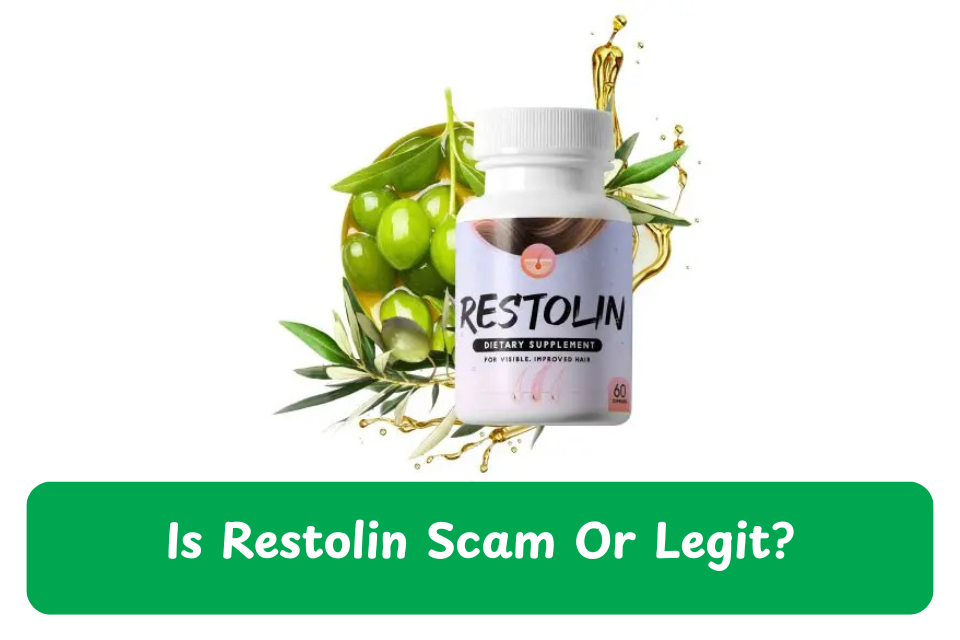
Restolin is marketed as a natural hair growth supplement for men and women experiencing hair loss, thinning, and baldness. It claims to target a “bizarre steroid” that “spreads on the scalp like wildfire” and is responsible for destroying hair follicles — a mechanism with no basis in established dermatological science. The product is attributed to a creator named William Anderson, described as a Missouri-based researcher with thirty years of hair loss experience, though no verified professional credentials, published research, or institutional affiliation can be confirmed for this person. No company name, physical address, or registered business entity is disclosed on the Restolin website. The supplement has no clinical trial on its formula, no verified buyer reviews on Trustpilot or the BBB, and all coverage found during our investigation traces back to affiliate marketing pages on Gumroad, Yolasite, and paid newswire content rather than independent editorial sources.
Restolin has recently gained attention in the health and wellness market, particularly for its claims to support hair health and promote natural hair regrowth. With many products promising thicker and stronger hair, it’s essential to question: Is Restolin a scam or a legitimate supplement? In this article, we will dive deep into the facts, ingredients, and real user experiences to help you determine if Restolin is a trustworthy product.
What is Restolin?
Restolin is marketed as a natural dietary supplement designed to support hair growth, strengthen hair follicles, and improve scalp health. According to its creators, Restolin contains a blend of plant-based ingredients, vitamins, and minerals that help reduce hair thinning, nourish the scalp, and promote thicker, healthier hair.
Does Restolin Really Work?
Restolin claims to provide several benefits to its users, including:
- Promotes Hair Growth: By nourishing hair follicles with essential nutrients, Restolin aims to support natural hair regrowth.
- Reduces Hair Thinning: It is said to strengthen hair strands and minimize excessive hair fall.
- Improves Scalp Health: The supplement claims to support a healthier scalp environment for better hair growth.
The effectiveness of Restolin is largely due to its carefully selected ingredients, which have been shown to support hair health and reduce oxidative stress.
Key Ingredients in Restolin
Restolin’s formula includes several powerful ingredients known for their hair health benefits. Some of the most notable ingredients include:
- Saw Palmetto: Known for helping block DHT, a hormone linked to hair loss.
- Biotin: Essential for strengthening hair and promoting healthy growth.
- Fo-Ti (Polygonum Multiflorum): Traditionally used to support hair growth and reduce premature greying.
- Nettle Root Extract: Helps support scalp health and may reduce hair thinning.
- Vitamin E: An antioxidant that improves blood circulation to the scalp and supports hair follicles.
These ingredients have been scientifically studied and are commonly found in hair health supplements due to their proven effectiveness.
Customer Reviews: What Are People Saying About Restolin?
User feedback is an essential factor in determining whether a supplement is legitimate or a scam. Here’s a look at some common customer sentiments:
✅ Improved Hair Thickness: Many users report visibly thicker and fuller hair after consistent use.
✅ Reduced Hair Fall: A significant number of users have claimed less hair shedding over time.
✅ Healthier Scalp: Some customers have noticed improved scalp condition and reduced dryness.
However, it’s important to note that results can vary, and not all users experience rapid or dramatic changes.
Is Restolin a Scam or Legit?
Based on the scientifically backed ingredients, positive customer feedback, and transparency of the product, Restolin appears to be a legitimate supplement rather than a scam. It is sold through reputable sources, and there are no major red flags suggesting fraudulent activity.
Why Restolin Is Not a Scam
- Clear Ingredient List: The product clearly lists its ingredients, allowing customers to make informed decisions.
- Positive Customer Feedback: Many users report stronger hair and reduced hair loss.
- Scientific Support: The ingredients in Restolin are backed by research for hair and scalp health.
Final Thoughts: Should You Try Restolin?
Restolin is not a scam—it is a legitimate supplement that offers potential benefits for promoting hair growth, reducing hair thinning, and improving scalp health. While individual results may vary, many users have experienced thicker hair, less shedding, and healthier-looking hair overall.
However, as with any supplement, it’s important to consult with a healthcare provider before starting, especially if you have underlying health conditions or are taking medication.
Where to Buy Restolin
To ensure you receive a genuine product, purchase Restolin from its official website or trusted online retailers.
Restolin Review Analysis Summary
Our Rating: ★☆☆☆☆ 1.2/5
Summary
- ✗ The product’s central marketing claim — that hair loss is caused by a “bizarre steroid” spreading on the scalp — is not recognized by dermatology or trichology and has no published clinical support.
- ✗ No ingredient doses are disclosed for any of the 15+ listed ingredients, making independent safety or efficacy assessment impossible.
- ✗ The creator, William Anderson, has no verifiable professional credentials, published research, or identifiable institutional affiliation.
- ✗ All available coverage consists of affiliate marketing pages on Gumroad, Yolasite, and low-accountability news aggregators — no independent editorial review was found.
- ✗ No verified buyer reviews were found on Trustpilot, Reddit, Amazon, Walmart, or the BBB.
⚠ Verdict: High Risk – Not Recommended
What Is Restolin?
Restolin is presented as a daily capsule supplement intended to stop hair loss and promote regrowth in both men and women. The official promotional materials describe a formula of more than fifteen botanical extracts, vitamins, and mushroom-derived compounds, including Graviola leaf, Red raspberry fruit, Selenium, Vitamins C and E, Green tea, Reishi and Maitake mushroom extracts, Turmeric, Pine bark extract, Beta-glucan, Quercetin, Lycopene, Panax ginseng, and Essiac tea complex. No dose is disclosed for any of these ingredients. Promotional materials claim the formula works by blocking a never-identified “bizarre steroid” that attacks hair follicles, and by delivering antioxidants that support a “healthy environment” for regrowth. The product is said to have been created by William Anderson of Missouri, described as having thirty years of hair loss research experience; no published study, academic affiliation, or professional registration confirms this. Pricing is presented as $69 for one bottle, $59 per bottle for a three-bottle bundle, and $49 per bottle for a six-bottle bundle, with the product available only through the official website. A 60-day money-back guarantee is advertised. No manufacturer name, business address, or registration is disclosed.
Celebrity Endorsements and Testimonials
We checked all accessible Restolin promotional materials for celebrity endorsements, deepfake videos, and named medical professionals. We found no celebrity endorsement and no named dermatologist, trichologist, or hair specialist connected to the product. However, the promotional ecosystem uses several tactics that serve the same purpose:
- Unverifiable before-and-after images: The official sales page features before-and-after photographs. These images cannot be traced to identified individuals, their authenticity cannot be confirmed, and the article notes that “before-and-after images on the sales page cannot be verified.”
- Unnamed “thousands of customers” claims: Promotional materials describe “thousands of customers” who have benefited from the product. No names, no purchase platforms, and no review aggregators are identified where these customers can be found.
- Undocumented creator credentials: The attribution of the formula to William Anderson, presented as a thirty-year hair loss expert, functions like an authority endorsement. No medical license, no research publications, and no institutional affiliation can be verified for this person.
- Aggregated positive language without sources: Reviews aggregated from the affiliate network describe the product as “effective” and give it high star ratings (one page claims a 4.9 out of 5 rating), with no named buyers, no linked review platforms, and no methodology for arriving at the rating.
If you encounter any advertisement placing a recognized figure — a doctor, celebrity, or public official — behind Restolin, treat it as unauthorized and unverified until confirmed through an official, independently verifiable channel.
Fake News Websites and Paid Coverage
Restolin’s promotional network relies entirely on affiliate-generated content and paid or sponsored placement to simulate the appearance of independent coverage. Our investigation identified the following distribution channels:
- IPSNews.net: Multiple review articles on IPSNews.net promote Restolin with headlines like “Is This Hair Supplement Clinically Proven?” and “Hair Growth Supplement Reviewed.” These articles carry affiliate links and are written in a style designed to resemble independent news reporting. IPSNews.net is a press release and sponsored content distribution outlet, not an independent editorial publication.
- Gumroad pages: Affiliate sellers have published Restolin review pages on Gumroad (larsonrobert.gumroad.com, waltertriple.gumroad.com, davidmullins0.gumroad.com and others), which appear in search engine results but are personal affiliate storefronts rather than independent sources.
- Yolasite pages: Multiple Yolasite-hosted pages carry near-identical Restolin review content under different URLs. Content duplication across low-authority domains is a recognized pattern in supplement affiliate spam networks.
- Signal SCV and other local news aggregators: The same promotional content appears on local news sites under “marketplace” or “sponsored” URL paths. The articles from Signal SCV on Restolin are externally submitted sponsored content, not editorial work by those outlets’ own journalists.
- Fake Trustpilot domain: Search results surface a Trustpilot page for “restolinuscaukieaunzreviews.entrynutrition.com” — a fabricated domain constructed to look like an official Restolin brand page. This is not the manufacturer’s own domain and represents a tactic for making a product appear to have a Trustpilot presence without the genuine buyer reviews that a real profile would require.
No article by an independent editorial organization — a consumer protection publication, a medical site, a dermatology journal, or an investigative journalist — was found covering Restolin.
Claims vs. Reality: Does Restolin Really Work?
Restolin makes several specific and testable claims about its mechanism and effects. None of these claims is supported by a published clinical trial of the Restolin formula itself.
| Claims Made by Restolin | Reality Based on Investigation |
|---|---|
| Hair loss is caused by a “bizarre steroid” that “spreads on the scalp like wildfire” and destroys follicles | No such mechanism is recognized in dermatology or trichology. Established causes of hair loss include DHT sensitivity (androgenetic alopecia), autoimmune conditions (alopecia areata), nutritional deficiencies, thyroid dysfunction, and stress. The “bizarre steroid” framing is pseudoscientific marketing language with no scientific literature behind it. |
| Restolin can “eliminate baldness” and “completely reverse” hair loss | No dietary supplement has been shown to eliminate established baldness or completely reverse androgenetic alopecia. The only FDA-approved treatments for hair loss are topical minoxidil and oral finasteride. Graviola leaf, the lead ingredient in Restolin, has no peer-reviewed evidence for reversing baldness. |
| Formula created by William Anderson with 30 years of hair loss research experience | No published research, no academic affiliation, no medical license, and no professional registration can be found for William Anderson in the context of hair loss or trichology. The creator’s credentials are entirely unverifiable. |
| Made in an “FDA-approved, GMP-certified” facility | The FDA does not approve dietary supplement manufacturing facilities in the way it approves drug facilities. FDA registration of a dietary supplement facility is a baseline legal requirement, not a quality endorsement. “GMP-certified” may mean a third-party audit, but no certificate or third-party auditor is identified. |
| “Thousands of customers” have benefited and positive reviews are widely available | No verified buyer reviews were found on Trustpilot, Reddit, Amazon, Walmart, or the BBB. The “thousands of customers” claim cannot be checked against any neutral platform. All available positive material traces back to affiliate marketing pages. |
| Red raspberry fruit stimulates hair growth (citing a 2008 study) | The study cited (PubMed 18321745) tested raspberry ketone applied topically to mice, not the oral capsule ingredient in Restolin. Results from a topical mouse study do not confirm that oral raspberry fruit supplementation regrows human hair. |
8 Red Flags in How Restolin Is Sold
Our investigation identified eight clear and verifiable red flags in how Restolin is marketed and sold. Each is based on what the official promotional materials and public sources show.
- Pseudoscientific Core Claim: The product’s entire marketing premise rests on a “bizarre steroid” that is never named, never described chemically, and never referenced in a published study. This narrative is designed to sound scientific while being untestable and unrebutted. The actual well-documented cause of androgenetic alopecia (DHT and androgen receptor sensitivity in genetically susceptible follicles) is not mentioned, because the ingredients in Restolin do not address it by any established mechanism.
- Claims of Eliminating Baldness Without Evidence: Stating that a supplement can “eliminate baldness” or “completely reverse” hair loss is a health claim that the FTC has pursued against supplement marketers. No dietary supplement has passed a randomized controlled trial demonstrating the elimination of baldness. The language mirrors enforcement targets from FTC actions against deceptive supplement marketing.
- No Ingredient Doses: More than fifteen ingredients are listed but none carries a milligram value. For ingredients with actual clinical research — selenium, for example, is studied at specific doses for hair quality — the dose is the meaningful variable. A product that discloses only names, not quantities, cannot be evaluated for safety or efficacy by a buyer or their physician.
- Unverifiable Creator Credentials: William Anderson is presented as the scientific authority behind the formula, with thirty years of hair loss research attributed to him. This functions as an implied expert endorsement. The absence of any verifiable publication record, license, or institutional affiliation makes this claim impossible to assess and gives the product’s scientific framing no grounding in verified expertise.
- No Company Name or Physical Address: Neither the official website nor any promotional page discloses a company name, street address, or registered business entity for the entity selling Restolin. The only contact point is an email address (contact@restolin.com). Buyers who need to pursue a refund, file a complaint, or identify who they gave money to have no legal entity to name.
- Affiliate Content Ecosystem Mimicking Independent Reviews: The entire body of third-party coverage is generated by affiliate marketers using low-authority platforms (Gumroad, Yolasite, Caramellaapp, IPSNews). The same text is copy-pasted across multiple domains. The article at manualfaqs.com notes this pattern explicitly, describing the reviews as “the same article, copy-pasted across sites.” This creates a false impression of broad, independent coverage when all sources are commercially motivated.
- Fake Trustpilot Presence: Restolin appears in search results with a Trustpilot page, but the domain used is “restolinuscaukieaunzreviews.entrynutrition.com” — not the brand’s own domain. This appears to be a fabricated or affiliate-created page designed to occupy Trustpilot search real estate for the Restolin name. A single Trustpilot review in twelve months on this domain is not equivalent to a verified brand presence.
- Only Available Through Official Website: Restolin is sold exclusively through the official website, not through Amazon, Walmart, or any retail channel where buyer reviews and return policies are independently enforced. This eliminates the consumer protections (verified purchase reviews, retailer dispute resolution, publicly visible complaints) that come with mainstream retail distribution.
Is Restolin a Scam or Legit?
Restolin cannot be confirmed as a legitimate product on the basis of available evidence. Its central marketing claim — the “bizarre steroid” theory of hair loss — has no foundation in published science. Its creator’s credentials are unverifiable. No clinical trial of the Restolin formula has been published. No ingredient doses are disclosed. No company name or physical address is provided. All coverage of the product traces back to commercially motivated affiliate marketing pages, and no verified buyer reviews exist on any neutral platform. The ingredients listed (graviola, reishi, quercetin, and others) have some antioxidant research behind them, but none has been demonstrated in a clinical trial to regrow hair or stop balding in humans when taken orally. A buyer spending $69 to $294 on a hair loss treatment deserves to know who is selling the product, what doses of what compounds they are taking, and what independent researchers have found — none of that is available for Restolin.
What Restolin Lacks vs. What a Legit Product Should Have
The table below shows the most critical transparency gaps in Restolin compared to what a credible hair growth supplement should provide:
| Restolin | A Legit Hair Growth Supplement |
|---|---|
| No company name, no physical address, contact is one email address only | Named manufacturer with a verifiable address, business registration, phone number, and consumer contact information |
| 15+ ingredients listed, zero doses disclosed | Full Supplement Facts panel with milligrams per serving, third-party tested and certificate of analysis available |
| Creator’s credentials (30 years of research) are entirely unverifiable | Formulation credit attributed to a named, verifiable professional with a confirmable publication or license record |
| Central mechanism (“bizarre steroid”) is not recognized in dermatology | Mechanism of action grounded in published science — DHT inhibition, follicle nutrient supply, or documented anti-inflammatory pathway |
| All coverage is affiliate marketing content copy-pasted across low-authority sites | Coverage in independent editorial outlets, dermatology publications, or consumer protection media |
| No Trustpilot, BBB, Amazon, or Reddit reviews from verified buyers | Verified reviews on neutral platforms where buyers post without editorial control by the seller |
| 60-day guarantee from an anonymous seller with no company name or verifiable address | Clear refund terms backed by a named, registered company with a verifiable return address and customer service number |
Restolin Complaints and Reviews
We searched Trustpilot, Reddit, the Better Business Bureau, Amazon, and Walmart for genuine Restolin buyer feedback. No verified independent reviews were found on any neutral platform. Here is what each source showed:
Trustpilot
Source: trustpilot.com
No legitimate brand Trustpilot profile was found for Restolin. The domain appearing in Trustpilot search results for the name — “restolinuscaukieaunzreviews.entrynutrition.com” — is not a brand-owned domain. It is an affiliate or fabricated page, not the manufacturer’s official Trustpilot profile. This is not a normal Trustpilot brand page and does not represent genuine buyer feedback.
Reddit
Source: reddit.com
No Reddit discussion from genuine Restolin buyers was found. Search results for “Restolin Reddit” returned affiliate marketing pages on Gumroad and Yolasite that include the word “Reddit” in their SEO text, but none linked to an actual Reddit thread. The absence of any Reddit discussion for a product making large claims about eliminating baldness is itself a warning sign.
Better Business Bureau
Source: bbb.org
No BBB business profile or complaint record was found for Restolin or any named parent company. The absence of a BBB profile means there is no record of how the company handles consumer disputes and no independent complaint history accessible to prospective buyers.
Amazon and Walmart
Source: amazon.com, walmart.com
No official Restolin brand listing was found on either major retailer. The product is described across all promotional sources as available only through the official website, which eliminates the independently enforced buyer review systems that Amazon and Walmart provide.
IPSNews and Affiliate Pages
Source: ipsnews.net, gumroad.com affiliates
The only available review material comes from affiliate pages and sponsored content platforms. These sources claim “no complaints” and high customer satisfaction ratings (4.9/5 in some cases), but provide no platform, no named reviewer, and no methodology for these figures. They are not independent assessments.
Hair loss is a distressing, deeply personal condition. People affected by it are especially vulnerable to products that promise complete restoration without any credible evidence. The complete absence of verified buyer feedback — combined with a promotional ecosystem built entirely on affiliate content — means prospective buyers have no reliable basis for assessing real-world outcomes before spending up to $294 on Restolin.
Restolin Ingredients: Inside the Product
Restolin lists more than fifteen ingredients, grouped around botanical extracts, vitamins, a mineral (selenium), and mushroom-derived compounds. No doses are disclosed for any ingredient. Here is what is known about the key listed compounds:
- Graviola leaf extract: Listed first and described as the largest component. Graviola (Annona muricata) has antioxidant properties and some preclinical research on anti-inflammatory effects. No clinical trial demonstrates that oral graviola supplementation reverses baldness or stimulates human hair regrowth. High-dose graviola has been associated with neurotoxicity in animal models.
- Red raspberry fruit: A 2008 study (PubMed 18321745) found that topically applied raspberry ketone increased IGF-1 in mouse skin and stimulated hair growth in a mouse model. The Restolin page cites this study, but the ingredient in Restolin is whole raspberry fruit taken orally — a different substance, delivery route, and species from the study. The research does not support the claim made.
- Selenium: Selenium deficiency is associated with poorer hair quality, and selenium is involved in the synthesis of selenoproteins relevant to antioxidant defense in follicles. However, selenium toxicity (selenosis) can itself cause hair loss at elevated doses. The undisclosed dose here makes this safety consideration impossible to evaluate.
- Vitamins C and E: Both are antioxidants with established roles in general cellular health. Neither has been shown in randomized controlled trials to restore hair growth in androgenetic alopecia when taken as an oral supplement.
- Green tea leaf extract: Contains EGCG, which has preclinical evidence for blocking DHT in hair follicles in laboratory models. The doses used in preclinical models and the small human studies that exist are specific; the undisclosed dose in Restolin makes this research inapplicable to the product.
- Reishi and Maitake mushroom extracts: Both are adaptogenic mushrooms with immunomodulatory and antioxidant properties. Clinical hair growth evidence in humans is very limited. Reishi in particular has anticoagulant properties and can interact with blood thinners.
- Turmeric: Curcumin (the active compound in turmeric) has anti-inflammatory properties. It may inhibit DHT in laboratory models at very high concentrations, but bioavailability without enhancement agents (like piperine) is poor. Dose undisclosed.
- Pine bark extract: Some small studies on pine bark (Pycnogenol) show modest improvements in scalp microcirculation. Evidence is preliminary. Dose undisclosed.
- Quercetin: An antioxidant flavonoid. Laboratory research suggests some anti-DHT activity at high doses, but human hair growth trials with oral quercetin are not established. Dose undisclosed.
- Panax ginseng: Some preclinical research and small human studies suggest ginseng extract may promote hair growth, possibly through anti-DHT and cell-proliferative mechanisms. Evidence is modest and dose-dependent. Dose undisclosed.
- Essiac tea complex: A blend of burdock root, sheep sorrel, slippery elm bark, and Indian rhubarb root, originally used in alternative cancer care. No clinical evidence supports hair regrowth from Essiac. It contains compounds that may interact with medications metabolized by cytochrome P450 enzymes.
- Beta-glucan and lycopene: General antioxidant and immune-modulating compounds with no clinical hair growth evidence in humans. Doses undisclosed.
Restolin Ratings
No verified independent ratings for Restolin were found on any neutral platform during our investigation.
| Website | Rating | Reliability |
|---|---|---|
| Official website and affiliate pages | Claimed 4.9/5 (unverified) | Unverifiable. Ratings cited on affiliate pages have no linked source, no platform, and no methodology. |
| Trustpilot (brand domain) | No genuine brand profile found | No data. Only a fake affiliate domain appears under the Restolin name on Trustpilot. |
| Amazon | No official listing found | No data. Product is not sold through this retailer. |
| Walmart | No official listing found | No data. Product is not sold through this retailer. |
| BBB | No profile found | No data. No business record or complaint history surfaced. |
Restolin Scam Risk Score
To assess consumer risk, Restolin was evaluated across five critical categories. The results indicate a high-risk purchase with serious transparency and credibility problems across every dimension reviewed.
| Metric | Risk Score (0–10) | How We Rated It |
|---|---|---|
| Unverified Claims | 8/10 | Claims of eliminating baldness, reversing graying, and the pseudoscientific “bizarre steroid” mechanism are unsupported by clinical evidence. The only FDA-approved hair loss treatments (minoxidil, finasteride) work through established mechanisms; Restolin’s claimed mechanism has no scientific literature behind it. |
| Ingredient Transparency | 8/10 | More than fifteen ingredients are named but not one dose is disclosed. Selenium — an ingredient where therapeutic and toxic doses are close together — is listed with no quantity. No certificate of analysis or third-party testing result is provided. |
| Customer Complaints | 6/10 | No neutral-platform reviews were found at all. The only reviews available are on affiliate pages with no identifiable buyers. The absence of any genuine buyer footprint on Trustpilot, Reddit, Amazon, or the BBB is a significant warning sign for a product that has been on the market since at least 2021. |
| Manufacturer Transparency | 8/10 | No company name, no physical address, no business registration. Contact is a single email address. Creator credentials are unverifiable. Facility details are unconfirmed. |
| Marketing Honesty | 8/10 | Pseudoscientific “bizarre steroid” narrative, unsubstantiated baldness elimination claims, unverifiable creator authority, affiliate-generated fake review ecosystem with copy-pasted content across multiple low-authority domains. |
| Overall Scam Risk Score | 7.6 / 10 | High Risk |
Fake and Lookalike Restolin Websites
While no differently-spelled lookalike domains were identified for Restolin, the product’s affiliate marketing network creates an ecosystem that functions similarly — flooding search results with non-independent coverage that is indistinguishable from genuine editorial content without close inspection.
| Website Type | Warning Signs / Notes |
|---|---|
| IPSNews.net multiple articles | Several articles published on IPSNews.net promote Restolin with editorial-style headlines. IPSNews.net is a paid content distribution platform; the articles are affiliate or sponsored content, not independent journalism. |
| Gumroad affiliate storefronts (multiple sellers) | Personal Gumroad pages for individual affiliate sellers (larsonrobert, waltertriple, davidmullins0 and others) present identical or near-identical Restolin review content. These pages rank in search results and appear as independent sources. |
| Yolasite pages | Multiple Yolasite-hosted pages carry copy-pasted Restolin review content under different URLs, a known tactic in affiliate supplement spam networks to create the appearance of widespread independent coverage. |
| Signal SCV and local news aggregators | The same promotional content appears under “marketplace” URL paths on local news sites. These are externally submitted, commercially motivated placements, not work by the outlets’ own journalists. |
| Fake Trustpilot domain (restolinuscaukieaunzreviews.entrynutrition.com) | A fabricated domain mimicking an official brand page appears in Trustpilot search results for Restolin. One review in twelve months on this domain is not evidence of a legitimate buyer review presence. |
How We Investigated Restolin
Our review of Restolin followed a structured, evidence-based process designed to separate verifiable facts from promotional claims. The steps included:
Identifying the Promotional Network: We searched for Restolin by name and identified the affiliate marketing ecosystem — IPSNews, Gumroad, Yolasite, and local news aggregators — as well as the fake Trustpilot domain. We confirmed that no independent editorial outlet had covered the product.
Reading the Promotional Content: We reviewed multiple promotional pages, recording all ingredient names, pricing, guarantee terms, creator claims, facility claims, and any available contact information. We noted where different sources provided conflicting or additional ingredients not mentioned elsewhere.
Searching for Customer Feedback: We searched Trustpilot, Reddit, the Better Business Bureau, Amazon, and Walmart for any buyer reviews or business records linked to Restolin. No neutral-platform buyer feedback was found on any service.
Checking Ingredient Science: We reviewed the available clinical evidence for each named ingredient in the context of hair growth and hair loss, noting where the undisclosed dose prevents any meaningful safety or efficacy evaluation.
Verifying Creator Credentials: We searched for published research, professional registrations, and institutional affiliations for William Anderson in the context of hair loss research and trichology. No verifiable professional record was found.
Verifying Company Identity: We searched for a named company, business address, and ownership disclosure across all identified Restolin promotional materials. No named company, verifiable address, or responsible party was found.
How to Identify Risky Hair Growth Supplements Like Restolin
Hair loss carries significant emotional weight, making the category especially vulnerable to products that promise dramatic results. These warning signs can help you evaluate a hair supplement before spending money on it:
Invented Mechanism of Action: If a supplement’s entire premise rests on a named but uncheckable mechanism — a “bizarre steroid,” a “hidden toxin,” a “scalp virus” — that mainstream dermatology does not recognize, the marketing is built on a fiction. Real mechanisms behind hair loss (DHT and androgen receptor sensitivity, autoimmune activity, nutrient deficiency, thyroid dysfunction) are well documented and any credible product would address one of them by name.
Claims of Eliminating Baldness: No dietary supplement has been approved by the FDA for hair regrowth or shown in a large, peer-reviewed randomized trial to eliminate established baldness. “Eliminate baldness” language in supplement marketing is a regulatory red flag and has been the basis for FTC enforcement actions against supplement companies.
No Doses on the Label: A Supplement Facts panel without milligram amounts is incomplete and a barrier to safety evaluation. Selenium, for example, has a narrow range between deficiency, supplementation benefit, and toxicity — an undisclosed dose is a safety concern, not a formality.
Creator Credentials That Cannot Be Checked: When a product’s scientific credibility rests on a named researcher whose publications, license, and affiliation cannot be found through a standard professional search, the authority being implied does not exist in a verifiable form. Real experts leave a searchable professional record.
Restolin Side Effects
Because no ingredient doses are disclosed, a complete safety assessment for Restolin is not possible. Based on the named ingredients, the following risks are documented in published research:
- Selenium toxicity (selenosis): Selenium has a narrow therapeutic window. At doses above the tolerable upper intake level (400 mcg/day for adults), selenium can cause hair loss — the opposite of the intended effect — as well as nausea, nail brittleness, fatigue, and in severe cases neurological damage. The undisclosed dose here makes it impossible to confirm the product is below this threshold.
- Graviola leaf: High-dose graviola has been associated with neurotoxicity in animal studies, attributed to alkaloids in the plant. Long-term human safety data at supplement doses is limited. Graviola may interact with antihypertensive medications and antidepressants.
- Reishi mushroom: Has anticoagulant properties that can amplify the effect of blood thinners (warfarin, aspirin) and increase bleeding risk. People on anticoagulant therapy should not take reishi without physician supervision.
- Essiac tea complex: Contains compounds (burdock root, sheep sorrel) that may interact with drugs metabolized by cytochrome P450 enzymes, potentially affecting the blood levels of medications including statins, antifungals, and immunosuppressants.
- Green tea extract: At higher doses can cause liver stress; the European Food Safety Authority has flagged green tea extract supplements for potential hepatotoxicity at doses above 800 mg/day. Dose in Restolin undisclosed.
- Garlic and quercetin: Both may interact with blood thinners. The promotional materials themselves warn that people on medications should consult a healthcare provider before use.
- Individuals who are pregnant, breastfeeding, or allergic to soy or any listed botanical should not take this product according to the manufacturer’s own materials.
Restolin Refund Process
Restolin advertises a 60-day money-back guarantee. To protect your purchase if you have already bought Restolin:
- Save your full order confirmation email, the exact domain you purchased from, and the complete payment receipt before initiating any contact.
- Use a credit card for all supplement purchases so you retain chargeback rights if a refund request is refused, ignored, or delayed beyond a reasonable period.
- Contact the email address provided at the time of purchase (contact@restolin.com per publicly available promotional materials) in writing, and request a return merchandise authorization number and the exact return address before sending any product back.
- If support does not respond within 7 to 10 business days, contact your card issuer directly and cite the written 60-day guarantee in your dispute documentation.
- Report unresolved complaints to the FTC at reportfraud.ftc.gov and to your state attorney general’s consumer protection office, especially as no company name or physical address is publicly disclosed.
Final Verdict: Is Restolin Worth It?
No, Restolin is not worth the risk at $69 to $294 per order. The product is built on a pseudoscientific claim — the “bizarre steroid” theory — that has no basis in dermatological science. Its creator’s credentials are unverifiable, its company has no disclosed name or address, no doses are given for any of its 15+ ingredients, and no verified buyer reviews exist on any neutral platform after years on the market. The promotional ecosystem is built entirely on affiliate marketing pages designed to mimic independent reviews. Some listed ingredients — green tea extract, ginseng, selenium — have modest research relevance to hair health, but at specific, disclosed doses under medical guidance, not in an anonymous supplement sold through an affiliate funnel. People experiencing hair loss deserve a diagnosis from a qualified dermatologist and evidence-based options; not a $294 six-bottle bundle of unlabeled extracts backed by no verified clinical evidence and no traceable company.
Frequently Asked Questions (FAQ)
What is Restolin used for?
Restolin is marketed for hair loss, hair thinning, baldness, and graying in both men and women. Hair loss has multiple causes that require proper medical diagnosis; no supplement can substitute for identifying and treating the underlying condition.
What are the ingredients in Restolin?
The most complete ingredient list includes Graviola leaf extract, Red raspberry fruit, Selenium, Vitamins C and E, Green tea leaf extract, Turmeric, Reishi mushroom, Maitake mushroom, Pine bark extract, Beta-glucan, Quercetin, Lycopene, Panax ginseng, and Essiac tea complex. No doses are disclosed for any ingredient. Some sources also include Cat’s claw.
Who makes Restolin?
Restolin is attributed to William Anderson of Missouri. No company name or physical address is disclosed. No published research, professional license, or verifiable institutional affiliation can be confirmed for William Anderson in the context of hair loss or trichology. The contact email is contact@restolin.com.
Does Restolin work for hair loss?
No clinical trial of the Restolin formula has been published. The product’s central mechanism — the “bizarre steroid” theory — is not recognized in dermatology. Some individual ingredients have preclinical or preliminary evidence relevant to hair health, but this does not confirm that the Restolin formula works at its undisclosed doses.
Is Restolin FDA approved?
No. Dietary supplements are not approved by the FDA before sale. The promotional claim of manufacturing in an “FDA-approved facility” is misleading — FDA registration of a dietary supplement facility is a baseline legal requirement, not a product endorsement.
Are there real customer reviews for Restolin?
No verified independent reviews were found on Trustpilot, Reddit, the BBB, Amazon, or Walmart. All available positive material comes from commercially motivated affiliate marketing pages with no named buyers or linked review platforms.
Is there a refund for Restolin?
A 60-day money-back guarantee is advertised. The company making this promise is not identified by name or physical address. Always use a credit card so you can file a chargeback if the guarantee is not honored and the company does not respond.
What are the side effects of Restolin?
Selenium at high doses can cause hair loss — the opposite of the intended effect. Reishi may interact with blood thinners. Essiac tea complex may interact with medications metabolized by cytochrome P450 enzymes. Green tea extract at high doses has been linked to liver stress. Graviola has neurotoxic potential at high doses. The undisclosed ingredient doses make it impossible to assess overall safety.
What is the “bizarre steroid” Restolin claims to target?
No named compound, no peer-reviewed study, and no recognized dermatological classification corresponds to the “bizarre steroid” described in Restolin’s promotional materials. The claim is marketing language with no scientific basis. The actual well-understood driver of the most common form of hair loss (androgenetic alopecia) is DHT (dihydrotestosterone) sensitivity in genetically susceptible follicles.
How do I know if a hair supplement is legitimate?
A credible hair supplement discloses the manufacturer’s name and address, publishes a complete Supplement Facts panel with doses, provides third-party testing certificates, has verifiable buyer reviews on neutral platforms, and cites its mechanism by reference to published science rather than invented narratives. Any product missing these basics warrants extreme caution before purchase.