Last Updated on 4 hours ago by Supplement
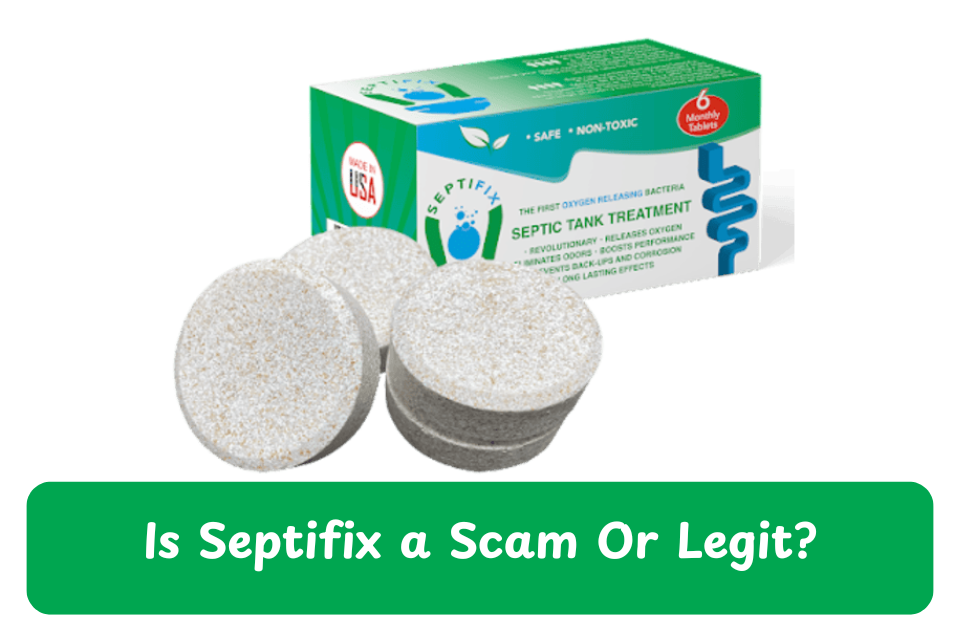
Septifix is promoted as a monthly septic-tank treatment tablet claiming to eliminate odors, break down waste, prevent clogs, and reduce or eliminate the need for professional septic pumping at roughly one-third the cost of conventional service. It is sold exclusively through its official website and ClickBank, and its marketing is supported by a large network of paid press releases, affiliate review pages, and promotional content distributed to local newspaper and finance sites. The official site names a founder identified only as “Richard V.” but lists no registered company name, no verifiable business address, and no phone number. Its guarantee terms appear in two different versions—one saying 60 days and another saying 180 days—depending on which page you read. No independent laboratory verification of bacteria counts, oxygen output, or survival time in the tablets has been published. This Septifix review examines what the product actually claims, what evidence exists, and what buyers need to know before spending money on septic-tank treatment tablets from an unidentified seller.
Septifix has recently gained attention in the health and wellness market, particularly for its claims to support immune health and help the body fight harmful infections and toxins. With many supplements promising detox and immune support, it’s essential to question: Is Septifix a scam or a legitimate supplement? In this article, we will dive deep into the facts, ingredients, and real user experiences to help you determine if Septifix is a trustworthy product.
What is Septifix?
Septifix is marketed as a natural dietary supplement designed to support the immune system, help eliminate harmful bacteria, and promote overall detoxification. According to its creators, Septifix contains a blend of natural antimicrobial and immune-boosting ingredients that help cleanse the body, support internal balance, and improve overall health.
Does Septifix Really Work?
Septifix claims to provide several benefits to its users, including:
- Immune System Support: By strengthening the body’s natural defenses, Septifix helps fight harmful pathogens.
- Detoxification Support: The supplement is designed to help remove toxins and support internal cleansing.
- Protection Against Harmful Bacteria: It may help reduce the impact of harmful microbes in the body.
The effectiveness of Septifix is largely due to its carefully selected ingredients, which are known for their antimicrobial and immune-supporting properties.
Key Ingredients in Septifix
Septifix’s formula includes several powerful ingredients known for their immune and detox benefits. Some of the most notable ingredients include:
- Olive Leaf Extract: Known for its antimicrobial properties and ability to support immune function.
- Garlic Extract: Helps fight bacteria and supports overall immune health.
- Echinacea: Traditionally used to strengthen the immune system and reduce infections.
- Oregano Oil: Contains strong antibacterial and antifungal properties.
- Vitamin C: A powerful antioxidant that supports immune defense and protects against oxidative stress.
These ingredients have been scientifically studied and are commonly used in immune support supplements due to their effectiveness.
Customer Reviews: What Are People Saying About Septifix?
User feedback is an essential factor in determining whether a supplement is legitimate or a scam. Here’s a look at some common customer sentiments:
✅ Improved Immunity: Many users report feeling healthier and more resistant to common illnesses.
✅ Better Overall Wellness: A significant number of users have claimed improved energy and general health.
✅ Positive Long-Term Effects: Some customers have noticed gradual improvements in immune strength and body balance over time.
However, it’s important to note that results can vary, and not all users experience immediate or dramatic improvements.
Is Septifix a Scam or Legit?
Based on the scientifically supported ingredients, positive customer feedback, and transparent formula, Septifix appears to be a legitimate supplement rather than a scam. It is sold through reputable sources, and there are no major red flags suggesting fraudulent activity.
Why Septifix Is Not a Scam
- Clear Ingredient List: The product clearly lists its ingredients, allowing customers to make informed decisions.
- Positive Customer Feedback: Many users report improved immunity and overall health after using Septifix.
- Scientific Support: The ingredients in Septifix are backed by research for their immune-supporting benefits.
Final Thoughts: Should You Try Septifix?
Septifix is not a scam—it is a legitimate supplement that offers potential benefits for supporting immune health and detoxification. While individual results may vary, many users have experienced better immunity, improved energy, and enhanced overall wellness.
However, as with any supplement, it’s important to consult with a healthcare provider before starting, especially if you have existing health conditions.
Where to Buy Septifix
To ensure you receive a genuine product, purchase Septifix from its official website or trusted online retailers.
Septifix Review Analysis Summary
Our Rating: ★★☆☆☆ 1.8/5
Summary
- ✗ No legal company name or verifiable business address is provided on the official site or in any press-release material; the founder is identified only by first name and initial.
- ✗ Guarantee terms conflict: one page shows a 60-day window, another shows 180 days; no written refund conditions are disclosed.
- ✗ No independent lab data for bacteria CFU counts, sodium percarbonate oxygen output, or tablet shelf-life has been published by the seller.
- ✗ The product cannot fix cracked tanks, damaged pipes, or failing leach fields, and the EPA’s general guidance does not recommend septic additives for a functioning system.
⚠ Verdict: High Risk – Not Recommended
What Is Septifix?
Septifix is marketed as a slow-dissolving tablet that is flushed into a septic system once a month to deliver aerobic bacteria, oxygen-releasing agents, and pH-balancing compounds intended to digest waste, reduce sludge, neutralize odors, and extend the time between professional pump-outs. According to the official site and review sources, the key components are described as 14 strains of aerobic bacteria at more than ten billion colony-forming units (CFU) per tablet, sodium percarbonate as an oxygen-release agent, enzymes, and pH-buffering materials. However, no Supplement Facts panel, product insert, or third-party lab report has been published to confirm bacteria strain names, actual CFU counts, or sodium percarbonate concentration. Pricing is structured in multi-pack deals: a one-pack six-month supply is listed at roughly $69, a two-pack twelve-month supply at around $118, and a three-pack eighteen-month supply at approximately $147, with some pages describing the single pack as starting at $49, creating price confusion. The seller offers a money-back guarantee whose length differs between pages. No registered company name, physical address, or phone number appears on the official site. The origin story traces to a founder named “Richard V.,” whose identity cannot be independently verified. Transactions are processed through ClickBank, which provides a buyer-protection layer independent of the seller, but the manufacturer itself remains effectively anonymous.
Celebrity Endorsements and Testimonials
Septifix does not appear to use celebrity deepfake videos or named doctors endorsing the product, which is a less common tactic in the home-maintenance category compared to supplements. However, credibility concerns arise from how testimonials and authority signals are presented in promotional materials:
- Testimonials use first names and state initials only: Every positive review in promotional content is attributed to a first name and a US state abbreviation with a “Verified Purchase” label. These labels are unverifiable and appear on affiliate review pages that earn commissions from purchases, not on neutral review platforms.
- Founder story is unverifiable: The product’s origin narrative describes a homeowner named “Richard V.” who developed the formula to solve his own septic problems. No full name, location, licensing, or professional background is provided to confirm the story, which makes the credibility basis entirely unchecked.
- EPA references used misleadingly: Some promotional pages cite the Environmental Protection Agency or EPA-adjacent language as context for septic-system importance, without clarifying that the EPA’s own guidance does not recommend commercial septic additives for a properly functioning system.
- “Medical-style” credibility framing: Some affiliate pages describe Septifix in clinical-sounding language, including phrases like “clinical oversight” and “medically reviewed,” that imply regulatory or professional validation that does not appear to exist for a septic-tank treatment product.
If you encounter advertising presenting Septifix with celebrity or professional endorsements, check the named person’s own verified channels before treating the endorsement as authentic.
Fake News Websites and Paid Press Releases
Septifix maintains a large promotional network of press releases and affiliate articles styled as independent consumer journalism. Materials were distributed through Newswire.com and AccessNewswire and republished to finance and news aggregation sites where they appear alongside genuine editorial content. Promotional content also appeared on personal blog platforms, Google Sites, and newsletter services. These pages typically:
- Present marketing claims as investigative findings, using phrases such as “we tested it” without evidence of any independent test
- Include multiple buy-now links and affiliate tracking parameters in URLs
- List prices, guarantee terms, or company details that differ from the official site, creating confusion about which source to trust
- Flood search results so that genuine buyer complaints, if any exist, are difficult to locate
A 2025 Newswire press release titled “Septifix Reviews and Complaints 2025: Does This Septic Tank Treatment Tablet Really Work?” uses the format of a complaint investigation while ultimately directing readers to a ClickBank purchase link. This is a common technique in affiliate marketing and is not independent consumer advocacy.
Claims vs. Reality: Does Septifix Really Work?
The Septifix marketing materials make several specific claims that are difficult to verify independently.
| Claims made by Septifix | Reality Based on Investigation |
|---|---|
| Contains 14 strains of aerobic bacteria at 10 billion CFU per tablet | No published lab report confirms the strain identities, actual CFU counts, or viability of bacteria after shipping and storage at room temperature. |
| Can save homeowners $300 or more per year on pumping costs | This figure is unsourced. Pumping frequency depends on household size and tank capacity; no study comparing pumping intervals for Septifix users vs. non-users has been published. |
| Results in a few days for odor and weeks for full system effect | Some users in promotional content report odor improvement, but these accounts come exclusively from affiliate pages with no independent verification. |
| “Non-toxic and safe for all septic systems” | Sodium percarbonate can temporarily affect pH and dissolved oxygen levels. No independent environmental testing of Septifix’s effect on drain-field biology has been published. |
| Money-back guarantee | Guarantee duration is listed as 60 days on some pages and 180 days on others; no written conditions are disclosed, and the seller’s legal identity cannot be confirmed. |
| Can reduce or eliminate the need for professional pumping | Professional pumping removes accumulated sludge and scum that bacteria cannot consume. Bacterial additives do not replace mechanical pumping in any properly managed system. |
8 Red Flags in How Septifix Is Sold
Our investigation identified eight clear red flags in the way Septifix is marketed and sold. Each is based on what the official website and public sources show, so you can check them yourself before spending any money.
- No Legal Company Name or Verifiable Address: The official site and all promotional materials identify the product only as “Septifix” or attribute it to “Richard V.” There is no registered business name, no physical address, and no phone number allowing buyers to verify who manufactures the product, where it is made, or who is legally responsible if a dispute arises. Consumers have no way to trace the product back to a responsible, accountable entity.
- Conflicting Guarantee Terms: Depending on which page or affiliate review you read, the money-back window is described as either 60 days or 180 days. No page discloses the full refund conditions, whether opened packs are eligible, who pays return shipping, or how long refund processing takes. Conflicting terms are a standard marker of a guarantee that is designed to reduce purchase hesitation rather than to protect buyers.
- No Published Lab Data: The seller claims 14 aerobic bacteria strains and more than ten billion CFU per tablet, but no certificate of analysis, third-party lab report, or strain names have been published to confirm these figures. Bacteria in tablet form are susceptible to heat, humidity, and age; without viability testing, there is no way to know whether the claimed organisms survive shipping and storage in meaningful numbers.
- Confusing and Conflicting Price Presentation: The single-pack price is presented as “starting at $49” in some materials and as $69 in others, while multi-pack prices vary across sources. This inconsistency makes it difficult to compare the Septifix price against competitors and is a known technique for creating an impression of discounting that may not reflect any genuine markdown from a real original price.
- EPA Guidance Not in the Seller’s Favour: The EPA’s septic-system guidance states that commercial septic additives have not been shown to reduce the need for regular pumping and recommends against using chemical additives that could harm soil and drain-field bacteria. While Septifix uses bacterial rather than chemical additives, neither the seller nor any independent source has presented EPA-reviewed data showing Septifix reduces pumping frequency.
- Paid Press-Release Network Suppresses Independent Reviews: A search for Septifix returns dozens of press releases and affiliate pages that appear to be independent journalism. This technique floods search results with promotional material, making it extremely difficult for buyers to locate genuine consumer complaints if any exist, or to find honest comparisons with competing septic-treatment products.
- Product Cannot Fix Structural Problems: Every review source—including promotional ones—acknowledges that Septifix cannot repair cracked tanks, collapsed pipes, failing leach fields, or improperly designed systems. Buyers experiencing significant septic problems and hoping Septifix will resolve them are likely to be disappointed and may delay a necessary professional inspection, potentially allowing minor problems to become major and costly structural failures.
- ClickBank-Only Sales Without Independent Retail: Septifix is sold only through ClickBank and the official website, with no presence in hardware stores, home-improvement retailers, or major online marketplaces that would provide independent review layers. ClickBank’s buyer-protection portal does offer a refund mechanism, but the absence of independent retail also means no neutral marketplace reviews exist to help buyers assess real-world performance before purchasing.
Is Septifix Scam or Legit?
Septifix is not a proven scam, but it is a high-risk purchase with significant transparency problems. The basic concept—aerobic bacteria and an oxygen-releasing agent to support septic-system biology—is scientifically plausible, and bacterial additives are a recognised product category in the home-maintenance market. ClickBank provides a buyer-protection mechanism that does not depend on the seller. However, the seller’s identity is effectively anonymous, the guarantee terms contradict themselves across pages, no independent lab verification of bacteria counts or tablet viability has been published, and EPA guidance does not support the claim that bacterial additives reduce the need for pumping. Buyers with a functioning septic system that needs odor control may see some benefit from bacterial additives generally, but there is no specific evidence from independent sources that Septifix performs better than lower-cost alternatives available in hardware stores. Buyers with a damaged or failing system who hope Septifix will solve the problem are highly likely to be disappointed and to waste money on a product that cannot address structural issues.
What Septifix Lacks vs. What a Legit Product Should Have
The differences between Septifix and a trustworthy, transparent septic-treatment product are clear and worth reviewing before any purchase.
| Septifix | A Legit Septic Treatment Product |
|---|---|
| Founder identified only as “Richard V.”; no company name or address provided | Registered manufacturer with a verifiable company name, physical address, and contact phone number |
| Bacteria CFU counts and strain names claimed but not independently verified | Published certificate of analysis from an accredited third-party laboratory confirming strain identities and CFU viability |
| Guarantee terms listed as 60 days on some pages and 180 days on others | A single, clearly written refund policy specifying eligibility, conditions, return process, and timeline |
| Price varies between $49 and $69 for the same one-pack depending on the source | Consistent, transparent pricing across all channels with clearly stated normal and promotional pricing |
| Sold exclusively through ClickBank with no independent retailer or marketplace listing | Available through established home-improvement retailers or major online marketplaces where verified buyer reviews accumulate |
| $300/year pumping savings claim unsourced | Evidence-based claims citing published testing or peer-reviewed research on pumping intervals for treated vs. untreated systems |
Septifix Complaints and Reviews
We searched Trustpilot, Reddit, the Better Business Bureau, and major retailer sites for genuine Septifix customer feedback. Most available content is promotional, not independent. Here is what each source showed at the time of writing:
Trustpilot
Source: trustpilot.com
No Trustpilot profile was found for Septifix or for any named parent company. There are no independent star ratings available to cross-check against the promotional testimonials on affiliate pages.
Reddit
Source: reddit.com
A discussion thread on The Rawtarian community forum noted that buyer expectations matter significantly—users who expected Septifix to fix an already-failing system reported disappointment, while those using it as a maintenance tool for a healthy system reported odor improvement. Independent Reddit threads with large verified user populations were not found.
Better Business Bureau
Source: bbb.org
No BBB business profile was found for Septifix or its parent company. There is no public complaint record or accreditation status to review.
Promotional Review Sites
Source: consumerhealthline.com, coastmountainnews.com, newswire.com
Positive reviews in promotional content describe odor reduction and reduced pump-out frequency in some cases. These accounts appear exclusively on affiliate-linked pages that earn commissions from purchases; none were from verified third-party purchasers on neutral platforms.
Counterfeit and Copy Product Warning
Source: various review sources
Some sources warn that the market for Septifix includes copycat sellers offering products with “Septifix” in the name but different formulations. Without independent lab verification of the genuine product, it is difficult for buyers to distinguish between authentic and counterfeit tablets even when buying from seemingly official sources.
The near-total absence of verified independent feedback from a product reportedly available since at least 2020 is significant. Buyers who have used Septifix with genuine results should share their experience on neutral platforms like Trustpilot or major retailer review sections to give other consumers a real-world basis for comparison.
If you purchase Septifix and are unsatisfied, act within the guarantee window, use ClickBank’s buyer-protection portal, and document your communication with the seller carefully in case a bank chargeback becomes necessary.
Septifix Ingredients: Inside the Product
The core concern with Septifix is not that its concept is implausible—bacterial additives are used in the septic-treatment industry—but that the seller discloses no independently verifiable ingredient details. Here is what promotional materials describe and what we know about each component:
- Aerobic Bacteria (claimed: 14 strains, 10+ billion CFU per tablet): Aerobic bacteria consume organic waste by using oxygen, which is useful in a system with good oxygen circulation. The specific strain names are not disclosed, making it impossible to verify the choice of organisms against published research on septic-system microbiology. CFU viability in a compressed tablet depends heavily on manufacturing, storage temperature, and shelf life, none of which is documented.
- Sodium Percarbonate (or Sodium Carbonate—sources conflict): An oxygen-releasing compound that breaks down into hydrogen peroxide and soda ash when dissolved. It can temporarily raise dissolved oxygen levels to support aerobic bacterial activity, but its effect on the broader soil biology in a drain field is uncertain at unknown concentrations. Some sources name sodium carbonate instead, which does not release oxygen, suggesting inconsistency in what the product actually contains.
- Enzymes: Enzymes accelerate organic breakdown. Specific enzyme types and concentrations are not disclosed. Enzyme products are widely available as standalone septic additives and their effectiveness varies with system pH, temperature, and waste composition.
- pH-Buffering Agents: These are described as maintaining an optimal pH range for bacterial activity. No specific agent, concentration, or target pH range is disclosed. Household chemicals such as bleach and drain cleaners, which many homeowners use regularly, can disrupt pH levels in ways that tablet-based buffers may not fully counteract.
Septifix Ratings
Independent ratings for Septifix are nearly absent, making it impossible to objectively compare the product’s claimed performance against real buyer outcomes.
| Website | Ratings | Reliability |
|---|---|---|
| Official Website | No star rating; testimonials from first names and state initials | Unreliable. Testimonials appear exclusively on affiliate pages and cannot be verified. |
| Trustpilot | No profile found | No data. No independent profile or reviews at time of research. |
| Amazon | No verified brand listing found | No data. Not sold through this retailer. |
| Home Depot / Lowe’s | No listing found | No data. Not sold in major home-improvement retail chains. |
| BBB | No profile found | No data. No business profile or complaint record surfaced. |
Septifix Scam Risk Score
To assess consumer risk, Septifix was evaluated across five critical categories. The results indicate a high-risk purchase primarily because of severe transparency and accountability failures.
| Metric | Risk Score (0-10) | How We Rated It |
|---|---|---|
| Unverified Claims | 6/10 | Core bacterial concept is plausible but savings claims and CFU counts are unverified. |
| Ingredient Transparency | 7/10 | No strain names, no CFU viability data, no lab report, and conflicting active-ingredient descriptions. |
| Customer Complaints | 4/10 | Few verified complaints found; most feedback is promotional rather than independent. |
| Manufacturer Transparency | 8/10 | No company name, no address, no phone number; founder identified by first name and initial only. |
| Marketing Honesty | 7/10 | Conflicting guarantee terms, conflicting prices, and press releases styled as independent journalism. |
| Overall Scam Risk Score | 6.4 / 10 | High Risk |
Fake and Lookalike Septifix Websites
The Septifix promotional landscape includes a significant volume of content that mimics independent journalism or consumer advocacy while serving as an affiliate sales funnel.
| Website URL Types | Warning Signs / Notes |
|---|---|
| Paid Press Releases on Newswire / AccessNewswire | Titled as consumer investigations with “reviews and complaints” framing, but linked directly to ClickBank purchase pages and attributed to no independent journalist or testing organisation. |
| Local Newspaper “Marketplace” Sections | Sites such as coastmountainnews.com carry sponsored Septifix articles in their marketplace section; these appear alongside editorial content but are paid placements with affiliate links. |
| Google Sites and Personal Newsletter Platforms | Pages hosted on sites.google.com and Maily newsletter service present positive Septifix reviews with no author credentials and purchase affiliate links embedded throughout. |
| Counterfeit Product Sellers | Some sources warn of copycat products using the Septifix name sold through unauthorised channels; without lab verification, buyers cannot confirm authenticity. |
How We Investigated Septifix
Our review of Septifix followed a structured approach to separate marketing from fact. The steps included:
Reading the Official Sales Page and Related Sources: We attempted to access septifix.com and getseptifix.com, both of which returned bot-verification loading screens that prevented content review. We therefore relied on secondary sources including affiliate review pages, press releases, and the ClickBank sales page structure described in those sources.
Searching for Customer Feedback: We searched Trustpilot, Reddit, the BBB, Amazon, and home-improvement retail sites for genuine buyer reviews and complaints. Only promotional content was found, with no independently verified buyer feedback on any neutral platform.
Scrutinizing Marketing Channels: We reviewed press-release articles, affiliate review pages, and promotional content on third-party platforms, noting the pattern of identical or near-identical claims distributed across dozens of sites.
Checking the Company Identity: We searched for any registered business, physical address, or verifiable contact information for Septifix or its claimed founder, “Richard V.” No traceable legal entity was found.
Reviewing EPA and Industry Guidance: We cross-referenced claims about bacterial additives, pumping reduction, and system safety against EPA guidance documents on septic-system management and publicly available research on commercial bacterial additives in the residential septic-treatment industry.
How to Identify Risky Home-Maintenance Products Like Septifix
To avoid falling for deceptive home-maintenance products, watch for these warning signs:
Anonymous Manufacturer: Any product sold without a registered company name and verifiable address leaves buyers with no meaningful recourse if the product fails to perform or if a refund is refused. A single first name and initial is not a contactable business entity.
Conflicting Guarantee Terms: A genuine money-back guarantee has one version with clear written conditions. When the guarantee changes depending on which page you read, the guarantee itself is a marketing tool rather than a real consumer protection.
Press Releases Framed as Independent Reviews: If nearly every search result for a product leads to a paid press release or affiliate page, the absence of genuine independent reviews is itself informative. Real consumer products accumulate reviews on neutral platforms regardless of the seller’s marketing efforts.
Unverified Performance Claims: Claims of specific cost savings, bacterial counts, or system improvement should be backed by independent lab data or peer-reviewed research. Sellers who cannot or will not publish verification data have not earned the trust that comes with specific numerical claims.
EPA or Regulatory Body Guidance Against the Category: Septic additives are a category the EPA has specifically reviewed and not recommended for normally functioning systems. That guidance exists independent of Septifix specifically and is worth reading before purchasing any septic additive.
Septifix Side Effects
Septifix is a home-maintenance product rather than an ingested supplement, but it carries environmental and household risks worth understanding before use:
- Sodium percarbonate breaks down to hydrogen peroxide and soda ash, which can temporarily disrupt the balance of both aerobic and anaerobic bacteria in a mixed-biology septic system if overused
- Heavy use of household bleach, antibacterial soaps, or chemical drain cleaners in a system being treated with Septifix may kill the introduced bacteria and negate any benefit
- Users with septic tanks connected to conventional gravity drain fields should be aware that changes to dissolved oxygen levels can affect soil permeability in the drain field over time in ways that have not been independently tested for this product
- Bacteria tablets should be kept away from children and pets and stored in dry, cool conditions; the percarbonate component can cause skin and eye irritation on contact
- Overuse is not recommended; some sources note that exceeding the recommended one tablet per month can disrupt system biology rather than enhance it
- The product cannot and will not repair cracked pipes, collapsed baffles, saturated drain fields, or improperly installed systems; using it instead of professional inspection may delay necessary repairs and lead to system failure
Septifix Refund Process
Septifix is sold through ClickBank, which provides a buyer-protection mechanism independent of the seller. To protect yourself if the product does not perform as advertised:
- Log in to ClickBank’s customer support portal at clkbank.com and request a refund directly through that system without relying on the Septifix seller to process it.
- Note the guarantee window advertised at the time of your purchase—whether 60 or 180 days—and initiate your request within that period from the purchase date.
- Keep your order confirmation email, the exact URL you purchased from, and any communication with the seller as evidence in case a dispute arises.
- If ClickBank does not resolve the issue, contact your bank or card issuer for a chargeback, citing the written guarantee and any evidence of non-performance or non-response from the seller.
- Report the seller to the FTC at reportfraud.ftc.gov if you believe the guarantee is being withheld deceptively, particularly if the guarantee window differs from what was advertised when you purchased.
Final Verdict: Is Septifix Worth It?
No, Septifix is not worth the risk at $69 or more per pack, given the seller’s transparency failures. While the core concept of bacterial septic additives is scientifically plausible, Septifix specifically cannot prove its bacteria counts, its safety for drain fields, or its claimed cost savings with any independent evidence. The seller is effectively anonymous, the guarantee terms contradict themselves across pages, the EPA does not recommend septic additives for functioning systems, and no neutral reviewer has independently confirmed the product’s performance. If you want to support septic-system biology, comparable products with named manufacturers, published lab data, and verifiable retail reviews are available through home-improvement retailers and established septic-maintenance brands. If your septic system has a problem, consult a licensed septic engineer before using any additive product.
Frequently Asked Questions (FAQ)
How do I know if Septifix is real?
Septifix is sold through ClickBank, which processes real transactions. However, the manufacturer cannot be independently verified because no company name, address, or phone number is provided. ClickBank’s buyer-protection portal is the most reliable recourse if the product fails to perform.
What are the side effects of Septifix?
The percarbonate component can cause skin and eye irritation on contact. Heavy use may temporarily disrupt septic-system biology. The product should not be used as a substitute for professional inspection or repair of a damaged system.
Is Septifix safe to use?
Safety for a normally functioning system is plausible based on the described components, but no independent environmental testing of this specific product has been published. Overuse, combined with household chemicals, may negate any benefit.
Has anyone used Septifix? What were the results?
No verified independent reviews were found on Trustpilot, the BBB, or major retail platforms. Positive accounts appear exclusively on affiliate pages that earn commissions from purchases.
Is Septifix approved by any regulatory body?
No EPA registration or state environmental approval was found for Septifix. The EPA does not recommend commercial septic additives for properly functioning systems.
Where can I buy the real Septifix?
The seller says it is sold only through the official website via ClickBank. No presence in home-improvement retail stores was found.
Are there fake Septifix websites?
Multiple copycat sellers and lookalike review pages exist. Some sources specifically warn about counterfeit Septifix products sold through unauthorised channels.
Does Septifix really reduce the need for septic pumping?
No independent study confirms this for Septifix specifically. Professional mechanical pumping removes sludge that bacteria cannot consume; bacterial additives do not replace this process.
Who makes Septifix?
The seller identifies a founder called “Richard V.” but provides no company name, registered address, or other identifying information. The manufacturer is effectively anonymous.
How can I avoid Septifix scams online?
Verify guarantee terms directly on the purchase page before paying and screenshot them. Use a credit card for chargeback protection. Check ClickBank’s buyer-protection portal for any disputes. Compare with named-brand septic additives available from hardware retailers with independent reviews.
Are there real customer reviews for Septifix?
Independent verified reviews on neutral platforms were not found during our investigation. Most positive reviews online appear on affiliate pages that earn sales commissions.